A stone site on the Golan Heights made up of more than 42,000 basalt rocks that dates back 5,000 years was likely not used as an astronomical observatory as previously thought, according to a study published on Sunday.
The Rujm el-Hiri site, also known as Gilgal Refa’im (Wheel of Ghosts), is located on the strategic plateau about 10 miles east of the Sea of Galilee.
The study by Tel Aviv University and Ben-Gurion University of the Negev found that geodynamic movement over 150 million years caused significant shifts in the ground, challenging the theory that the structure was used as an astronomical observatory, as the original alignment of the walls and entrances do not correspond to celestial observations.
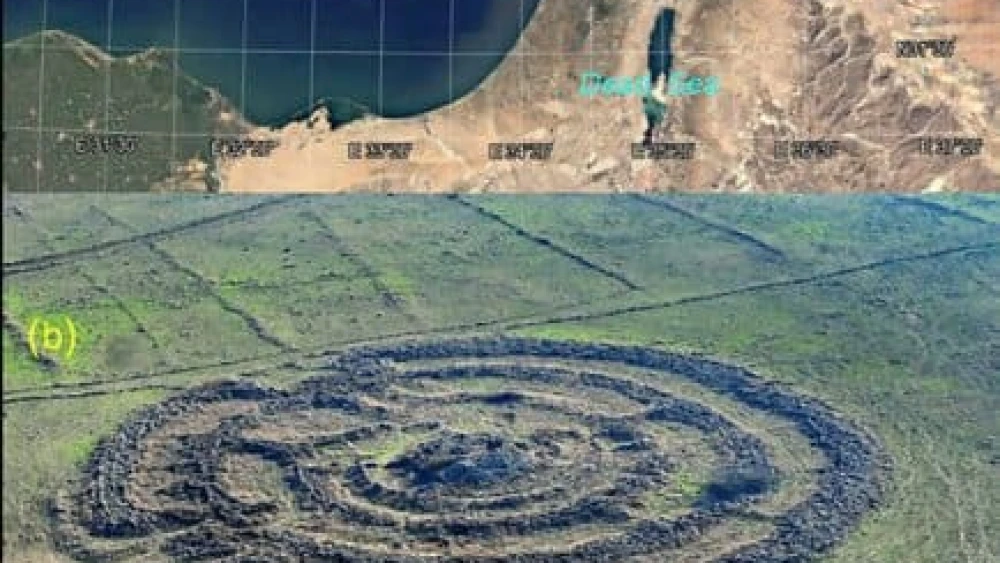
The study was based on calculations of the sky map and aligning the directions of the solstices, equinoxes and other celestial bodies as they appeared five millennia ago along with the entrances to the site. The findings show that the orientations of the entrances and walls were entirely different at that time.
The establishment of the site, and other nearby ancient settlements, is dated by archaeologists to the Early Bronze Age II period (3000–2700 BCE).
Israeli archeologists have theorized that the site was not a defensive position or a residential quarter but was possibly a ritual center, although there is no consensus regarding its function.
The study’s findings, which include the first comprehensive mapping of the archaeological landscape using satellite technology, have been published in the journal Remote Sensing.
The 75-mile Golan Trail marked hiking route, which stretches the length of the Heights, passes Gilgal Refa’im.