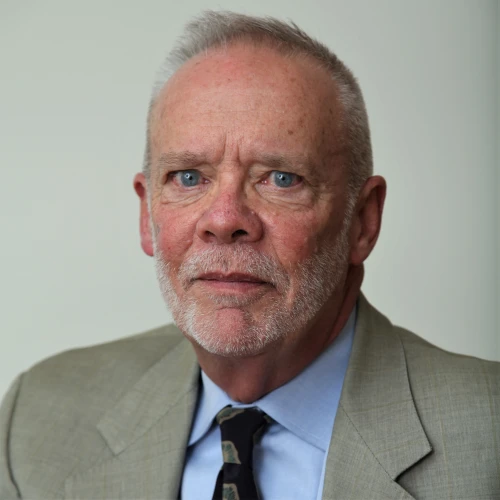
Canada-Israel relations are at one of their lowest points ever, Israeli Ambassador to Canada Iddo Moed told JNS in an interview on Tuesday.
On July 30, Canada announced its intention to recognize a Palestinian state during the 80th Session of the U.N. General Assembly in September, contingent on reforms by the Palestinian Authority.
On Tuesday, a Canadian government spokeswoman denied reports in Israeli media that Prime Minister Mark Carney had reversed course and would no longer pursue recognition, telling JNS it was incorrect.
The Amsterdam-born Moed said Canada is aligning with a broader international bloc that believes increasing political pressure on Israel will alter the situation on the ground.
The ambassador also raised the concerns of Canadian Jewish communities, who—entering the period of the High Holidays—fear that “bubble legislation"—municipal bylaws that restrict protests within a specific radius of locations such as clinics, schools and religious centers—may not be enacted in time.
While stressing that many Jews feel abandoned in the face of a sharp rise in antisemitism, Moed welcomed recent positive steps, including the reversal of a ban on the Jewish community’s participation in Montreal’s gay pride parade and the Toronto International Film Festival’s decision to retract its ban on a film about Oct. 7.
Moed emphasized the importance of strengthening Israel-Canada ties in academia, economics, science, research and development, and commerce. He pointed to strong enthusiasm for collaboration in innovation and entrepreneurship, areas in which both countries excel.
JNS: What do you think prompted Carney to announce recognition of a Palestinian state in September at the UNGA?
Iddo Moed: You’ll have to ask Carney this question, but in my view, Canada has joined a larger chorus that believes exerting more political pressure on Israel will change the situation on the ground. Yet, as history has shown time and again, our conflict only ends when we can sit with partners capable of delivering peace and coexistence—and right now, there are no such partners.
An overwhelming majority of Israelis, across the political spectrum, recognize this reality. We know there are no partners with whom to discuss peace at present. That is why we reject this approach and have conveyed that directly to our Canadian counterparts. It is a futile effort that may ease consciences by creating the sense of working for peace, but peace will not come by imposing conditions that compromise Israel’s security—as we saw on Oct. 7.
Security is the foremost priority we must safeguard. Ensuring the safety of our citizens comes first; only afterward can we address other matters. At this moment, as we are in the midst of a war against Hamas and as Iran continues to threaten Israel, international efforts should focus on pressuring those who seek Israel’s destruction—not on pressuring Israel into a solution that is no longer viable.
Q: How would you describe Canadian-Israeli ties at the moment? Do you think the Canadian government is taking the Israeli criticism seriously?
A: I believe ties are at one of their lowest points ever. The Canadian government views the relationship solely through the prism of Gaza, putting aside the effort and hard work invested over the past 76 years since we established bilateral relations.
Israel collaborates with Canada in academia, economics, science, research and development, and commerce—fields where our ties run deep. Yet the current government seems intent on focusing exclusively on a political solution, as part of an international effort that is not even a genuine Canadian initiative. That approach prevents us from building further on what already exists, and I find that very unfortunate.
Canada is at a turning point and could greatly benefit from collaboration with Israel, particularly in innovation and entrepreneurship. Israel has much to offer in expanding industries with both civilian and military applications, where we have significant experience. This kind of cooperation is flourishing with many countries around the world.
It would be mutually beneficial to explore these opportunities while continuing discussions on the political situation—something Israel remains open to. We are transparent, we accept criticism, and we have nothing to hide.
What is unhelpful is reducing the relationship to Gaza alone, sometimes with false claims—such as the accusation that Israel blocks humanitarian aid. That is simply untrue. We have, in fact, delivered Canadian humanitarian aid to Gaza. Suggesting otherwise is ridiculous.
This is where our relations stand today, but we should move out of this corner as quickly as possible and look together at how we can make a real difference—for both our countries and for the people of the region. That is absolutely possible.
Q: Do you think Canada is concerned with its growing Muslim population? The influence of the Muslim Brotherhood is increasingly gaining ground in Canada, according to a report published in late June by the Institute for the Study of Global Antisemitism and Policy. Do you agree?
A: “I am not familiar with that report, nor with the Canadian government’s concerns about population composition. What I do observe, however, is that at times the demonstrations—and the sources of incitement, hate and anti-Israel activity—often include groups with among them many people of Middle Eastern origin.
Maybe there is a connection, maybe not. In my view, what we should all be working on together is not just looking at the Middle East, but addressing the rapid rise of antisemitism in Canada. That requires strengthening and expanding education programs, something I hear consistently from Jewish communities and emphasize in my conversations with government representatives. There are also complaints about law enforcement, and perhaps those are justified as well. That is an internal Canadian issue. But when someone is attacked in the street simply because he looks Jewish, the response becomes a matter of real concern.
What I am hearing from the Jewish community is deep anxiety about the government’s approach. They feel that they are left alone. We have conveyed that message directly to the government. Some of this hostility may stem from the Middle East, some may be homegrown. I cannot say for certain. My point is that the real challenge is combating hate.
Of course, many people from the Middle East are peaceful. In Israel we live side by side with Muslims, Christians, Armenians, Druze and Bedouin. The same is largely true in Canada. But at times, individuals of Middle Eastern background can be identified as being involved in the anti-Israel, hateful demonstrations we are now seeing frequently on Canadian streets.
Q: The Canadian government may say one thing, but are there things going on behind the scenes that tell a different tale?
A: “I see a very strong drive to connect on innovation. On both sides, young people are entrepreneurial, talented and skilled in advanced technologies. They want to push forward, reach the next level and continue developing.
There is a real thirst for collaboration—to innovate, to solve problems and to create practical solutions. Israel excels at commercializing patents and technologies, while Canada is highly advanced technologically. This creates enormous opportunities to work together in fields such as agriculture, cybersecurity, artificial intelligence and quantum research.
The interest in collaboration is strong on both sides, and this will remain one of our key priorities in the coming period. It may not always make headlines, but it is happening, it is important and we intend to do much more to strengthen it.
Q: The Jewish community was invited back to join Montreal’s pride parade and the Toronto film festival reversed its decision on the screening of the Oct. 7 film. Do you see this as a glimmer of hope, and what should be done to foster more good news?
A: I see these as important signs that reason is returning to those who make decisions on these occasions. It’s an important first step, but we must also pay attention to those demanding the opposite.
The Capital Pride was sabotaged through blackmail by people claiming to be pro-Palestinian. “Queers for Palestine” have no understanding of what the reality is for queer people in Palestine. They are simply anti-Israel and antisemitic voices seeking to block participation because they do not want Israelis and Jews included. That sentiment still exists.
The decision by the Toronto International Film Festival to re-invite the Israeli film about Oct. 7 was also very important and very welcome. I was personally involved and strongly supported that step. Just as Palestinian films are presented—telling their stories without incitement—Israeli films should be presented as well. Both perspectives should be seen.
Now is the time to step back and recognize that this is not about seeking some artificial “balance.” It is about identifying what is respectful, tolerant and consistent with the values we all cherish, versus what falls outside of those norms. That is the only real discussion.
This is not about pitting antisemitism against Islamophobia. It is about distinguishing between what is hateful and what is not. When people adopt this perspective—as seen recently in Ottawa with Pride, and in Toronto as well—things begin to change. This is the direction we should pursue in our societies: a path that strengthens liberal and tolerant values.
Q: Are there programs and coordination to keep the community safe? Do you think the Israeli government needs to step in with additional resources?
A: This is an internal issue for Canada. I see my role, given my close ties with Jewish communities, is to convey their concerns. Beyond that, it remains entirely a Canadian matter.
As we mark the 690th day since hostages were taken from Israel into Gaza, for the Jewish community here in Canada, and for many others, their hearts remain with those who have not been able to return home. Some hostages are alive, some are not—we know that—but they must be brought back. Their fate and humanitarian condition have almost vanished from public debate and discussion, and that is deeply troubling.
At the same time, the responsibility of Hamas—for the atrocities of Oct. 7 and for the ongoing suffering of Palestinians today—has been almost entirely disregarded. Even when the Canadian government states that Hamas should have no role in a future solution, there is still no pressure on the Palestinian side to improve conditions for the hostages, let alone release them. That absence is glaring.
It is critical to remember that there are still 50 hostages in Gaza. Securing their release must come before any talk of moving to the next stage of negotiations. For Israelis, this is the foremost precondition. Everywhere you go in Israel, you see their faces, their signs, and you meet people praying daily for their safe return.
Israel will continue to do everything possible to bring them home. But the international community must not forget: 50 hostages remain in Gaza. Their release is the most urgent and essential step before any progress can be made in relations with our neighbors.
Q: What is the general overall sentiment of Canadian Jews in Canada?
A: From Vancouver to Halifax, from north to south, there are complaints and incidents of antisemitism—blatant antisemitism—including not only verbal abuse but also physical attacks.
As we approach the High Holidays, communities are deeply concerned about police presence and protection. I know there are plans to introduce so-called “bubble legislation,” but questions remain: how will they be enforced, and will they be in place before the holidays? I am not sure, especially since this coincides with Parliament reconvening. These concerns are fueled by recent incidents—arson attacks, physical assaults, shootings at schools and people carrying the Hakenkreuz, the Nazi swastika.
All of this indicates that such acts continue, likely due to insufficient response from local authorities. The Jewish community is looking for stronger action, as these threats are deeply intimidating.
In addition, I hear from people employed in the public sector who say they are facing intimidation and even discrimination in the workplace. It is shocking to realize how widespread antisemitism has become, and it must be addressed. This is not only about individual safety, but about the security and well-being of entire communities.
Across the board, most communities and individuals will tell you the same thing: Compared to one, two or three years ago, the situation is much worse today.
Q: Do you think that there is going to be an influx of aliyah in the coming years, and would you recommend that?
A: We always support aliyah, but ultimately it is up to each individual to decide where they wish to live. Israel welcomes everyone—we are ready with open arms to absorb them and have them become part of Israeli life.
Since Oct. 7, I have witnessed the bond between Israel and the Jewish Diaspora grow even stronger. That connection itself is of immense importance.
As an ambassador, my role is to reach out to the Jewish community in Canada, to support and strengthen them wherever they are, while also reminding them that Israel is always waiting with open arms to welcome them whenever they choose to come.