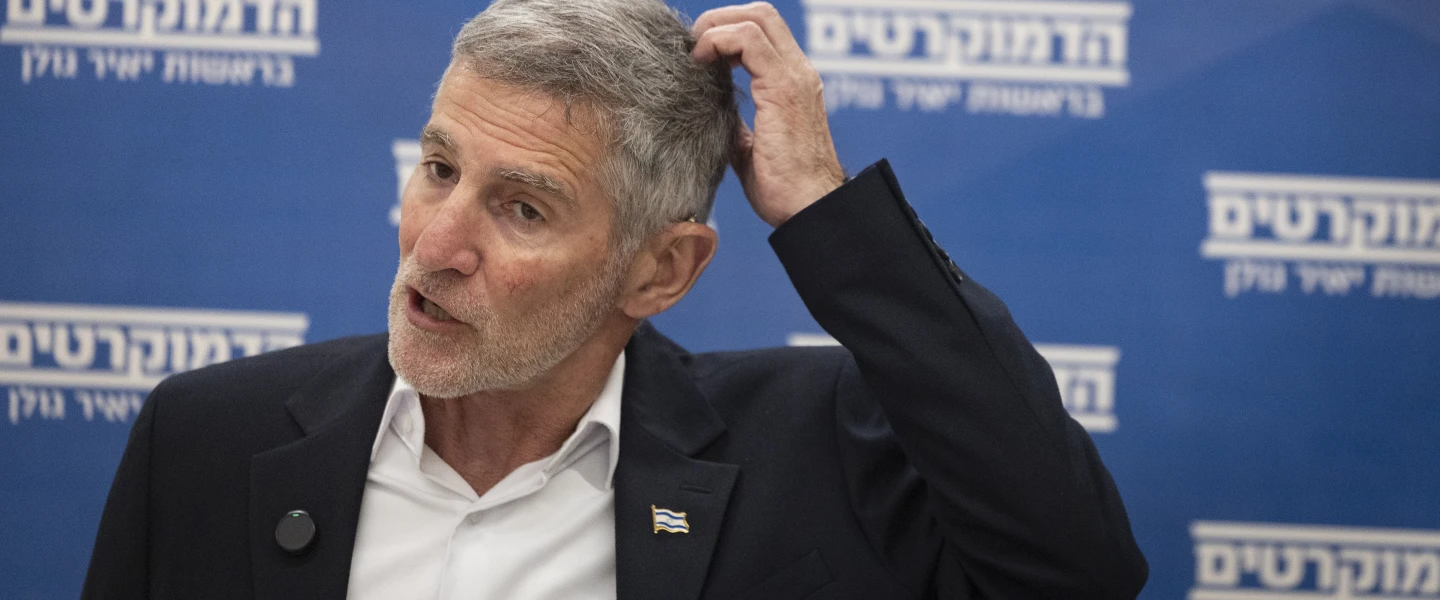
The Democrats enter Israel’s Oct. 27th election attempting to revive a left-wing ethos which was nearly wiped out in the previous election cycle. Led by former Israel Defense Forces deputy chief of staff Yair Golan, the Democrats are campaigning on a sweeping agenda encompassing Palestinian statehood, judicial power, secularization and economic policy. Securing the left flank of the opposition bloc, the party could become an influential, if controversial, partner in an alternative government to that of Benjamin Netanyahu.
The Movement
The Democrats are the successors to a union between Israel’s Labor Party and the far-left Meretz Party. Labor traces its roots to the socialist-Zionist movement that governed Israel during its formative decades and later negotiated the Oslo Accords. Meretz, established in 1992, adopted a more explicitly secular and dovish platform, emphasizing Palestinian statehood, socialist economics and militant secularism.
Both parties experienced a prolonged electoral collapse. In 1992, they held a combined 56 Knesset seats. By 2022, Labor had fallen to just four, while Meretz failed to cross the electoral threshold altogether. Their political union in 2024 was intended to consolidate the shrinking left-wing electorate and restore its parliamentary influence.
The effort has been spearheaded by Golan, who served as deputy IDF chief of staff before entering politics with Meretz in 2019. He gained widespread recognition for personally rescuing civilians during the Oct. 7 Hamas-led attacks and subsequently won the Labor leadership in May 2024.
The Democrats’ electoral list combines veteran left-wing politicians with prominent figures from the protest movement against Netanyahu’s government. Labor lawmakers Naama Lazimi, Gilad Kariv and Efrat Rayten occupy the three places immediately behind Golan, followed by figures including former Meretz MK Gaby Lasky and anti-government protest organizers Omri Ronen and Moshe Radman.
Golan has repeatedly attracted controversy for his inflammatory public statements. In May 2025, he warned that Israel was becoming an international pariah comparable to apartheid-era South Africa, declaring that a sane country “does not kill babies as a hobby.” His comments provoked widespread condemnation, including from opposition politicians. Golan subsequently insisted that his criticism was directed at the government rather than IDF soldiers, and denied that Israel deliberately killed children for sport.
More recently, in October 2026, Golan described the Haredi population as parasitic and called for transforming it into a productive population. Following criticism, he claimed that he had been referring specifically to Haredi political leaders rather than the community itself.
Such controversies have made Golan a polarizing figure in Israeli politics, even as his party attempts to translate its ideological platform into political influence within a broader opposition alliance.
The Platform
The Democrats’ security program calls for pairing military action with diplomatic agreements and a renewed push toward separation from the Palestinians. It advocates dismantling Hamas’s rule in Gaza and replacing it with a Palestinian technocratic administration, supported by international supervision and Gulf-funded reconstruction.
Golan also proposes negotiating a new nuclear agreement with Iran while retaining military measures against its nuclear program. Golan has criticized the killing of Iran’s Supreme Leader Ali Khamenei, arguing that it was strategically mistaken without a clear plan to translate military gains into a lasting nuclear agreement.
On Palestinian statehood, Golan has declared that “My vision is two states for two peoples.” In Judea and Samaria, the Democrats oppose annexation, seek expanded security coordination with the Palestinian Authority and pledge to dismantle illegal or newly approved outposts. Golan said in an interview in August that his long-term vision for separation from the Palestinians would require the eviction of as many as 100,000 Israelis from their homes.
The party’s domestic agenda is similarly far-reaching. It proposes reversing the government’s judicial-reform legislation, including changes to judicial appointments, and amending the Nation-State Basic Law. It would enshrine additional civil and social rights, limit prime ministers to eight years in office and bar indicted ministers from serving.
The Democrats’ approach to freedom of speech has provoked particular controversy. Golan has personally threatened the pro-Netanyahu broadcaster Channel 14 with closure. “Channel 14 will have to return to journalistic ethics—or close,” he said in September. The Israel Press Council condemned his earlier closure threat as antidemocratic and harmful to freedom of expression. Golan has also advocated closing the Bnei David pre-military academy in Eli, accusing the institution of promoting extremist nationalist views. This statement led to further condemnations from coalition and opposition parties alike in the face of Bnei David’s training of thousands of IDF combat soldiers and officers, with dozens of its graduates killed in action since Oct. 7, 2023.
On religion and state, the Democrats seek civil marriage and divorce, recognition of non-Orthodox conversions, an end to the Chief Rabbinate’s monopoly over kosher certification, and public transportation on Shabbat, with local discretion over services. They also advocate equal marriage, adoption and surrogacy rights for same-sex couples.
The party further proposes universal military or civilian service, with the IDF receiving first priority in selecting recruits, withdrawal of benefits from draft evaders and ending special funding arrangements for Haredi school networks that fail to teach core subjects.
Economically, the Democrats favor a larger state role. Their program includes shorter working weeks, expanded childcare and public housing, stronger unions and more products under price supervision, alongside action against monopolies.
The Partners
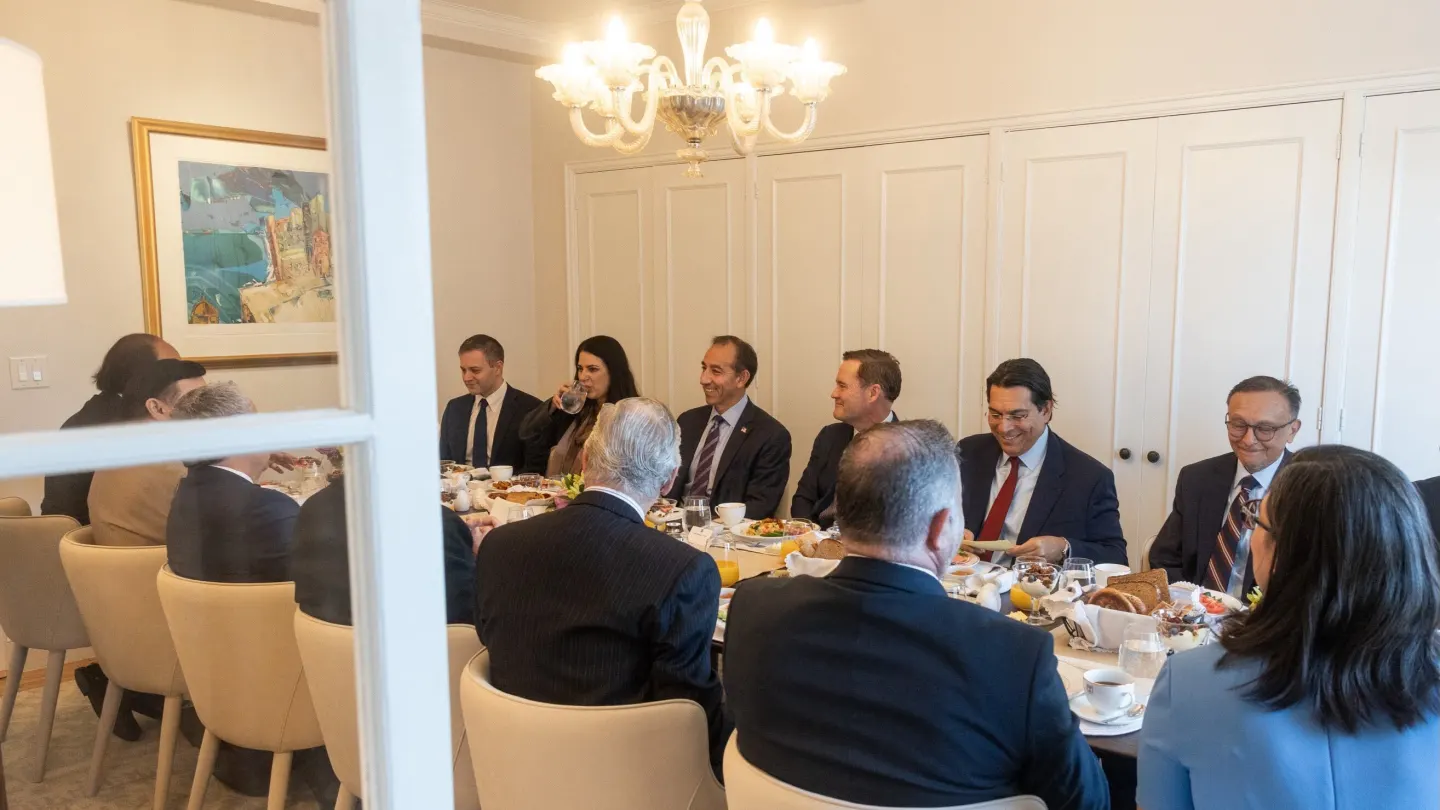
The Democrats’ prospective coalition partners are Gadi Eisenkot’s Yashar, Naftali Bennett’s Beyachad and Avigdor Liberman’s Yisrael Beiteinu. Golan joined their leaders at a Sept. 26 meeting to coordinate election strategy and prospective government policy. However, significant ideological disagreements remain, particularly over the Palestinian question and the composition of a future coalition.
The most immediate dispute concerns the participation of Arab parties. Unlike his prospective partners, Golan openly supports including Mansour Abbas’s Islamist Ra’am in government. “Yes, with Ra’am. Jewish-Arab partnership in government is a positive thing,” he told Israel’s Channel 12 News in October, adding that he would attempt to persuade the other opposition leaders after the election. Bennett, Eisenkot and Liberman have rejected such an arrangement under their current positions.
Golan has also ruled out governing with any party that belonged to Netanyahu’s coalition on Oct. 7, 2023. In September, he went further, declaring that the Democrats would not enter government without legislation preventing Netanyahu from returning to the premiership. The precise legal mechanism has not been specified.
Beyond these conditions, the Democrats are preparing extensive coalition demands. According to September reporting by online news portal Walla, the party is seeking enforceable commitments on judicial and constitutional reforms, determined to avoid what it regards as the left’s limited influence in the previous Bennett-Lapid government. The defense, justice, education, national security and communications ministries are among those Golan has identified as priorities.
Polling published between Oct. 4 and 12 places the Democrats at approximately eight to 10 seats, a substantial recovery from Labor and Meretz’s combined four seats in 2022. Nevertheless, their prospective partners remain short of a parliamentary majority in most surveys.
The election will therefore determine more than whether the Israeli left can rebuild its parliamentary representation. It will also test whether Golan can translate that recovery into meaningful political power without abandoning the more contentious elements of his party’s agenda.