Some of the parties contesting Israel’s Oct. 27 election could help determine the next government without winning a single seat. Their leaders and agendas differ, but they face the same electoral hurdle: securing enough votes to enter the Knesset.
Israel’s electoral threshold stands at 3.25% of valid ballots. Lists falling below it receive no representation, and their votes are excluded when distributing the Knesset’s 120 seats among qualifying parties. Those ballots are not transferred to a rival, but their exclusion increases the relative weight of votes cast for parties that qualify. A small party’s failure can therefore alter the balance between competing political camps.
The 2022 election demonstrated the consequences. Meretz received 3.16% of valid ballots cast and Balad 2.91%, leaving their combined 289,410 voters without representation. Their failure to qualify helped Benjamin Netanyahu’s bloc secure 64 seats despite a near-even division of votes between parties supporting and opposing his return to office.
Beyond the electoral arithmetic, these parties offer alternatives to the larger political organizations and can serve as a protest vote or to bolster a fledgling political movement. Some parties that are now prominent, including Itamar Ben-Gvir’s Otzma Yehudit, spent years contesting elections unsuccessfully before sustained campaigning, growing public recognition, and electoral alliances helped them finally pass the threshold. The upcoming election features several minor parties whose immediate significance lies in their potential to affect the electoral balance, while some may eventually grow into larger political forces.
Blue and White
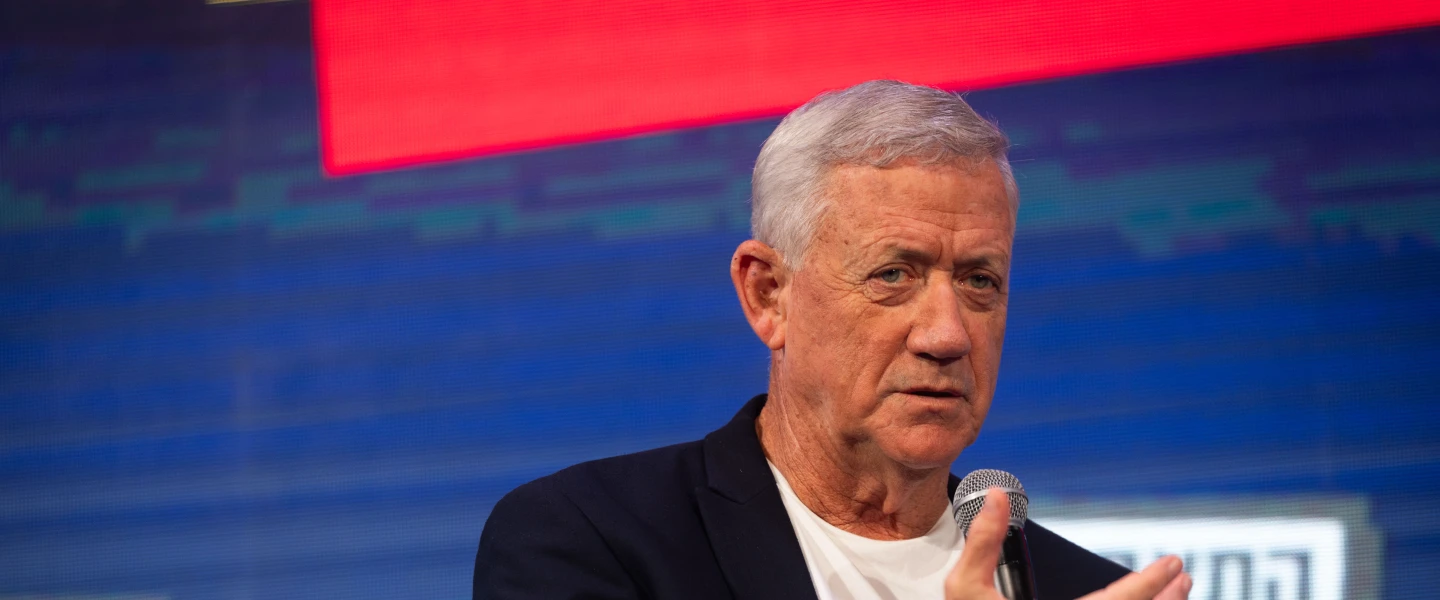
Once a leading contender for the premiership, Benny Gantz announced on Monday night that he was dropping out of the Oct. 27 election. Gantz conceded that he “did not succeed in convincing enough of the people of our path.”
The former IDF chief of staff and defense minister helped establish Blue and White in 2019, joining forces with Yair Lapid and Moshe Ya’alon to challenge Benjamin Netanyahu. Their alliance won 35 seats, matching Likud, and remained its principal competitor through two subsequent elections.
Gantz’s decision to enter a Netanyahu-led unity government in 2020 split that alliance, with Lapid and Ya’alon remaining outside. His reduced party won eight seats in 2021 before joining the National Unity alliance for the following election. After the Oct. 7, 2023, attacks, Gantz again entered Netanyahu’s government, serving in the wartime Cabinet until June 2024.
Further departures left him leading a substantially smaller political organization. Former partner Gadi Eisenkot now heads Yashar, which has attracted several of Gantz’s former colleagues. Blue and White’s slate for the Oct. 27 vote included former Immigrant Absorption Minister Pnina Tamano-Shata, former Beit Shemesh Mayor Aliza Bloch and representatives of military reservists.
Gantz’s program combined a security-focused outlook with proposals for broader military-service obligations, stronger public education and a constitution. He advocates preventing Iran from rebuilding its nuclear capabilities, denying Hamas and Hezbollah the ability to rearm, and preserving Israel’s freedom of military action. Domestically, he links cooperation with the haredi parties to their acceptance of fair enlistment requirements and core educational studies.
That message did not produce sufficient support in published polls. In September, Gantz said he would halt his campaign if he remained below the threshold in the final week. On Oct. 10, he had declared his intention to continue despite polling at 1.9% in the Oct. 8 Maariv poll.

The Haredi Public
The Haredi Public party seeks to change ultra-Orthodox politics from within, combining a commitment to Torah study with greater participation in military service and the workforce. Led by Beit Shemesh Deputy Mayor Moti Leitner, the party launched its national campaign in August as an alternative to Shas and United Torah Judaism, arguing that their leadership has neglected the community’s educational and economic needs.
Its approach to representation departs from established haredi practice. Researcher Dr. Nechumi Yaffe and activist Ziva Glanz occupy third and fourth places on its slate, unlike the exclusively male lists of Shas and UTJ. Rabbi Yehoshua Pfeffer chairs its rabbinic committee but describes the rabbis’ role as advising and guiding elected representatives rather than directing political decisions.
Military service policy illustrates the party’s central distinction from the major haredi parties. The Haredi Public supports draft exemptions for men devoted to full-time Torah study while requiring other eligible haredi men to serve through frameworks compatible with their religious observance. “Boys who are not in full-time Torah study have to be in the army,” Pfeffer told The Media Line. The proposal would therefore preserve a place for full-time scholars without treating yeshivah enrollment alone as sufficient grounds for exemption.
Its education platform is similarly more outward-facing. The party advocates stronger mathematics and English instruction, expanded state-haredi schooling, better teacher training, and action against ethnic (i.e., anti-Sephardi) discrimination in admissions. It also proposes vocational training and employment incentives, presenting improved earning capacity as a means of supporting religious families with less dependence on public assistance.
Beyond communal policy, the party supports lower taxes, reduced regulation and greater market competition. Specific proposals include easing import restrictions and simplifying construction approvals to increase housing supply.
Leitner’s challenge to the haredi establishment does not place him in the anti-Netanyahu camp. He has expressed willingness to join a Netanyahu-led government and favors a right-wing orientation on security and economic policy. National surveys reported in late September and early October nevertheless placed the party below the threshold. An Oct. 14 Maariv poll placed the party at 0.5%. Its electoral task is to turn dissatisfaction with existing haredi representation into support for an independent alternative.

Noam
Noam approaches the election seeking independent representation for a religious-conservative agenda previously advanced through alliances with larger right-wing parties. Founded in 2019 and led by Avi Maoz, the party operates under the spiritual guidance of Rabbi Tzvi Tau, president of the Har Hamor Yeshivah in Jerusalem. Maoz attained its single Knesset seat through the joint Religious Zionist list in 2022.
As a deputy minister in the Prime Minister’s Office, Maoz held responsibilities for Jewish national identity. He resigned in March 2025, saying the government had withheld the authority and resources promised to implement his program, while remaining a Knesset member.
Education remains central to that program, and Maoz seeks the Education Ministry portfolio. Noam proposes stronger teaching of Jewish heritage and Zionism, greater parental control over educational content, and scrutiny of outside organizations operating in schools. Its proposals also include smaller classes, expanded school choice and a starting teacher salary of 12,000 shekels (about $3,900) per month.
These measures accompany a broader effort to strengthen Orthodox authority in public life. Noam supports reinforcing the Chief Rabbinate, protecting Shabbat’s public status and opposing same-sex marriage and adoption. It also advocates allowing the Knesset to override Supreme Court rulings, splitting the attorney general’s responsibilities and expanding ministers’ authority over appointments.
Running independently in this election cycle, the party must now secure the support that its previous electoral alliances supplied. A Channel 12 poll from Oct. 12 had the party at 0.5%. Despite weak polling, Tau instructed activists in September to continue through Election Day, urging them to “Keep going with all your might and do not stop.” That decision preserves Noam’s separate political identity but risks leaving its voters without representation, potentially weakening the right-wing bloc if it draws support away from parties that clear the threshold.
Beyond these three parties, other small lists offer alternatives ranging from Israel First–Green Leaf’s emphasis on civil liberties and cannabis reform to Tzeva Shachor’s uncompromising opposition to haredi conscription. Together, these campaigns reflect demands that their supporters believe larger parties have left unanswered. For some voters, supporting a minor party may be a way to express dissatisfaction with the larger parties or confidence that their preferred list can outperform the polls. For the larger parties, the stakes extend beyond which potential partners enter the Knesset. Regardless of the final outcome, in a close election, even votes that produce no parliamentary representation can help decide the balance of power.