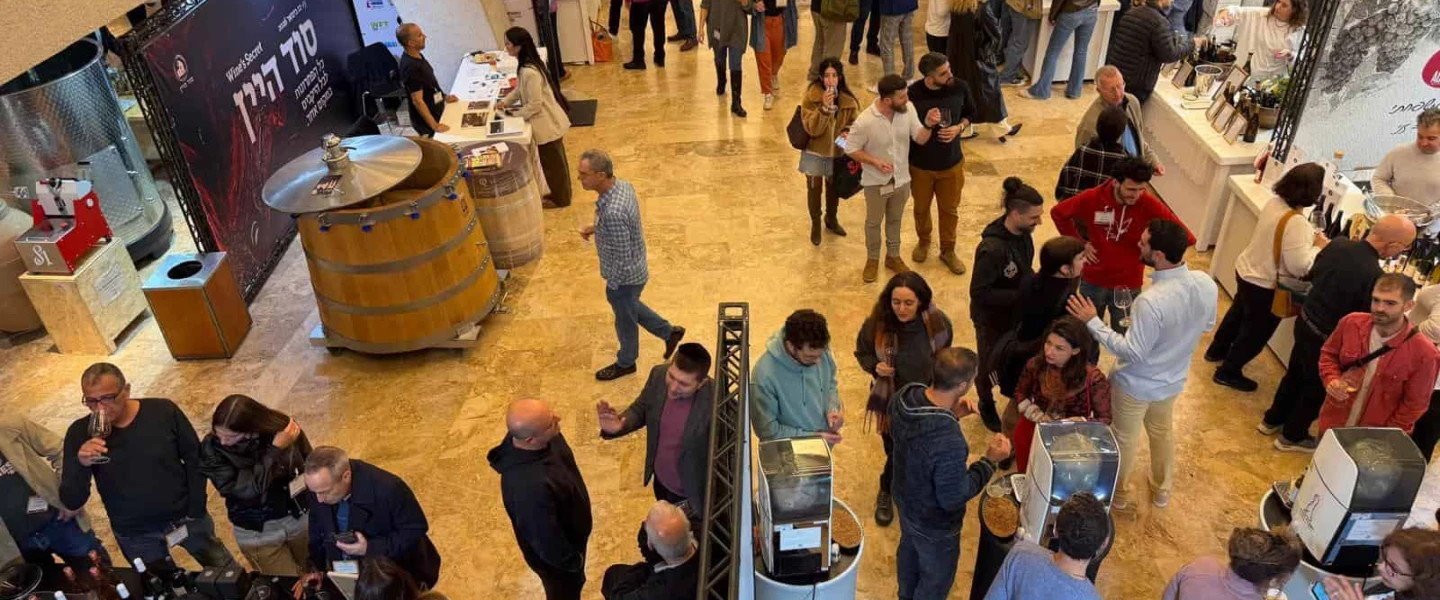
Thousands of Israeli wine lovers jammed into the Culture Palace in Tel Aviv on Jan. 12-13, wine glass in hand, to sniff, sip—or sometimes spit—hundreds of Israeli wines at Sommelier, Israel’s largest annual wine exhibition.
The two-day event was open to industry professionals—winemakers, exporters, bartenders and restaurant employees—during the day and to the general public in the evenings.
While Sommelier has been held annually for the past 23 years, including in 2024 when it was postponed for several months due to the Israel-Hamas war, this year carried a different atmosphere. There was a sense that the war had, at least for now, receded, and that Israel’s small but resilient wine industry was ready for a renewed push.
“The war affected the wine industry in many ways—from a lack of workers due to reserve duty to missile strikes on vineyards,” Adar Ben Shlush, winemaker at Suson Yam, a boutique winery on the outskirts of Jerusalem that has won international prizes, told JNS. “There was also the effect on restaurants, and people felt guilty going out and enjoying themselves during the war.”
That mood has eased with a tenuous, three-month-old ceasefire in place. Israel’s roughly 300 wineries continued producing wine even during the conflict, and today the country produces between 40 and 45 million bottles annually. The largest producers—Barkan, Carmel, Teperberg and the Golan Heights Winery—each bottle millions of units a year, primarily affordable table wines.
At the same time, higher-end wines are gaining popularity, as are visits to wineries themselves. During the past two years of war, as many international airlines reduced or suspended flights to Israel, Israelis found it harder to travel abroad. Some compensated by exploring local wine regions, often pairing winery visits with overnight stays in a zimmer, or bed-and-breakfast.
“Domestic tourism has come back,” Jacob Ner-David, founder and owner of Jezreel Valley Winery on Kibbutz Hanaton in the Galilee, told JNS. “We’re still waiting for Americans to return, but they plan well in advance. On my way here, I saw a Federation mission in the street, so that’s a good thing.”
Jezreel Valley produces about 140,000 bottles a year, and its wines are served in Michelin-starred restaurants in the United Kingdom and France. Before the war, Ner-David said, the winery’s labels appeared on the wine lists of a dozen restaurants abroad. During the conflict, amid anti-Israel sentiment, all but one dropped them. In France, however, Jezreel Valley wines continue to be served in four Michelin-starred restaurants—an achievement by any standard.
Sommelier also provided a platform for smaller wineries to showcase new releases. Among them was Ahat Winery, owned by winemaker Nitzan Twersky, known for her white blends.
“The place of white wine is starting to change,” she said. “Israel is a very hot country, and white wines also go better with Israeli food.”
Another boutique producer, Elul Winery in the Jerusalem Hills, presented an orange wine called Gezer—Hebrew for carrot. Orange wine is made from white grapes fermented with their skins, similar to red wine production. All of Elul’s vineyards are organic.
And a bit of whiskey ...
Israel’s wine world is small enough that Sommelier at times felt like a camp reunion. Winemakers and longtime attendees greeted one another with backslapping hugs and shouted hellos across the hall. As the afternoon wore on and the crowd thickened, so did the noise.
In the evenings, when the exhibition opened to the public, it became even more crowded. The scene reflected Tel Aviv’s eclectic mix: young, stylish attendees—women in high heels, men in black T-shirts—alongside older wine enthusiasts and even a smattering of Haredi Jews.
“We enjoyed the whole experience as it was our first time and had fun mingling with the Tel Avivans,” Diana Pankowski, who made aliyah a decade ago, told JNS. “We enjoyed the wide variety of Israeli wines and were optimistic to see so many new and promising wineries.”
The event also featured stands offering other spirits. Her husband, Jacob, said he was particularly pleased to sample Milk and Honey whisky, which he first tasted shortly after making aliyah.
After a difficult period, Sommelier offered more than just something to sip. It provided a sign that Israel’s wine industry, like the country itself, is determined to move forward, glass raised.