At the outdoor entrance to Jerusalem’s International Convention Center—convenient for the artsy types arriving from Tel Aviv by train—roughly 200 protesters gathered on Dec. 30, with bullhorns and signs to protest the national Israel Film Awards ceremony about to take place inside. The crowd, in non-red carpet attire, consisted largely of filmmakers and aspiring ones.
Students, including from the Bezalel Academy of Arts and Design and the Sam Spiegel Film and Television School, took turns on the bullhorn, passionately shouting phrases such as, “You’re ruining my future,” “Film is the pride of Israel” and “This ceremony is bullying.”
Some mildly harassed guests at the entrance fence with chants of “Shame on you” as security personnel scanned their digital invitations.
Who are Israeli cinema’s gatekeepers?
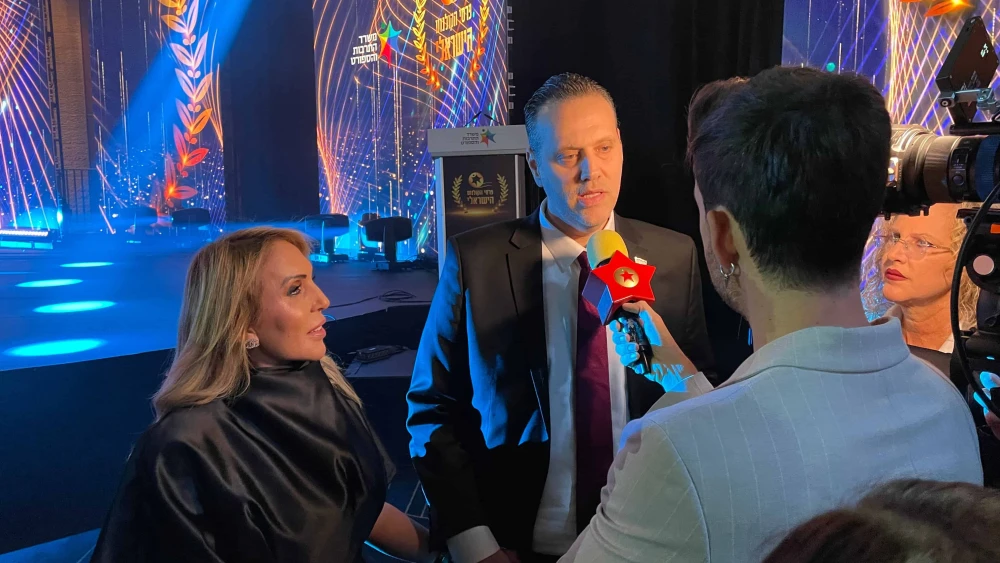
The Israel Film Awards were founded by Culture and Sports Minister Miki Zohar as an alternative to the Ophir Awards, the long-standing ceremony run by the Israel Academy of Film and Television, which last year awarded Best Film to “The Sea,” making it Israel’s automatic official submission to the Academy Awards. The film tells the story of a 12-year-old Palestinian boy who dreams of seeing the Mediterranean.
Viewing the Ophir Awards as representing a politically insular and elitist film community, Zohar withdrew state funding from the ceremony in September 2025, diverting the funds to the new, state-sponsored event, reportedly costing an estimated 2.5 million shekels, nearly $800,000.
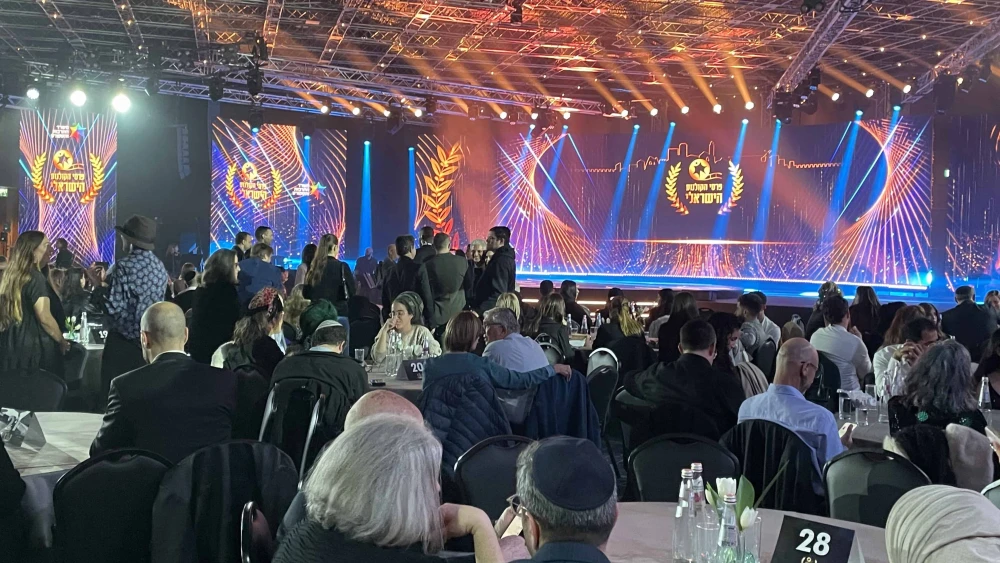
“The time has come to liberate cinema from politics and creators from the need to appease all those who do not seek the best interests of the State of Israel and the IDF soldiers,” Zohar said in his opening remarks to a crowd inside matching the size of protesters outside.
The audience included a visibly religious contingent not typically associated with Israel’s film industry. “Under my watch, Israeli taxpayers’ money will not fund pro-Palestinian works that earn applause abroad at the expense of IDF soldiers, or that promote antisemitic blood libels against Israel and its citizens,” Zohar said.
Winners received 100,000 shekels (more than $30,000) each. They included films such as “Burning Man” and “Pink Lady,” among other titles largely unfamiliar to international audiences and the Jewish Diaspora, unlike beloved Israeli television shows such as “Fauda” and “Shtisel.”
The event itself ran like a typical awards show, with actress Moran Atias serving as emcee and a live orchestral ensemble accompanying the musical interludes. But the ceremony nearly collapsed when several nominees threatened to boycott the new awards, amid reports that some industry insiders would blacklist anyone who participated.
In response, Zohar threatened to cancel public film funding—estimated at roughly 130 million shekels (about $41 million) annually. The boycott threat dissipated shortly thereafter.
As the ceremony began, protesters moved their chants to a balcony overlooking a red carpet marked more by controversy than celebration.
“They’re protesting our ability to say what we want in our films,” said actress and filmmaker Hilla Mann, among the protesters. “Even if a film tells a Palestinian story, it has a right to exist.”
Torn between their own country and the world
Filmmakers would not be formally forbidden from telling pro-Palestinian narratives; they just would be less likely to receive public funds. For many, this distinction is only academic: Without public support, these movies simply won’t get made, at least not by Israelis.
Unlike in the United States, Israel’s film industry is not dictated by the free market. Much like their European counterparts, Israelis rely heavily on public funding. With a small domestic market, public support is often existential.
Israel’s Film Law, passed in 1999 and implemented in the early 2000s, established the Israel Film Council to ensure funding for Israeli cinema as a means of shaping national culture. But without a large consumer base or marketing budgets capable of catapulting films to popular success, international film festivals have often served as the primary road to recognition, legitimacy and prestige.
These festivals, however, have long been associated with narratives critical of Israel and its policies toward the Palestinians. A recent example is “No Other Land,” a European-funded Israeli-Palestinian documentary on a Palestinian village in Judea and Samaria that won last year’s Oscar for Best Documentary Feature Film.
Since Oct. 7, 2023, out of psychological, creative and national necessity, the Israeli film industry has shifted organically toward productions dealing with the traumatic fallout and portrayal of that horrific day. At the same time, it finds itself squeezed from both sides: tightened government purse strings at home and a global arthouse market increasingly hostile to Israeli narratives.
“In these circuits, it so happens that very specific stories were picked up over the years—stories aligned with how Israel is perceived by this milieu,” said Tchelet Semel, a producer who served as cultural attaché at Israel’s Los Angeles Consulate as well as the director of film and TV in North America for Israel’s Foreign Ministry. “So Israeli filmmakers are in a very tough spot right now—between a rock and a hard place.”
Aligning Israeli cinema more closely with the Israeli government, particularly the Netanyahu government, critics argue, risks further isolating filmmakers internationally.
“It will make our lives more difficult on the international scene,” said Danna Stern, a former senior executive at YES television in Israel, now a Berlin-based producer whose recent works include the “Supernova” documentary about themusic festival massacre on Oct. 7, 2023. “It automatically equates content with politics.”
The Israeli model versus the American model
Lior Sasson, managing director of the Israeli Film and TV Academy between 2021 and 2024, does not believe Zohar’s reforms are necessarily intended to enforce ideological conformity so much as to encourage films with broader popular appeal—comedies and feel-good dramas. Part of Zohar’s reforms includes prioritizing projects with the potential for commercial success.
Subsidizing ticket sales, Sasson said, would be a more market-friendly way to reward films that resonate with audiences.
“When you have Israeli Film Day (Yom HaKolnoa), and tickets cost 10 shekels, the cinemas are packed,” he said. At full theater price, he added, Israeli films simply can’t compete with mass-marketed Hollywood blockbusters or Disney releases.
Ultimately, the ceremony went ahead without major disruptions. A few winners sent proxies to accept their awards, citing illness as an excuse for their absence. Even those who had considered boycotting the ceremony struck a conciliatory tone, offering diplomatic rebukes of Zohar. Many called for national unity, expressed gratitude to the IDF, and voiced hope for the return of the last hostage.
Veteran filmmaker Shula Spiegel, a multiple Ophir laureate and producer on Apple TV’s series titled “Tehran,” now in its third season, received the Lifetime Achievement Award.
“Mr. Minister, good art depends on the freedom to create,” she said in her acceptance speech. “Creators need a safety net that cannot coexist with the fear that their freedom to think, to speak, to express—and yes, also to criticize—will be taken away from them.”
Several interviewees drew comparisons to U.S. President Donald Trump. As president, Trump repeatedly proposed eliminating the National Endowment for the Arts, long associated with left-leaning causes, though Congress ultimately preserved its funding. More recently, under the leadership of Richard Grenell, the Kennedy Center has moved away from explicitly “woke” programming in favor of classic repertoire and pro-American and Christian-friendly works.
“It’s a big compliment if my work is seen like Donald Trump’s,” Zohar told JNS before the ceremony. “We’re trying to create something for all the people of Israel, not just a small part of the country. This ceremony will represent everyone, regardless of political opinion.”
This article is the first in a series exploring the impact of Oct. 7, 2023, on Israel’s entertainment industry.
Part 2: How Oct. 7 changed Israeli television and cinema
Part 3: As films take sides, Berlinale insists on apolitical posture
Part 4: In a taxi, the Berlinale’s ‘Where To?’ offers a roadmap for peace