For about seven months in 2025, the Gaza Humanitarian Foundation was perhaps the most controversial organization on the planet.
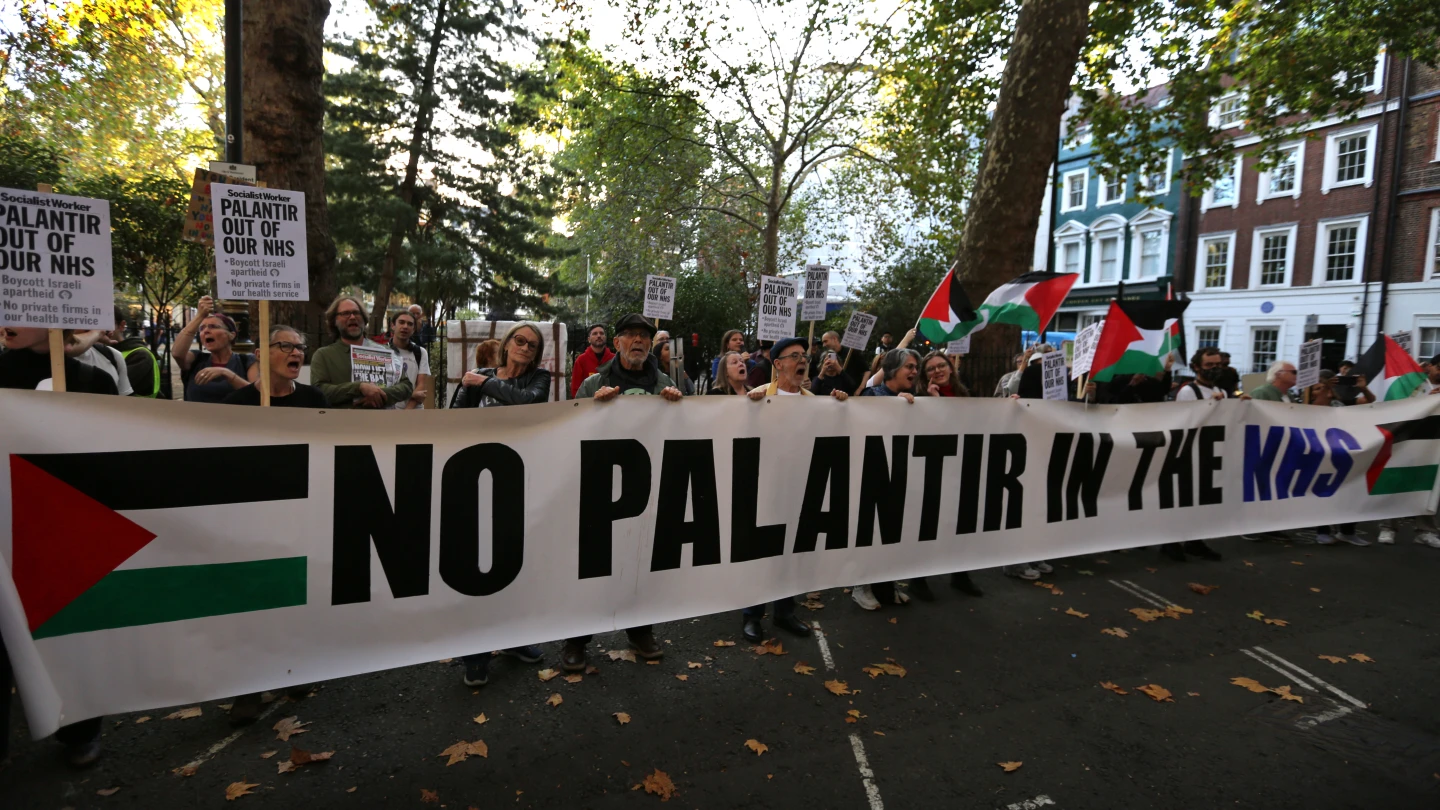
U.N. experts called for its “immediate dismantling,” and Doctors without Borders said it was a “deadly scheme” engaged in the “orchestrated killing” of civilians and other aid groups, including the main U.N. Palestinian relief organization, UNRWA, which refused to work with it.
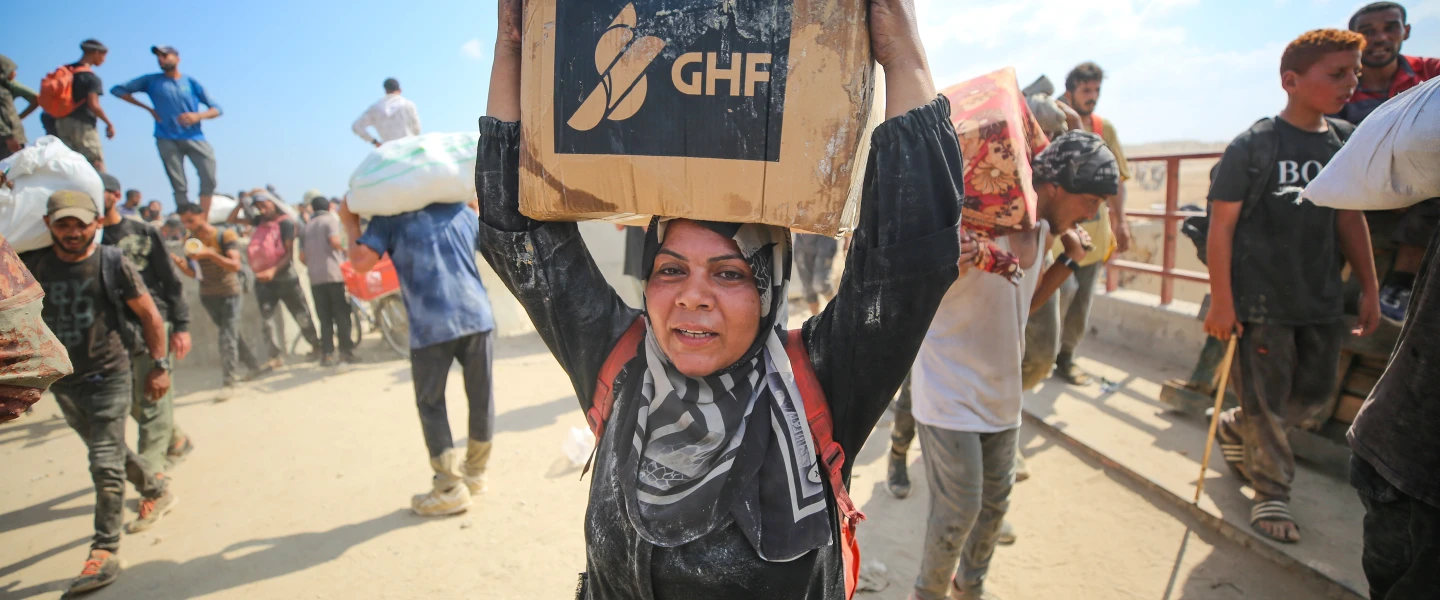
During those seven months, the foundation said that it distributed 187 million meals to Gazans at a time when the United Nations and other aid groups claimed that Gaza was on the verge of famine. During that same period, Hamas, other terrorist groups and street mobs in Gaza looted about 90% of U.N. aid, according to the global body’s statistics.
Then, in November, the foundation essentially disappeared. It suddenly announced that it was ending its emergency aid mission, and today, its website no longer exists.
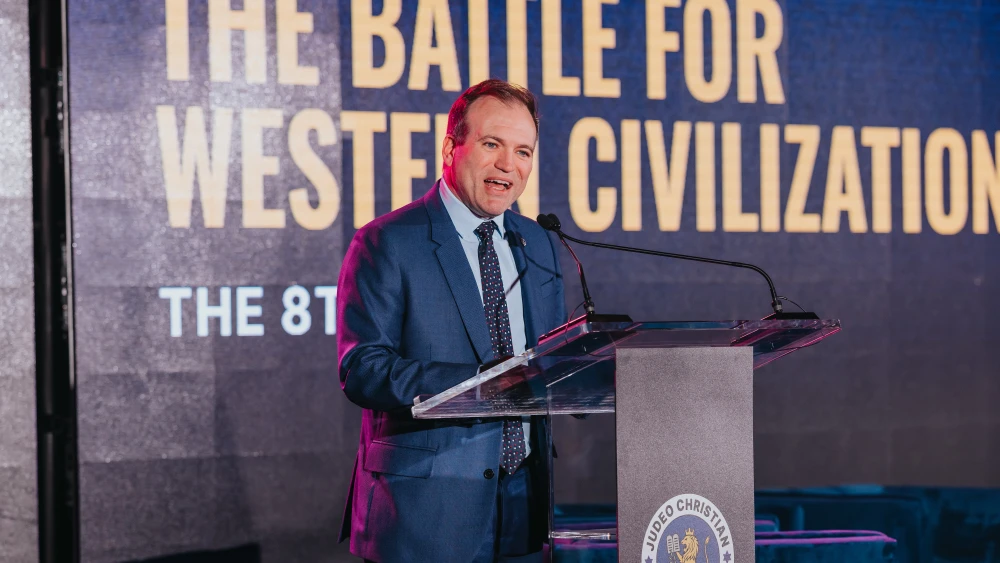
JNS sat down last week with the former head of the foundation, Rev. Johnnie Moore, on the sidelines of the Judeo Christian Zionist Congress in Nashville to talk about what the Gaza Humanitarian Foundation was, what it wasn’t, and how a pastor from South Carolina ended up at the center of a global maelstrom about the morality of feeding the hungry.
“Other than the political leaders, as an evangelical Christian, I probably did more to help the people of Gaza than any Christian on the planet over that period of time and paid a lot of consequences for it,” the soft-spoken Moore told JNS.
When the foundation was created, media reports frequently described it as backed by the U.S. and Israeli governments. The New York Times reported in May, shortly after the foundation began operating, that it was “an Israeli brainchild, first proposed by Israeli officials.”
Moore said that the foundation’s relationship with Israel was “no different than the other organizations.”
“We interacted with COGAT like everybody else,” Moore said, of the Coordinator of Government Activities in the Territories, part of the Israeli Defense Ministry.
“The difference was Israel knew that we were taking the diversion of food by Hamas seriously, and the U.N. wasn’t,” he said.
Moore told JNS that the Biden administration and the U.S. government created the first plan for the foundation.
“This was a U.S. plan. U.S. people. Americans on the ground. It was a U.S. operation,” he said. “Some Biden people will admit that, and others won’t.”
In a 2025 article in Foreign Affairs, Jacob Lew, the Biden administration’s ambassador to Israel, and David Satterfield, its special envoy for Middle East humanitarian issues, wrote that the “original conception” for GHF came as part of a negotiation between Israel and the United Arab Emirates.”
The two didn’t specify whose idea the foundation was.
“The GHF was meant to operate in a postwar Gaza, in which international forces would maintain security, and governance would come from a transitional administration with Palestinian and international participation,” they wrote. “Aid was to be distributed to civilians directly in secure zones.”
“Instead, the GHF operation started under very different wartime conditions,” they added.
Moore told JNS that the fundamental issue and reason that GHF went into operation was due to the fact that Hamas was stealing aid, creating an additional obstacle to peace negotiations.
“Everyone recognized the problem that Hamas was able to totally control once the food got in the Gaza Strip—not just food, everything else—as soon as it got in the Gaza Strip,” he said.
“Hamas was the one that was actually militarizing aid, and it was prolonging the war, it was causing more suffering with the people of Gaza,” Moore told JNS. “It was a deep moral crisis for the whole humanitarian community, especially the United Nations, which no one was willing to admit.”
From nearly the moment that the war began in October 2023, the Biden administration grew sensitive to claims from the United Nations and aid groups that Israel was not allowing a sufficient amount of humanitarian assistance into Gaza.
In October 2024, Secretary of Defense Lloyd Austin and Secretary of State Antony Blinken sent a 30-day ultimatum to Israel demanding that it increase aid deliveries or risk an arms embargo.
The Biden administration also tried to alleviate the humanitarian crisis by novel means, including air-dropping pallets of aid into Gaza and an aborted attempt to install a temporary, $230 million floating pier on the Gaza coast that injured dozens of U.S. servicemen, killed one American and two Israeli soldiers for limited humanitarian benefit.
Moore said newly elected U.S. President Donald Trump helped put the foundation’s plan, which had been in the works for more than a year, into operation in May 2025 amid an impasse between aid groups and the Israeli government about conditions for delivering aid into the Hamas-controlled enclave.

“It all began on May 5, when the president said in the White House that he was angry that Hamas was stealing the food from the people of Gaza, and the U.S. was going to do something about it,” Moore said.
The first executive director of the foundation, Jake Wood, resigned days later, saying that he agreed with the criticism from the United Nations and international aid groups that “it is not possible to implement this plan while also strictly adhering to the humanitarian principles of humanity, neutrality, impartiality and independence.”
“The day GHF was launched, the U.N. went after the founding CEO. He resigned,” Moore told JNS. “It’s just the worst, and I don’t judge him after the attacks I received from the U.N. I lived under 24/7 protection for months this summer.” His house was graffitied, he added.
“I don’t judge him for resigning, but when he did resign, I got a call from the State Department asking if I would do it,” Moore said. “I said, ‘Of course, I’ll do it.’ How can I not do it? And so I stepped into the role.”
The foundation named Moore its executive chairman on June 3.
Moore was frequently criticized during his tenure for lacking the experience of executives of incumbent aid groups like the Red Cross and UNRWA, a charge that he denied.
“I’ve done stuff in 100 countries,” Moore said, citing his work as an advocate for persecuted minorities around the world with a focus on Christians in the Middle East.
“I’ve met with all the heads of state in the region on multiple occasions,” he told JNS. “I know my way around the Middle East.”
GHF too was criticized for not having a track record of delivering humanitarian aid and for not “abiding by humanitarian principles,” criticism that Moore said ignored what the foundation was actually doing.

“The whole system was designed by veterans of the humanitarian community,” he said. “The guy who ran it on the ground was a 30-year veteran of USAID and other agencies. The veterans on the ground spent time in every single war zone for the last 25 years. These are incredibly, incredibly experienced people.”
“It was all designed from the ground up to comply with these standards, but these other organizations were the ones that were not neutral,” he said. “They were the ones that were partial, and they were politicizing everything.”
The scale of the problems at the United Nations and at UNRWA, which Israel has accused of employing members of Hamas, was revealed to Moore when U.N. Secretary-General António Guterres refused to condemn Hamas’s killing of Palestinian GHF aid workers in June.
“Where my naïveté crashed was that day early on, when Hamas killed 12 of our local Gazans,” Moore told JNS. “These were Gazan volunteers that were helping us feed their own people, and Hamas killed 12 of them and piled them out of the Nasser Hospital, controlled by the World Health Organization and Doctors Without Borders, and doctors didn’t even try to help them.”
“I wrote a letter to the secretary-general of the United Nations, and I asked the secretary-general if he would condemn Hamas for killing our 12 Gazan aid workers, and the secretary-general of the United Nations refused to do it,” Moore said.
“That was the moment when I realized all of these organizations say they exist for one purpose, but they’re actually politicians under a different name,” he said. “I realized this is something between a mafia and a system corrupt on a scale that was just incomprehensible, and then they tried to shut us down.”
The foundation tried to reach accommodations with the United Nations, established aid organizations and skeptical governments, given that GHF was delivering assistance at a time when other aid was being diverted by Hamas or unable to enter the Gaza Strip, according to Moore.
“The U.N. eventually—they didn’t like the criticism—they started asking for secret meetings, and we eventually made a deal that if they stopped calling for us to be shut down, we would ease up the criticism on them,” Moore told JNS.

Moore said that Germany was one of the countries that was most entrenched in its opposition to GHF, despite the lack of alternatives for delivering aid into Gaza.
“The German government’s policy was that they only worked with UNRWA,” he said. “So I met with the German government.”
The Israeli government legally banned UNRWA from operating in the country in January 2025, and Congress withdrew U.S. funding to UNRWA in 2024. In April 2025, the U.S. Department of Justice said that UNRWA was not immune from U.S. criminal prosecution or civil suits, a position previously maintained by the Biden administration.
Moore said that “the Germans were totally inflexible” despite these signs that UNRWA was no longer a viable aid mechanism.
“Your policy is you only work with UNRWA, but the Israelis aren’t, and we aren’t,” Moore said. “So is your policy that people are going to starve?”
“There’s a level of irrationality to the whole thing,” he said. “All these countries I met with, I said, ‘Look, we’ll change. We’ll adapt. Tell us what to do, we’ll do it.’ But everybody was captured.”
Moore stayed on as head of GHF for four months after initially agreeing to a three-month stint before a planned move to become the vice chancellor of Pepperdine University’s Washington, D.C., campus in October 2025.
In January of this year, he was named to the board of the Anti-Defamation League, another organization that is no stranger to controversies on the right and the left.
“I have one rule when it comes to disagreements in the Jewish community, which is I stay out of them,” Moore said. “There are times and places for disagreement, but when it comes to addressing antisemitism like we haven’t seen in the United States in a very, very long time, it’s an all-hands-on-deck moment.”
Though he was not involved in the decision to shutter GHF, Moore said he disagreed with the notion that the aid group had been “shut down.”
“I would say GHF completed its mission,” he said. “There are lessons that were learned from GHF, including by the U.N. system, that are integrated into the current system.”
“GHF in the end was—I don’t want to say it was the fall guy—but it took the arrows, the same way I was taking arrows for GHF, so that the professionals on the ground could do the work,” Moore told JNS. “GHF took the arrows to force the system to be improved.”
There were “1,000 things we could have done differently” at GHF, Moore said. He wishes that the organization had had more resources and the cooperation of the United Nations, but ultimately its task was to serve the civilian population of Gaza.
“The sin of GHF was, in our sincerity to feed people, we shined a very uncomfortable light on a very corrupt system, which they were not expecting, and it put them on the defensive, and they decided to try to kill us,” Moore said. “Because we were sincere about wanting to feed people, we decided we’re not going to die. We’re just going to show up every day.”
“In hindsight, more and more, it’s quite clear who was on the side of truth,” Moore said.