Newsletter
Newsletter Support JNS

IDF seizes 120 kilos of cocaine and marijuana on the border with Egypt

A day earlier, Israeli forces seized a large amount of narcotics, as well as ammunition, near the Lebanese border.

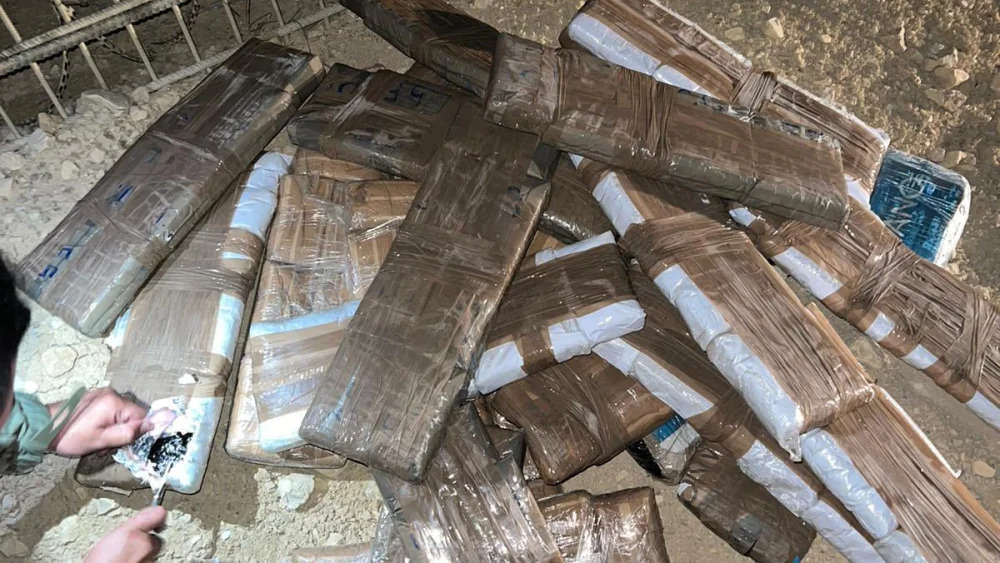
Israeli forces seized some 120 kilograms of cocaine and marijuana on the border with Egypt, Nov. 21, 2021. Source: Israel Defense Forces.

Israeli forces on Saturday seized narcotics worth tens of millions of shekels on the Egyptian border, the Israeli military reported.

Military spotters identified a number of suspicious individuals along the border on Saturday night, the army said in a statement. The troops scrambled to the scene seized some 120 kilograms of cocaine and marijuana.

It was the second major drug bust by the Israel Defense Forces in as many days.

On Friday, Israeli forces spotted a suspicious individual near Metula in northern Israel. The suspect managed to flee, but the troops seized 41 packages of narcotics, as well as a store of ammunition, worth hundreds of thousands of shekels, according to the IDF.
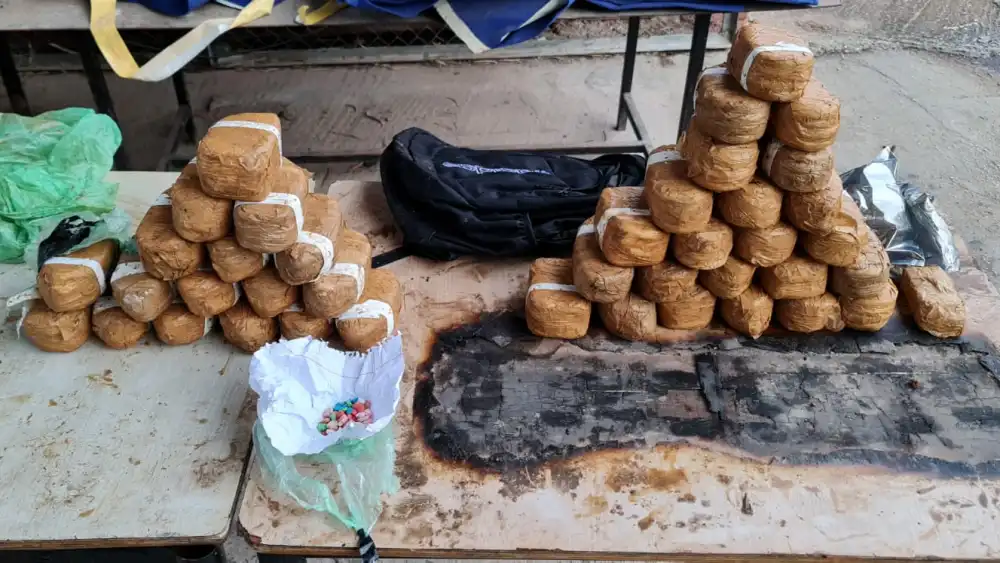
Confiscated drugs and ammunition seized by the IDF on the Lebanon border, Nov. 20, 2021 (IDF Spokesperson's Unit)
Confiscated drugs and ammunition seized by the IDF on the Lebanon border, Nov. 20, 2021 (IDF Spokesperson’s Unit)

All of the seized material was handed over to the Israel Police. IDF and police forces are still searching for the suspect.

On Nov. 11, Israeli security forces thwarted an attempt to smuggle weapons across the border from Jordan. One suspect was apprehended and 15 weapons were seized, the IDF said in a statement at the times.

IDF
The United States and Israel commenced formal negotiations to replace the expiring defense memorandum with a new framework.
“The dehumanization of Jews in rhetoric, through the use of violence, attacking Jews at synagogue or yeshiva—too many people think it’s okay,” said Rep. Mike Lawler.
CENTCOM stated that the strikes are “in response to Iran’s unwarranted and continued aggression.”
“The graduating student’s display included imagery that many people associate with antisemitism and that caused pain and concern,” a university spokesman told JNS.
“If CAIR does not meet the criteria for designation, it is difficult to understand why specially designated global terrorist sanctions exist,” stated the groups led by the Middle East Forum.
Haji Najibullah, who led Taliban fighters in Afghanistan’s Wardak Province, admitted to helping kidnap a New York Times reporter and supporting attacks that killed three American soldiers.