The European Union has condemned Israel’s strikes on Hezbollah in Lebanon in recent weeks, suggesting they were violations of the ceasefire agreement reached last year.
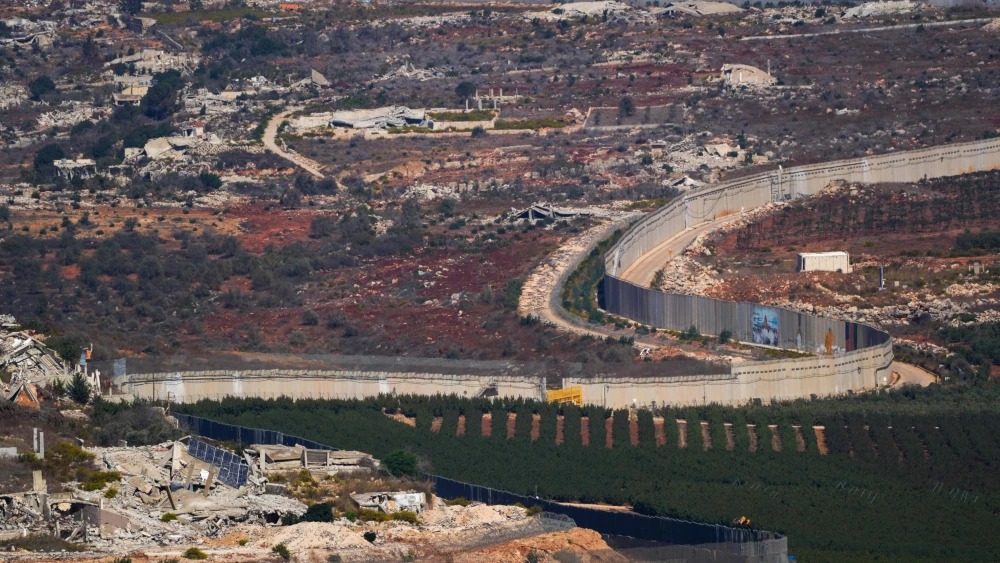
The calls by E.U. foreign affairs spokesman Anouar el Anouni and others for Israel to stop its strikes—which Jerusalem calls “enforcement” of the ceasefire due to Hezbollah violations—followed threats that the terrorist group would end the armistice.
The United States, which has not condemned Israel’s strikes, appears to be leading a firmer policy on Lebanon than the European Union. Following last week’s posting of Michel Issa, a Christian Lebanese-American businessman, as U.S. ambassador to Lebanon, Washington officials reportedly cancelled all meetings with Lebanese Army Commander Rodolph Haykal during his visit to Washington, in an apparent signal of discontent over the pace of his army’s takeover of southern Lebanon to edge out Hezbollah.
Yet, if Israel doesn’t strike Hezbollah, what does the E.U. expect or propose that it do about Hezbollah’s well-documented attempts to rebuild its arsenal for targeting and killing Israeli civilians?
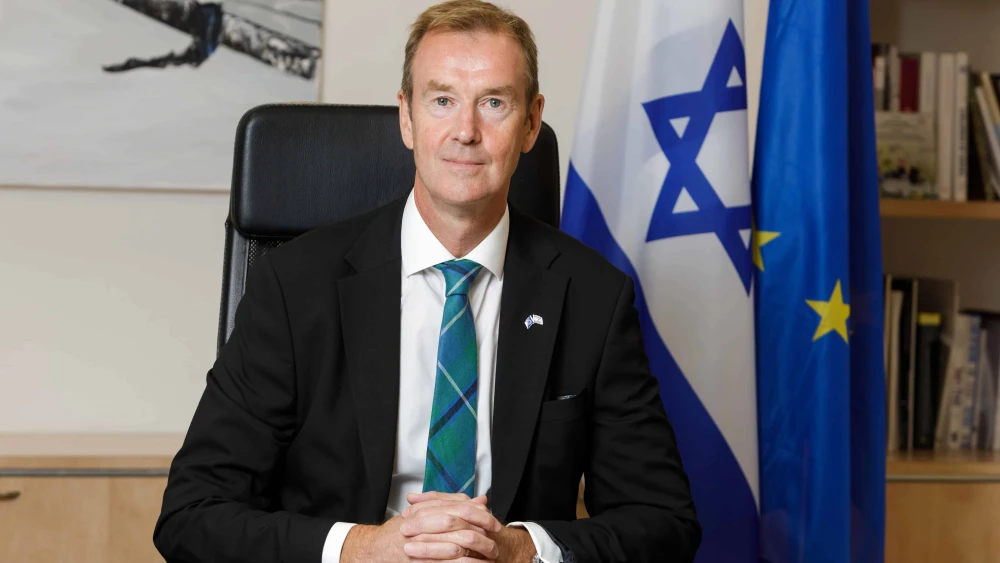
To answer this question and others, JNS sat down for a Q&A with the E.U.’s new ambassador to Israel, Michael Mann, a dual citizen of the United Kingdom and Germany, who assumed the post in September.
Q: Ambassador Mann, we know what the E.U. does not want Israel to do. What would the E.U. propose Israel do, as we see Hezbollah replenish its arsenal to kill as many of us as possible?
A: What happened in Lebanon last year—the damage done to Hezbollah by Israel—opened up the path to hopefully reinforcing the institutions of the Lebanese state and its territorial integrity. So we want all sides to respect the ceasefire and deal with any security concerns through the monitoring mechanism set up for that purpose. We urge all parties to not take up arms.
Q: You mentioned hope, but Hezbollah is taking up arms and violating the ceasefire. So is there any game plan that the E.U. has in mind that would meet Israelis’ security concerns? Should they just accept that?
A: The Lebanese government has said it will assert full state control over all arms and restore the presence of the Lebanese Armed Forces throughout Lebanon. The E.U.’s basic starting position is to prefer a diplomatic path and mediation rather than military options. We are against any violation of the agreement from any party. And we do recognize Israel’s security concerns in this context. Israel’s security is non-negotiable to us. But any security concerns should be addressed by making full use of the monitoring mechanism established in the framework of the ceasefire agreement.
Q: OK, and if the situation continues? Does the E.U. envisage any sanctions if the violations and the strikes continue?
A: No sanctions are being discussed in the Lebanese context. Not against Israel, not against Lebanon. In terms of Hezbollah, its military wing is already designated under the E.U. sanctions regime to combat terrorism, so we already apply sanctions to Hezbollah.
Q: To its military wing.
A: Yes, to its military wing. Measures we took back in 2013 comprise the freezing of assets and also prohibit making economic and financial resources directly or indirectly available to the military wing of Hezbollah. Also, the E.U. is not party to the ceasefire agreement in Lebanon, so naturally, it’s not something the E.U. would impose sanctions over.
Q: In recent days we’ve heard reports of an E.U. plan to train police officers to serve in Gaza. Can you elaborate on this subject?
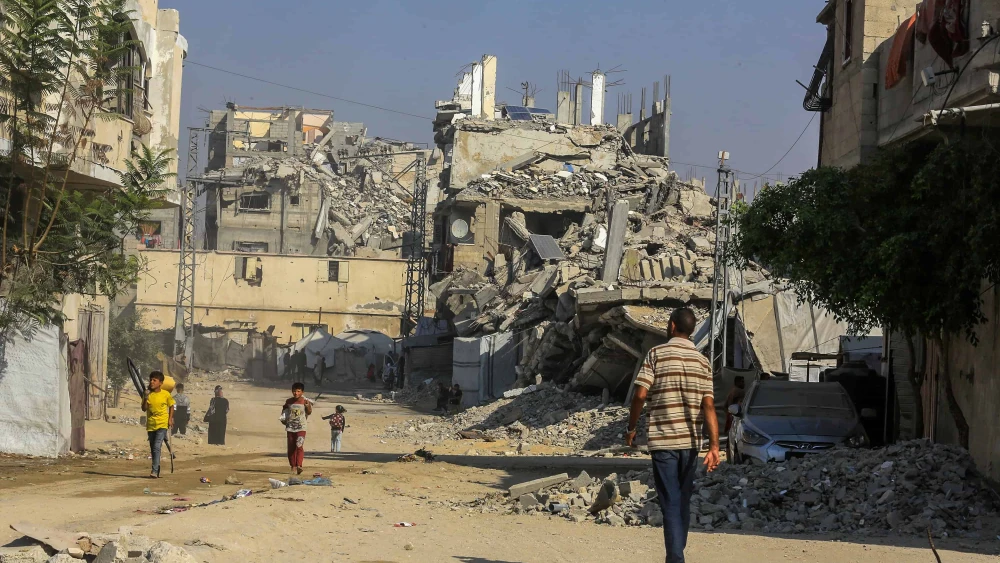
A: Yes, the plan to train 3,000 police officers for Gaza exists. We already have this program for training police in the West Bank, as part of justice reform in the Palestinian Authority, but we’re now suggesting to train some 3,000 Palestinian officers from and for Gaza.
Q: How will they be vetted?
A: We wouldn’t be vetting them. Potential police officers have to be vetted by Israel and the U.S., potentially in one of the countries of the region, and only those vetted and deemed suitable would be working in Gaza.
Q: Finally, we have at least two E.U. member states, Spain and Ireland, that have joined the genocide allegations against Israel at the International Court of Justice. How does the E.U. view this fact?
A: It is not an E.U. position; there is no E.U. position on this. The E.U. has 27 member states; they have sovereignty and individual views. The E.U. supports the international legal system and leaves this issue to the court.
Q: So these two E.U. member states accused Israel of genocide, and the E.U. doesn’t have a position about the allegation or the fact they made it?
A: The E.U. doesn’t have a view on this. Individual states may, but the E.U. does not. Establishing whether international crimes, including genocide, have been committed is the competence of national courts and international tribunals.