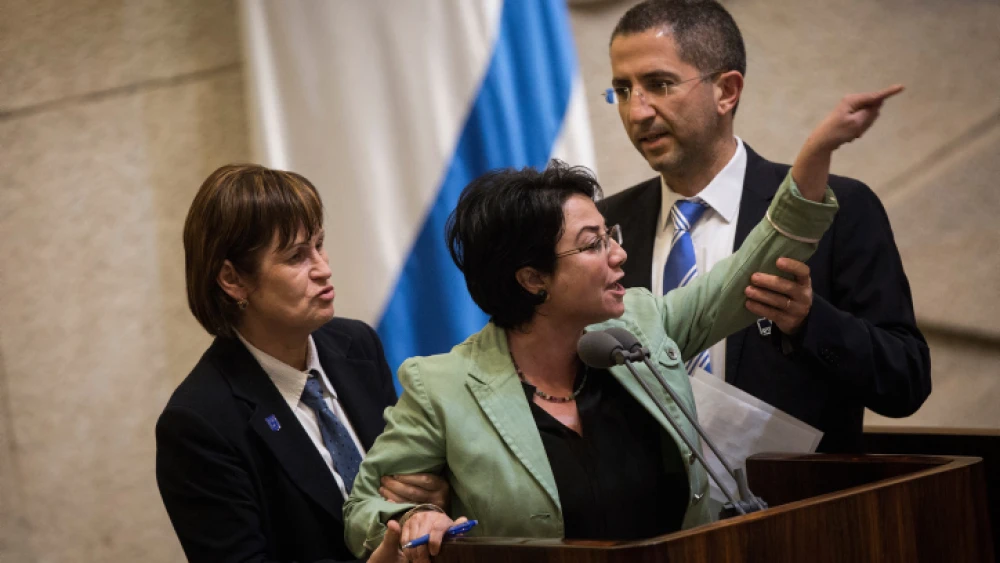
Former Balad Knesset member Hanin Zoabi has been summoned for a hearing before a final decision is made on whether she will be indicted on corruption charges, Israeli Attorney General Avichai Mandelblit announced on Thursday.
Zoabi is suspected of committing fraud, aggravated forgery, using forged documents, falsifying corporate documents, attempting to receive illicit benefits and money laundering pertaining to donations amounting to millions of shekels during the 2013 Knesset and municipal election campaigns.
The case focuses on funds Balad received in 2013, which were allegedly presented to the State Comptroller’s Office as donations from hundreds of private citizens.
The State Comptroller’s Office routinely audits all political parties to ensure that no violations of campaign financing laws take place.
Police suspect that during 2013 the party received some NIS 3.2 million ($920,000) from sources that have yet to be ascertained and that were fraudulently declared to be private donations, using more than 1,300 forged documents.
Zoabi is the prime suspect in the case, while 35 other Balad officials, including former director general Awad Hussein, the party’s legal counsel Riyad Mahamid, and central committee members Murad Hadad and Azaldin Badran, are suspected of fraud and lighter criminal offenses.
According to a Justice Ministry statement, Zoabi and other Balad officials perpetrated a “systematic and meticulously planned act of fraud.”
Balad said in a statement, “We adamantly reject the accusations against the party, against former MK Hanin Zoabi, and against other party members for the so-called 2013 election affair. The investigation into the matter ended three years ago. The State Prosecutor’s Office waited all this time only to announce its decisions on the eve of the elections, so as to damage Balad, the Joint Arab List and Arab voters.”
The party further added that the case is “an administrative matter that is under the purview of the state comptroller, which is how similar issues found among other parties have been handled. Making this into a criminal matter is a vindictive step indicative of political persecution, as clearly indicated by the timing of this announcement.”
This article first appeared in Israel Hayom.