


Israel’s Ministerial Committee for Legislation on Sunday approved a bill to create special tribunals to try Gazans accused of participating in the Oct. 7, 2023 Hamas-led invasion of southern Israel.
The bill, proposed by Knesset members Simcha Rothman (Religious Zionism) and Yulia Malinovsky (Yisrael Beiteinu), defines the acts perpetrated on Oct. 7, 2023 as genocidal and as crimes against humanity, requiring a unique judicial framework separate from Israel’s regular court system.
The legislation would create a 15-judge tribunal, composed of top Israeli jurists and international legal experts, with the authority to deviate from standard criminal procedures to expedite trials, protect victims and accommodate high-profile, multi-defendant cases. Appeals would be heard by all 15 judges.
A steering committee comprising appointees from the ministries of justice, defense and foreign affairs would determine who is indicted, based on national security and diplomatic considerations, according to the document, titled “A Bill for the Incarceration and Prosecution of Perpetrators of the Events of Oct. 7.” Its two authors submitted it in November.
The bill also proposes an expanded definition of “unlawful combatant,” which would allow prolonged detention of suspects via orders from the Israel Defense Forces chief of staff and the approval of a district court judge. This would modify the 2002 Unlawful Combatants Law to apply to those allegedly involved in the Oct. 7 attack.
The Justice Ministry’s legal department opposed the bill, calling it a breach of basic principles of criminal law and legal process, Ma’ariv reported.
The bill’s advancement to a first reading in the Knesset is contingent on approval from the ministers of justice and defense, as well as the National Security Council. Rothman told JNS the reading could come as early as Wednesday.
“The next step, God willing, is on Wednesday, for this bill to pass the preliminary reading in the Knesset and then move forward to legislation,” he said. “If we prosecute these Nukhba terrorists through the regular justice system with the preliminary procedures, it could take four to five years,” he said, using the Arabic-language nickname for Hamas’s special forces terrorists. “That’s why I think we need this special court,” he added.
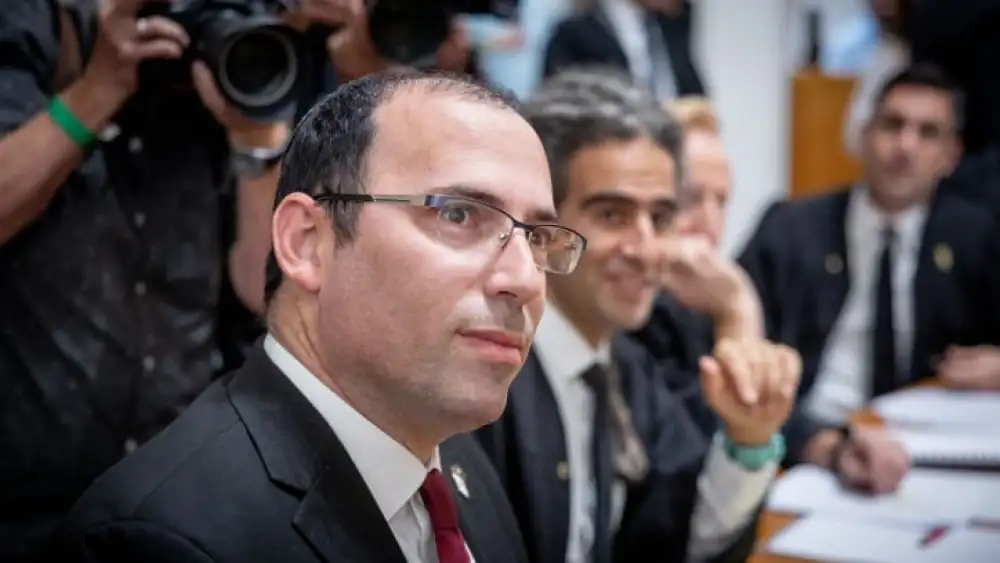
Worldwide, “when events of this magnitude, genocidal attacks happen, the perpetrators are tried in special tribunals, it’s a common practice, you cannot expect the regular system to deal with this kind of event,” he said.
The is especially true, Rothman added, amid “lies about Israel committing genocide when it’s operating in accordance with international law.”
The bill would help “remind the world of what a genocidal, vicious attack on helpless civilians looks like.”
The precise makeup of the tribunals will be determined during the legislation process, Rothman said, noting that it was co-authored by an opposition lawmaker as a sign of joint action. “On Oct. 7, Hamas attacked all of us, and we should legislate this together,” Rothman said. However, he is prepared for compromise. “I don’t need this to be perfect in my eyes, but I need it to be accepted in a wide consensus,” he added.



