Israel’s charge d’affaires in Turkey, Roey Gilad, on Wednesday confirmed reports that Turkey is granting passports to members of the Hamas terrorist organization.
“Some are in the process, some already got [the documents], but we are talking about around a dozen,” said Gilad, according to Reuters.
Israel would present the Turkish government with proof, said Gilad, but does not have high hopes that Ankara will do anything about it.
“We have already one document that we will present to the [Turkish] government in copy. Judging by the last experience we had by presenting a well-based portfolio to the government ... and getting no reply, I must say I don’t have high hopes that something will be done this time,” said Gilad.
The Israeli diplomat said that Israel told Turkey last year that Hamas was involved in “terror-related activity” in Istanbul, but that Turkey did not do anything about it.
Turkish President Recep Tayyip Erdoğan has been pursuing an aggressive Islamist foreign policy, boosting Muslim Brotherhood movements across the globe and backing Sunni jihadist groups in Syria.
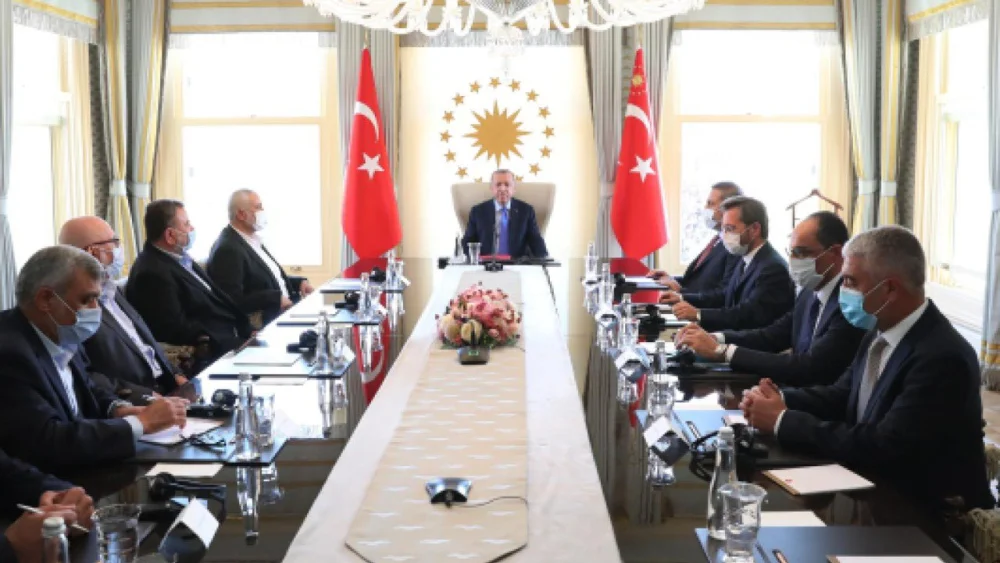
The Trump administration slammed Erdoğan on Tuesday for a meeting with Hamas leadership on Saturday.
“The United States strongly objects to Turkish President Erdoğan hosting two Hamas leaders in Istanbul on Aug. 22,” said U.S. State Department spokesperson Morgan Ortagus in a statement.