


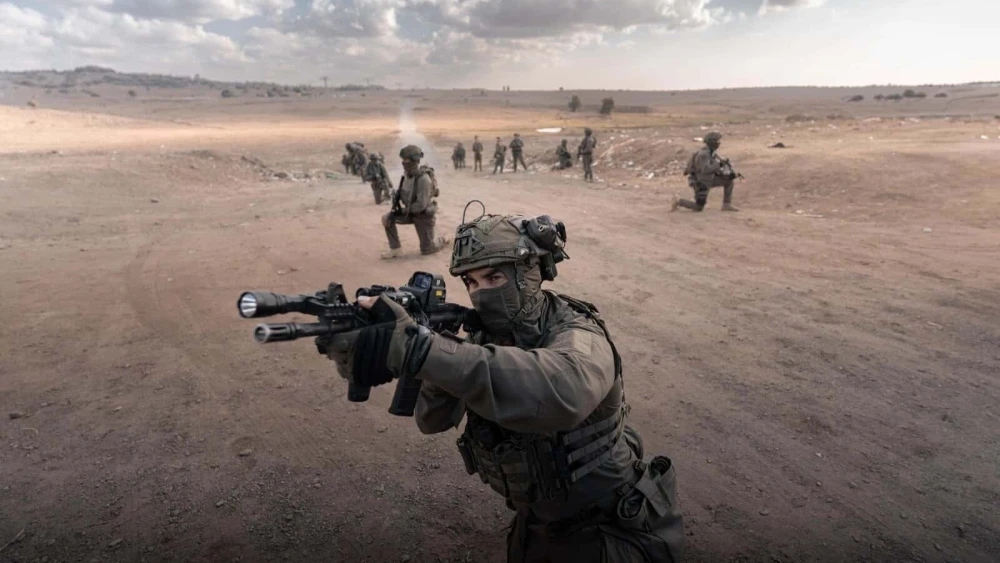
As part of its efforts to implement lessons drawn from Hamas’s Oct. 7, 2023, invasion of southern Israel, the Israel Defense Forces recently announced the establishment of a rapid-response reserve unit for the Golan Heights.
These lessons remain relevant no matter whom Israel finds itself facing on the other side of the border in the wake of the Assad regime’s collapse.
On Dec. 3, the IDF Spokesperson’s Unit announced the inauguration of the Pereh (Hebrew for “Wild”) unit in the Golan Heights, which will operate under the Golan Division (formally known as the 210th “Bashan” Formation).
The new unit was established as part of the process of improving the operational response in the Golan Heights, with an emphasis on creating a division-level force multiplier. The unit will consist of highly trained reservists, described as reconnaissance and special unit members who are locals.
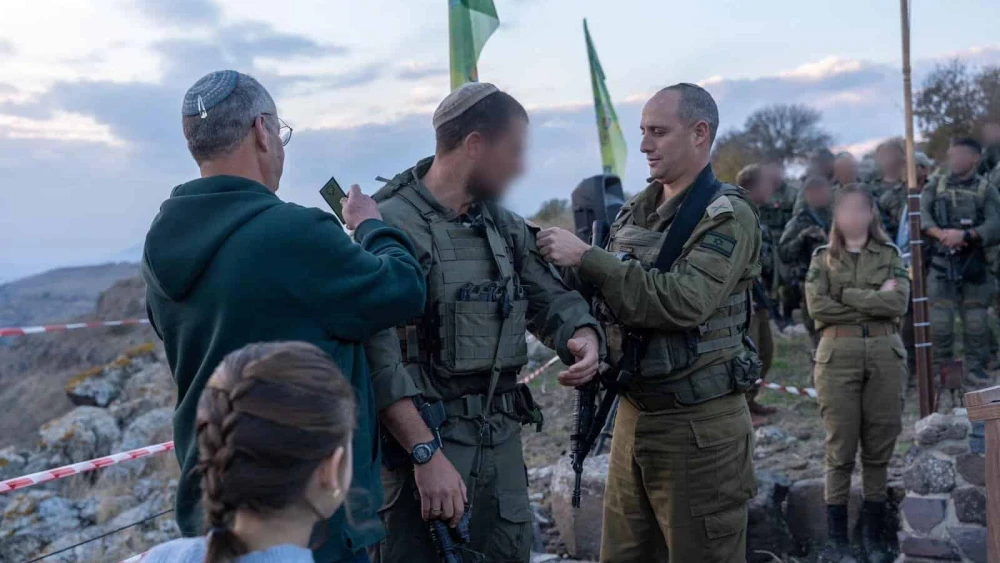
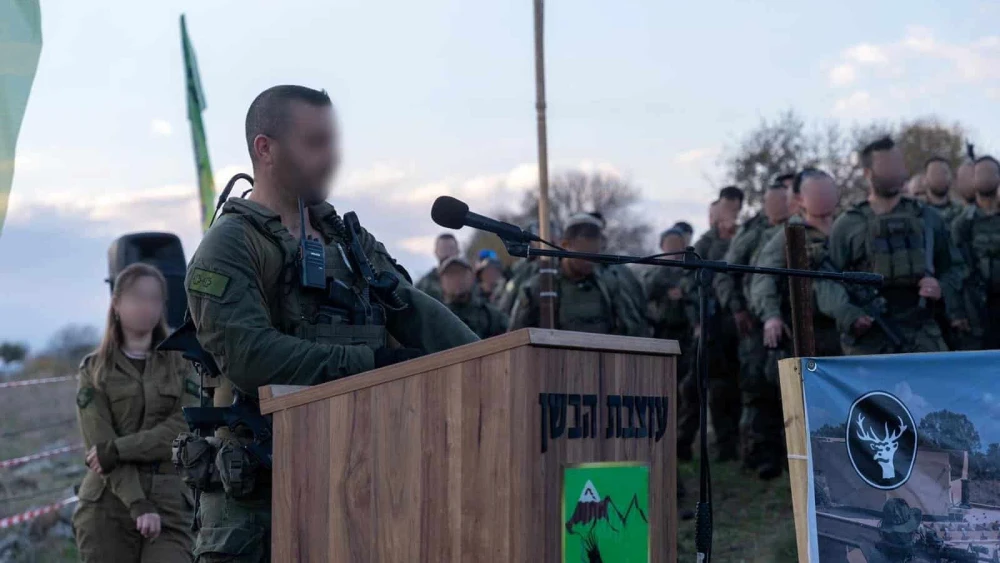
Brig. Gen. Yair Palai, commander of the 210th Formation, said the Pereh Unit was born out of a need for the Golan Heights to grow stronger and deal with any challenge. The unit’s commander, identified only as Lt. Col. (res.) Y., added that enlisted personnel joined the unit over the past three months.
Brig. Gen. (res.) Yossi Kuperwasser, a senior research fellow at Misgav Institute for National Security, and former head of the Research and Assessment Division of the IDF’s Military Intelligence Directorate, told JNS on Dec. 7 that “the logic standing behind the establishment of the Pereh Unit is to enable significant improvement of the area defense in the Golan Heights, on the basis of quality reserve personnel residing in the region, and this under the area division [Division 210].”
According to Kuperwasser, “This is part of the drawing of lessons from the October 7 attack, during which there was a significant shortage of skilled fighters mainly in the first hours, and the transition from routine to emergency was very problematic.”
Kuperwasser added, “The latest developments in Syria sharpen even more so the importance of the establishment of the unit, because they teach how much the aspects of the threat can change rapidly. It seems as if there is a need to set up similar units along the other borders, as part of the needed change in the security concept, and for improving the defense component.”
Thwart every threat
On Dec. 6, the IDF Spokesperson’s Unit stated that in light of an assessment of the situation that has been taking place since the previous day at the General Staff and in the Northern Command, and “in light of the developments in the internal fighting in Syria, it was decided on reinforcement of air and ground forces in the Golan Heights sector.
“IDF forces are deployed in the border area and have increased readiness according to the various scenarios,” the military said. The army vowed that it would “not allow a threat close to Israel’s border, and would act to thwart every threat on the citizens of the State of Israel.”
Lt. Col. (res.) Doron Avital, a former commander of the elite General Staff Reconnaissance Unit (Sayeret Matkal), told JNS on Dec. 6 that changes in Syria demanded new organizational responses. “In light of the developments in the north—the civil war in Syria—it is clear that one must organize in a different and more effective way along the Golan Heights line,” Avital said.
He assessed that “the Lebanon and Syria arenas are interwoven together—here, the weakening of Hezbollah is immediately translated into strengthening of the rebels [in Syria] and the axis opposing Iran.”
According to Avital, “In light of this, to build forces and units that have intimate regional familiarity—topographical landscape—regional familiarity with the enemy—is a good idea,” adding that the Golan Division’s Alpinist Unit along the Hermon line and Mount Dov operate on this basis, and that a unit should do the same within the greater Golan Heights area.
Last month, the IDF confirmed that it is constructing new fortifications on the Golan Heights, on the border with Syria. According to the IDF Spokesperson’s Unit, Israel has been “working to establish a barrier on Israeli territory exclusively to thwart a possible terrorist invasion and protect the security of Israel’s borders.”
The most disturbing scenario involves a surprise attack by Iranian-backed Shi’ite terrorist militias on Israeli communities and IDF bases in the Israeli Golan Heights, similar to the Oct. 7, 2023, assault and to what Hezbollah had planned to do in the Galilee from Lebanon. Thousands of enemy operatives could attempt to infiltrate Israeli territory using fast vehicles, breach the border and kill civilians.



