Newsletter
Newsletter Support JNS

Israel Police use drones to track coronavirus patients

Law enforcement is using drones across the country to “find and confirm that people with the coronavirus are in isolation,” says police spokesman Micky Rosenfeld.

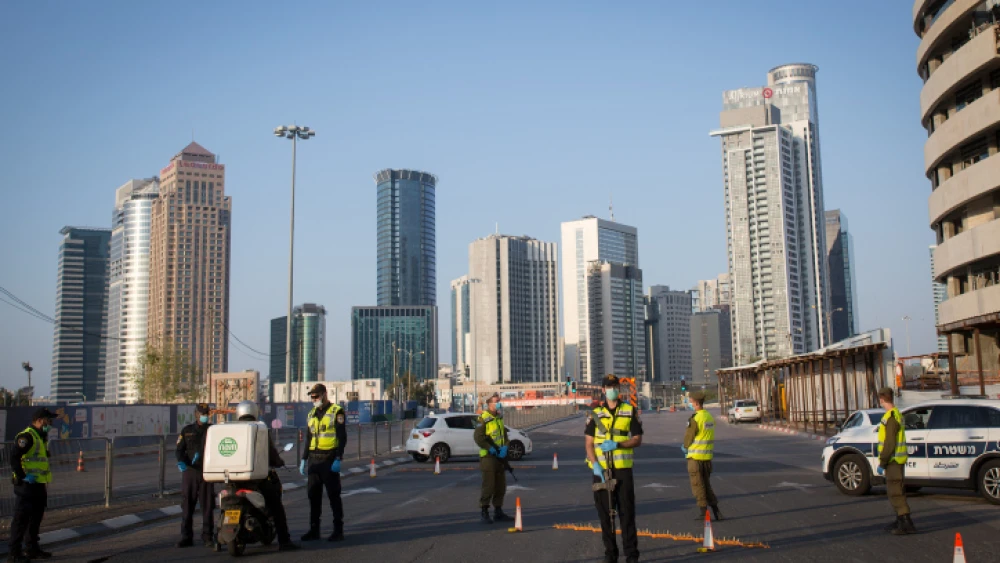
Israeli police officers and soldiers close Begin Highway near the entrance to Ramat Gan in Tel Aviv, on April 14, 2020. Photo by Miriam Alster/Flash90.

As part of the country’s efforts to stop the spread of the coronavirus pandemic, Israel Police are using drones to keep tabs on coronavirus patients under home quarantine.

Israel is also using advanced surveillance methods, previously only used in anti-terror operations, to trace the movements of people who test positive for coronavirus and to identify those they may have come in contact with.

Police spokesman Micky Rosenfeld says law enforcement is using drones across the country to “find and confirm that people with the coronavirus are in isolation,” according to the AP.

“Units on the ground are using drones in [high-rise] buildings and making visual confirmation,” he said.

Other countries, such as Italy, France, Spain, India and China, are also using drones to enforce lockdowns, according to the report. New York City and New Jersey have used them to enforce social-distancing regulations.

Drones have been used in Kuwait and the United Arab Emirates to order people to stay in their homes, and in Saudi Arabia to take people’s temperatures, according to the report.

In a draft report delivered to the U.S. president, the commission also called for improved religious accommodations for U.S. service members.
Salah Salem Sarsour, accused of concealing Israeli military court convictions on immigration forms, argued his detention was part of a Trump admin effort to target the pro-Palestinian movement.
CENTCOM stated that the strikes targeted missile, drone and radar facilities after the Islamic Republic attacked a cargo ship in the Strait of Hormuz, calling the assault a violation of the ceasefire.
Now that the primaries are over, “we hope that everyone will come together and be united,” Christine Quinn, chair of the executive committee of the New York State Democratic Party, told JNS.
An Iranian official warned on Friday that the safety of ships passing through the Strait of Hormuz without Iran’s permission “cannot be guaranteed.”
“We have put the train back on the tracks and going in the right direction,” said Yechiel Leiter, Israeli ambassador in Washington. “Final destination? Peace between our two countries.”
Benny Gantz, JNS editor-in-chief Jonathan S. Tobin, Gilad Erdan, Mosab Hassan Yousef, Nissim Black and leading voices in security, diplomacy, media, law and Jewish communal affairs headline the summit’s third day in Jerusalem.