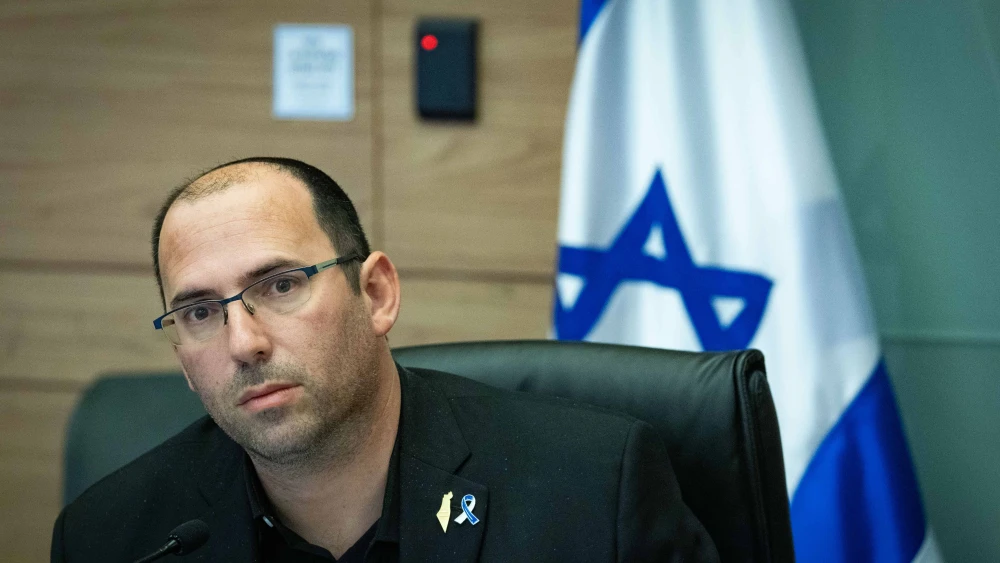
As Israel heads into an election year, Religious Zionism Party lawmaker Simcha Rothman reflected on the key initiatives he has led during his tenure in the Knesset.
As chair of the Land of Israel Caucus, Rothman spearheaded two major resolutions that received the backing of two-thirds of Knesset members, both addressing Israel’s future in Judea and Samaria. The first, passed in July 2024, rejected the establishment of a Palestinian state, while the second, in July 2025, called for the application of Israeli sovereignty to the territories.
“Since the founding of the State of Israel and since Israel took control of Judea and Samaria in 1967, the Knesset had never expressed what it wanted to see happen in those areas. For the first time, it did,” Rothman said. “The resolution enjoyed broad consensus from both coalition and opposition lawmakers—the prime minister signed it, and the defense minister voted in favor.”
Rothman also highlighted his early legislative achievement in the 25th Knesset, when he advanced a law canceling the 2005 disengagement from northern Samaria.
“The reason Jewish communities are once again living in northern Samaria—in Homesh, and soon, with God’s help, in Ganim, Kadim, Sanur and perhaps more—is because of the legislation we passed in this Knesset, 18 years after the disengagement,” he said.
“Religious Zionism as a party has done more for Judea and Samaria than was ever done before,” Rothman added.
Addressing whether these steps could affect the expansion of the Abraham Accords or the future of existing agreements, Rothman said the outcome depends entirely on the good will of the parties involved.
“It might endanger it, or it might not,” he said. “But I do believe that President [Donald] Trump, who promotes peace through strength and came to the Knesset to speak about the God of Abraham, Isaac and Jacob, understands the need to recognize that the land given to Abraham, Isaac and Jacob—Judea and Samaria—should be in the hands of the Jewish people.”

On the question of advancing Trump’s peace plan for Gaza, which has stalled since its implementation on Oct. 10, Rothman said he considers it irrelevant as long as Hamas refuses to disarm.
“Hamas leaders say it openly—it’s not even a question,” he said. “What Israel wants, what the United States wants, or what other nations in the region want is irrelevant, because Hamas shows no sign of leaving Gaza or giving up its weapons.”
“My hope is for the elimination of Hamas,” Rothman said. “I hope the other parties to the agreement will come to understand that Israel was never the problem and will move forward, refusing to let Hamas hold them hostage while it refuses to disarm and surrender.”
Before Oct. 7, 2023, and throughout his term, Rothman’s main focus was the reform of Israel’s justice system.
“We appointed, for the first time in Israel’s history, an ombudsman who is not a close associate of the chief justice, but was instead selected by an independent committee. He is already in office and doing an excellent job,” said Rothman.
He noted several other key reforms, including changes to the judicial selection process and the passage of the so-called reasonableness bill.
“We changed how judges are appointed, removing the Supreme Court justices’ veto power over new appointments,” he explained. “We also passed the reasonableness bill, which means the court can no longer overturn government decisions simply because it disagrees with them. Judicial intervention must be based on legislation or human rights; otherwise, it’s undemocratic and undermines the separation of powers.”

Rothman also cited legislation preventing the Israel Bar Association from collecting lawyers’ fees for political use.
“We are now in the process of legislating a separation of powers concerning government legal advisers—currently one of the strongest unelected entities in the Western world,” he said. “These advisers, who wield enormous power without public accountability, must be subject to change.”
At every step, “our guiding principle is to ensure the justice system serves the Israeli public—not itself,” Rothman emphasized. “We legislate responsibly to correct the system’s flaws because that is our duty.”
Under Rothman’s chairmanship, the Constitution, Law and Justice Committee has passed more than 90 laws in the past two years.
Discussing the Iranian threat, Rothman said that deterrence alone is not sufficient when dealing with enemies driven by a genocidal ideology, such as Iran and Islamic Jihad.
“We should be aiming to eliminate the threat,” Rothman said. “As long as jihadists have the capability to fire weapons, they will use them against us. We must prevent them from ever having the ability to harm us.”

Rothman, who was a frequent target of anti-government protesters before Oct. 7, said that the demonstrations that have rocked Israel over the past two years have always been politically motivated.
“It was never about the hostages,” he said. “First it was about judicial reform, before that it was COVID-19, and before that, rising prices. It’s the same people protesting—making Israelis’ lives miserable and at times even endangering national security—all for their political cause.”
Regarding the upcoming elections, Rothman said any political party must always view elections as a possible outcome.
“We hope—and will do everything we can—for this government to remain in power for as long as the law allows, meaning another year, but not at any cost,” he said.
“If the coalition isn’t functioning, if we can’t pass a budget or legislate effectively, then what’s the point? We need to ensure the coalition remains stable but also true to our ideological path,” he added.
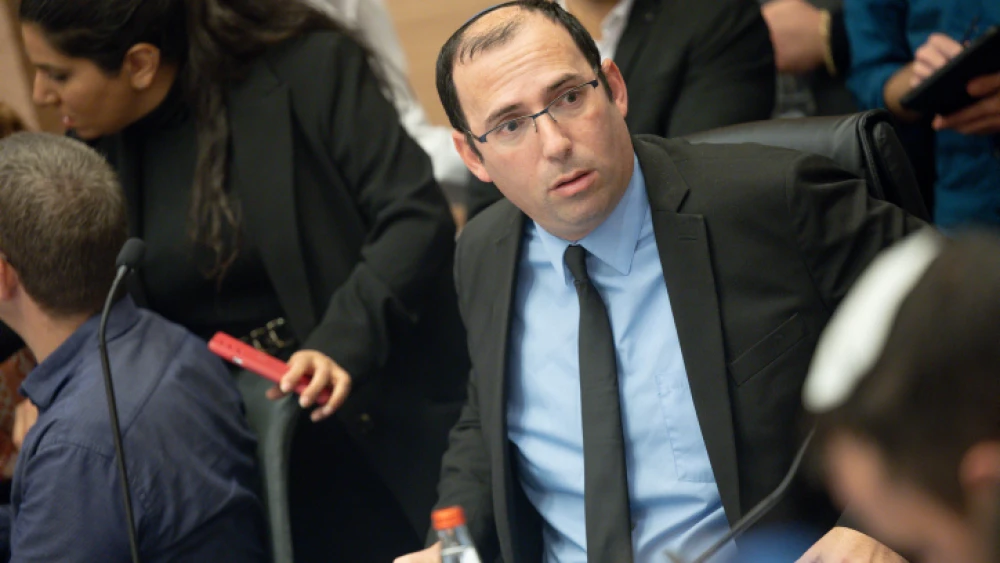
Rothman stressed the importance of maintaining a strong right-wing coalition at the helm.
“Our enemies have been planning to destroy us for more than a century, yet only in the past two years has Israel succeeded in eliminating long-standing threats,” he said. “The closest comparison is the 1967 Six-Day War—and even then, Israel lost a quarter of its air force to achieve victory. This time, we didn’t lose a single plane in our attacks on Iran.”
“We’ve witnessed miracles—in Iran, in Lebanon against Hezbollah, in Gaza and in Judea and Samaria,” Rothman continued. “Even in Yemen, the United States lost more aircraft than Israel, and we don’t even have aircraft carriers.”
He attributed Israel’s recent military successes to Israeli Prime Minister Benjamin Netanyahu’s leadership and the backing of a strong national, traditional coalition.
“It wouldn’t have happened otherwise,” Rothman said. “In the past, Netanyahu wanted to strike Iran but couldn’t. We saw who led the Shin Bet [Israel Security Agency] over the past 20 years and how the organization evolved compared to its leadership today and their values.”
“It works because we have a strong coalition that knows how to work together,” he concluded. “I hope it will earn the public’s trust for another four years—and I want Religious Zionism to grow into a larger party. We’ve proven we can deliver with the mandate the public has given us.”