


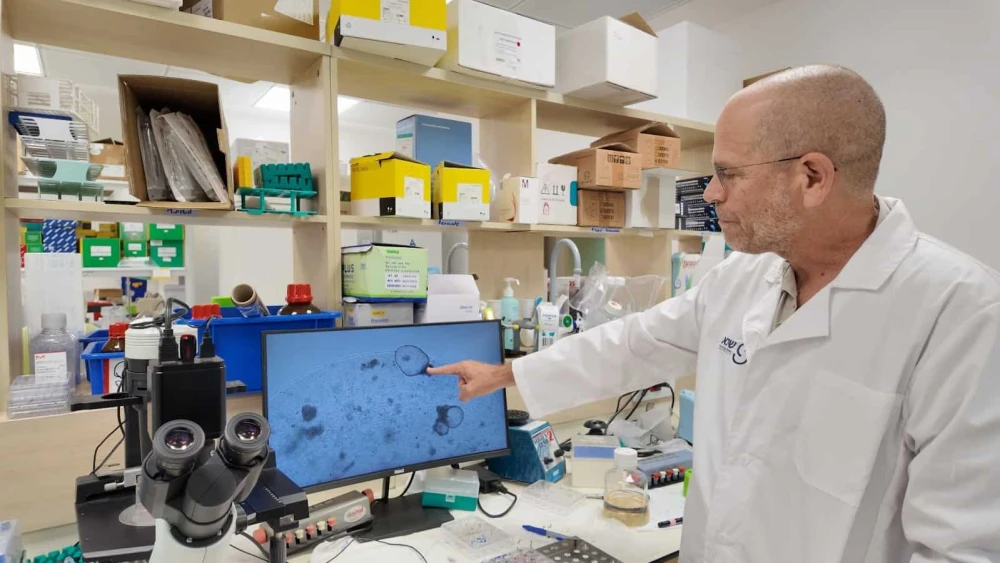
In a world first, Israeli researchers have grown human kidney organoids - a synthetic 3D organ culture -- from tissue stem cells in the laboratory mirroring human fetal kidney development, Tel Aviv University announced on Wednesday.
The breakthrough allowing researchers to see the development of the organ in real time, isolate genes that lead to birth defects, develop new treatments in the field of regenerative medicine, and test the toxicity of drugs during pregnancy on fetal kidneys.
The synthetic kidney grew and developed over six months, surpassing previous kidney organoids that broke down within four weeks, researchers said.
It is also the purest kidney organoid ever developed, with no cross contamination from stem cell development.
The research was carried out with Sheba Medical Center at Tel Hashomer in Ramat Gan.

“Growing the fetal kidney structures can shed new light on biological processes in general, and in particular on processes that lead to kidney diseases,” said Professor Benjamin Dekel, director of the Pediatric Nephrology Unit and the Stem Cell Research Institute at Sheba Medical Center’s Safra Children’s Hospital.
“We now have an essentially inexhaustible source of different kidney cells, and a better understanding of their different roles in kidney development and function,” Dekel said.
The study was published in The EMBO Journal.
The development highlights Israel’s strength as a leader in medical and scientific research.
“In recent years, we have witnessed attempts to distance Israel from international centers of influence, and scientific successes of this kind are a reminder that our contribution to medical and scientific research is significant and unquestionable,” said Professor Dror Harats, chairman of the Sheba Research Authority.


