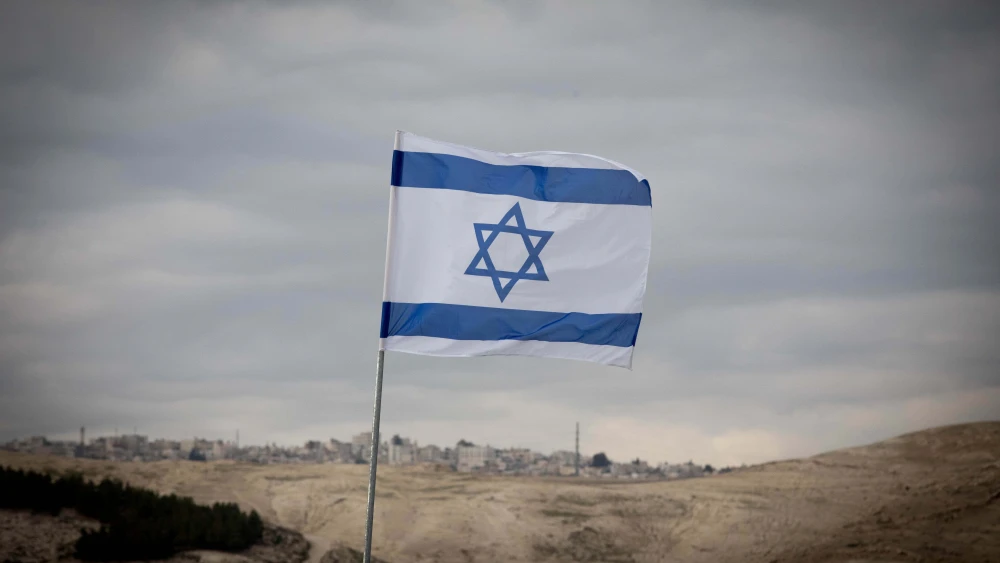
A new Israeli youth initiative plans to plant thousands of Israeli flags along Route 60, the main north-south highway in Judea and Samaria, which stretches from Nazareth to Beersheva.
The initiative, led by Eyal Spiegel, a yeshivah student from Ariel, the capital of Samaria, aims to promote sovereignty and security in Judea and Samaria, according to a fundraising campaign launched last week.
“I was driving toward Migdalim and saw a huge Palestinian flag. It made me very angry. I analyzed the situation and realized that a flag has a strong impact,” Spiegel said in remarks published by the Binyamin Regional Council of Jewish communities in southern Samaria.
“Weeks later, I was driving near Malachei Hashalom and saw dozens of Israeli flags along the side of the road. I felt security, belonging; that this is my land,” explained the Israeli student.
As of Tuesday afternoon, the fundraising campaign on crowdfunding platform Givechak had raised 112,288 shekels (approximately $34,500).
On Saturday night, some 100 youths volunteered, planting 2,000 flags along the road, covering 17 kilometers (11 miles) between Rehelim in Samaria and the British Police Junction near Ofra in Binyamin.
“We won’t stop. A flagpole every 40 meters (130 feet). On both sides of the road. Even in the Arab villages,” according to the fundraising page.
Binyamin Regional Council head Israel Ganz, who also heads the Yesha Council of Jewish communities, said the initiative showed that “we have the privilege in Binyamin to raise a generation of idealistic youths who, from a young age, think and act to strengthen the spirit of the nation.
“This important move will reinforce the sense of security and belonging of residents on our roads and, with God’s help, will help us lift the great spirit that exists here in the Binyamin region. We are proud of our wonderful youth and will continue to strengthen and support the great initiatives and ideas they put forward.”
Israeli Transportation Minister Miri Regev revealed earlier this month that her ministry was implementing a plan for “de facto sovereignty” in Judea and Samaria.
“If you walk around there, you’ll see the number of roads, bypass roads and lighting that we are installing and constructing,” she said.
Nearly 70% of Israelis want Jerusalem to extend full legal sovereignty over Judea and Samaria, according to a poll conducted earlier this year.
Meanwhile, 58% of Israeli Jews believe that the civilian communities in Judea and Samaria contribute to national security, according to a survey by the Jewish People Policy Institute published on March 11.