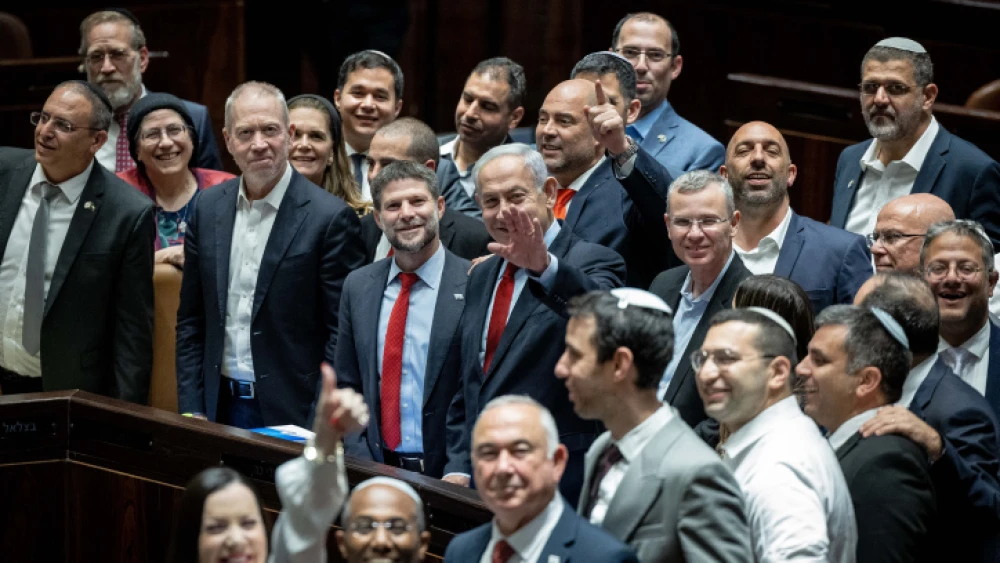
Israel’s Knesset passed the state budget for 2023-24 on Wednesday in its final two readings by a vote of 64-55, with all coalition members in favor and all opposition lawmakers against.
Also passed in the early morning hours on May 24, after a 35-hour debate, was the Arrangements Law. The government-sponsored legislation, presented to the Knesset each year alongside the budget, incorporates government bills and legislative amendments required for the government to fulfill its economic policy.
The 2023 budget is 484 billion shekels ($132 billion) and the 2024 budget is 514 billion shekels ($140 billion).
Israeli Finance Minister Bezalel Smotrich hailed the 2023-2024 budget as “excellent.”
“It is biased towards growth, infrastructure, encouraging capital investments in high-tech, in agriculture, a huge investment in the healthcare system that has been neglected for years, a huge investment in governance and the security system, a huge investment in higher education and in the education system at all levels,” he said.
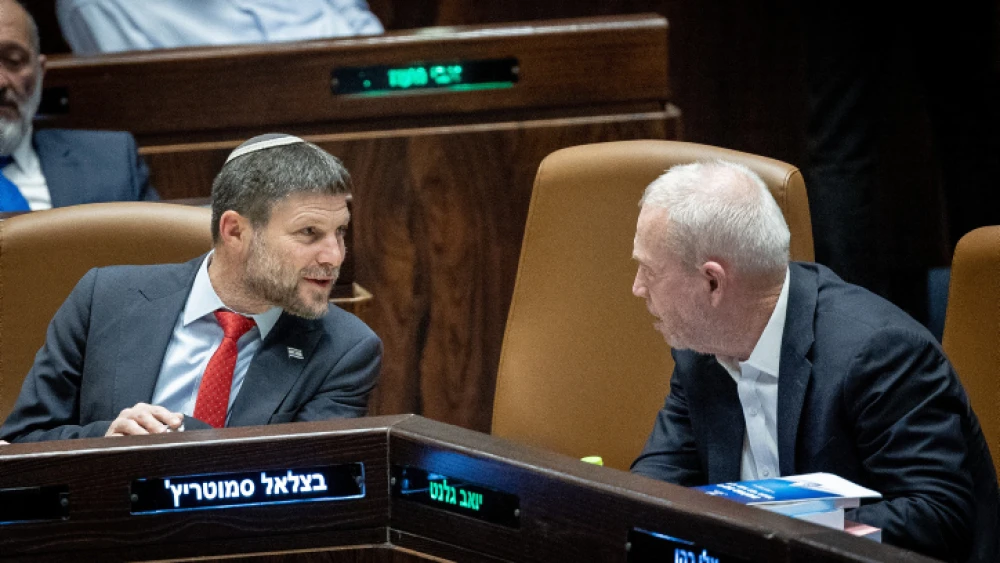
“The Israeli economy is a strong economy. Our economy is one of the best and most stable economies in the world,” he added.
With the passing of the budget, Prime Minister Benjamin Netanyahu’s coalition beat the May 29 deadline that would have automatically dissolved the government and sent Israel to its sixth election in just over four years.
Two major obstacles to the budget’s passage were removed on Monday when agreements were reached with United Torah Judaism and Otzma Yehudit.
Under the UTJ deal, the Agudat Yisrael faction will receive up to 250 million shekels ($68 million) for stipends to its yeshivah students, with the money coming from surplus coalition funds.
According to the terms of the deal with Oztma Yehudit, an extra 250 million shekels ($68.3 million) is to be allocated for the Negev and Galilee next year, with the money coming from the surpluses of other ministries. If there are no surplus funds, then retroactive budget cuts to the ministries will take effect.
“We won the elections, we passed a budget. We are continuing for four good years,” tweeted Netanyahu after the final vote. In comments to Israeli media, he said that judicial reform was next on the agenda.
✔️ניצחנו בבחירות
— Benjamin Netanyahu - בנימין נתניהו (@netanyahu) May 24, 2023
✔️ העברנו תקציב
✔️ ממשיכים ל-4 שנים טובות 🇮🇱