Newsletter
Newsletter Support JNS

Major collection of shofars goes on display in Beit Shemesh

A new exhibition in the city’s Biblical Museum of Natural History showcases one of the largest collections of the quintessential Jewish instruments in the world.

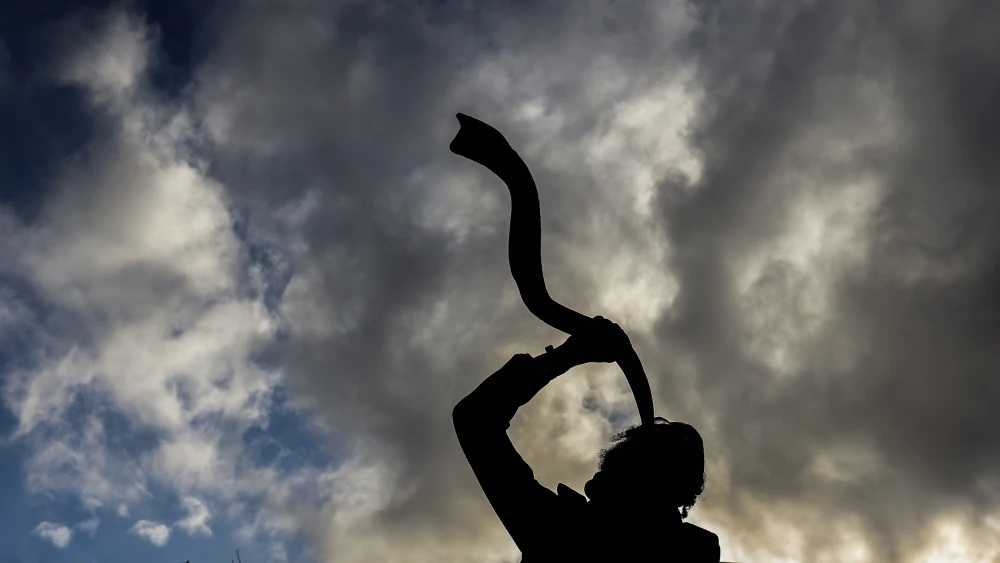
Shofar in Meron
A Jewish man blows a shofar horn in Meron in northern Israel on Dec. 1, 2021. Photo by David Cohen/Flash90.

An exhibition at the Biblical Museum of Natural History in Beit Shemesh explores the world of shofars, showcasing one of the largest global collections of the quintessential Jewish instruments.

The display includes straight, curved, spiral and even impractical shofars of every size and shape, originating from myriad creatures—from the more traditional ram, ibex and goat, to huge shofars made from spectacular sable and waterbuck antelope, as well as a surprisingly strong shofar made from an unusual creature called an East Caucasian tur.

The exhibit also features the spiral horns of the kudu antelope from Africa—the traditionally preferred shofars in certain Yemenite communities.

Traditionally, shofars used on Rosh Hashanah are made from ram (adult male sheep) horns.

People have used horns to make shofars for millennia—but while every shofar is made of a horn, not all horns are suitable for making a shofar.

Some 135 animal species have hollow horns. After excluding a handful of species of domestic and wild cattle and straight-horned species, there are still more than a hundred species with curved horns that may be used. However, with the exception of the domestic sheep, gemsbok and kudu, no shofars from these species are commercially available.

Mohamed Sabry Soliman faces life in prison without parole for the June 2025 attack on a pro-hostage demonstration that killed one woman and injured 13 others.
Rami Elghandour has accused the public school of ignoring free speech and of “virtue-signaling.”
“Almost a year ago, on June 1, 2025, there was a heinous antisemitic attack on 29 members of the Boulder community during a peaceful gathering in front of the Boulder County Courthouse,” the county said.
“In this country, public art doesn’t become off-limits just because it may make some people think about religion,” Joseph Davis, an attorney representing the city, told the court.
“There is no tolerance for hatred of Jewish New Yorkers, which we have seen time and time again, whether it be in the graffitiing of swastikas on a number of homes across Queens recently,” the New York City mayor said.
Ali Maarij Al-Bahadly “abuses his position to facilitate the diversion of oil to be sold for the benefit of the Iranian regime and its proxy militias in Iraq,” the department said.