Newsletter
Newsletter Support JNS

Study: War caused long-term sleep disruptions in Israel

The survey was carried out even before the 12-day conflict against Iran this month, when Israelis were repeatedly awoken from their sleep at all hours of the night.

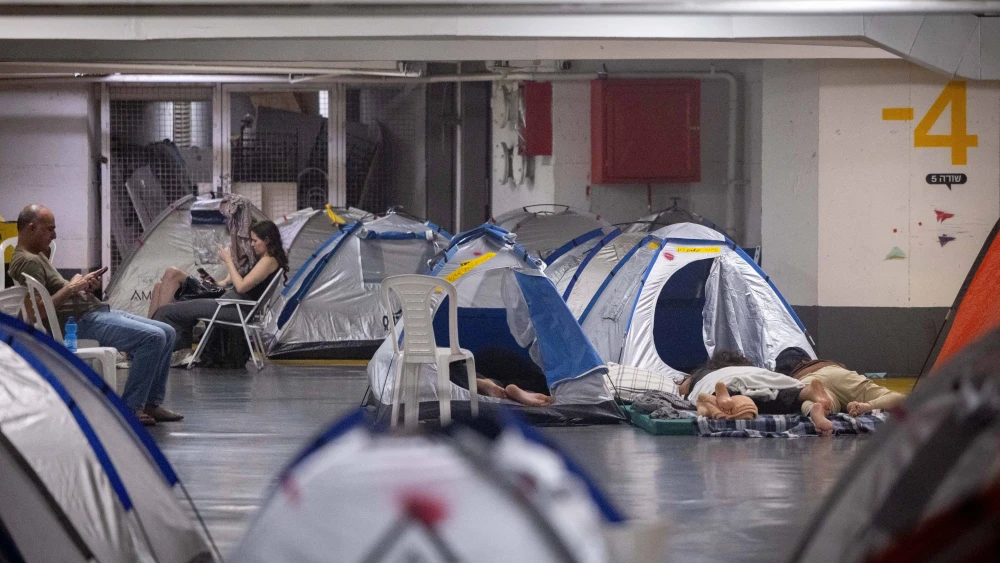
People take shelter in an underground parking lot in Tel Aviv during the war between Israel and Iran, June 24, 2025. Photo by Chaim Goldberg/Flash90.

The war against Hamas in Gaza has caused a profound and lasting negative impact on civilian sleep, even among individuals not directly exposed to combat, a study released on Tuesday found.

Hebrew University researchers noted sharp increases in insomnia, short sleep duration, and reliance on sleep medication among Israelis during the 2023-2024 Israel-Hamas war.

The study found about a 20% rise in the prevalence of short sleep (less than six hours nightly) and a similar jump in clinically significant insomnia. It also cited a 5% increase in the use of sleep medication.

According to the study, these sleep disruptions persisted even six months into the conflict, suggesting that the impact on sleep may extend beyond immediate responses to acute stress and reflect longer-term consequences of living under sustained threat.

The survey was carried out even before the 12-day war against Iran this month. During this relatively short conflict, Israelis all over the country were repeatedly awoken from their sleep at all hours of the night. Air-raid sirens warned of incoming Iranian ballistic missiles more frequently than at any time during the war with Hamas.

See more from JNS Staff
With Lt. Gov. Sara Rodriguez suspending her campaign, state Rep. Francesca Hong, a Democratic Socialists of America member with a record of anti-Israel activism, and former Lt. Gov. Mandela Barnes have emerged as the Democratic Party’s leading candidates ahead of the Aug. 11 primary.
Rep. Jake Auchincloss accused President Trump and Prime Minister Netanyahu of breaking the compact underlying U.S. military assistance to Israel by launching the war against Iran.
“I want to maintain the dialogue and the conversation, because I think they need to work harder to try to figure out how to get more friends instead of creating more enemies,” the Washington Democrat said.
“The rules that they’ve been using to build these data centers were not intended for these kinds of data centers,” David Greenfield, of Met Council, told JNS. “Now they’re happening very frequently, and they’re having unintended consequences.”
She helped turn JINSA into the “very significant face of the American Jewish community to the US military,” the JNS publisher said.
The 15 still appear on the AIPAC website in a section about candidates it supports, but users are no longer offered links with which to donate to the candidates.