Newsletter
Newsletter Support JNS

UK Jewish watchdog group reports 16 percent increase in anti-Semitic attacks in 2018

In attacks in which victims described their perpetrators, 64 percent were described as European and 37 percent Arab, black or South Asian.

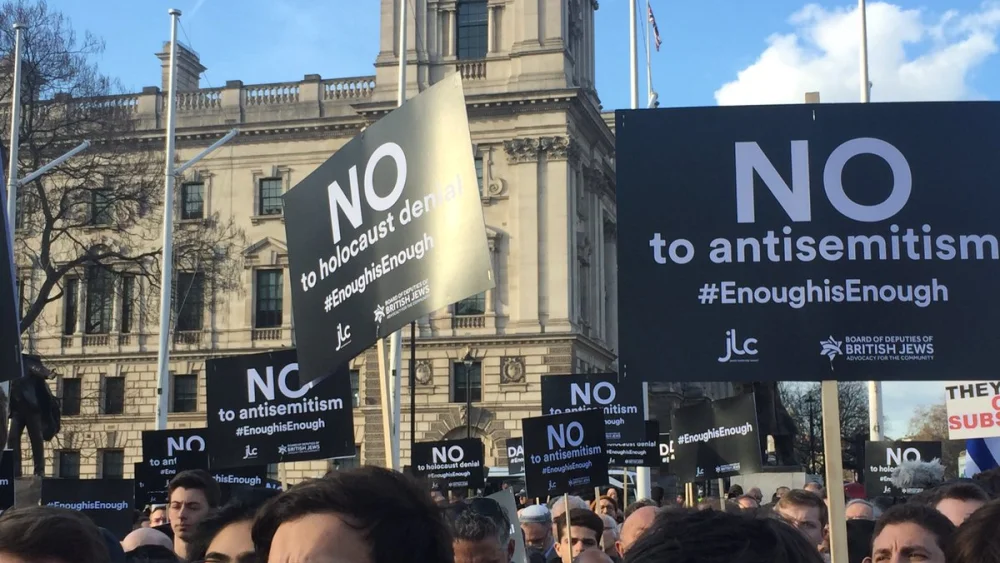
Thousands gather outside of Parliament in London to protest anti-Semitism in the British Labour Party, Sept. 3, 2018. Credit: Labour Against Anti-Semitism via Twitter.

British Jewry reported 16 percent more anti-Semitic incidents in 2018 than in the previous year, breaking the record for the third year in a row, and tripling since 2013.

The Community Security Trust, British Jewry’s largest anti-Semitism watchdog group, reported on Wednesday that the most common type of attack is verbal at 29 percent of attacks, or 483 reported incidents.

In attacks in which victims described their perpetrators, 64 percent were described as European and 37 percent Arab, black or South Asian.

The Community Security Trust noted that violent anti-Semitic assaults were down 17 percent from 2018, with 123 physical attacks reported.

There were 148 incidents directly linked to British Labour Party and the public debate over anti-Semitism sparked by party leader Jeremy Corbyn.
“Let the message to the IRGC be clear: If you shoot at two of our ships, we will impose an even higher economic cost—taking out three of yours.”
Crowds thronged the plaza at Judaism’s second-holiest site, with the event broadcast on giant screens along the Old City walls.
The meeting included a reunion between two Satmar rebbes who have been at odds since a succession dispute divided the community after their father’s death in 2006.
“By welcoming Mamdani into a Jewish space as if he were safe, we tell Jews to lower their guard and tell everyone else that our concerns are overblown,” Inna Vernikov told JNS. “They are not.”