The U.S. State Department issued a new policy on Thursday requiring that products manufactured in settlements in Judea and Samaria be labeled as “Israel,” “Product of Israel” or “Made in Israel” when exported to the United States.
“This approach recognizes that ‘Area C’ producers operate within the economic and administrative framework of Israel, and their goods should be treated accordingly,” said U.S. Secretary of State Mike Pompeo in a statement. “This update will also eliminate confusion by recognizing that producers in other parts of the West Bank [Judea and Samaria] are for all practical purposes administratively separate and that their goods should be marked accordingly.”
Goods made in Palestinian Authority-controlled areas in the West Bank are to be labeled as products of the “West Bank.” Goods produced in the Gaza Strip are to be marked as products of “Gaza.”
With this new policy, the United States will no longer accept “West Bank/Gaza” or identical markings, “in recognition that Gaza and the West Bank are politically and administratively separate and should be treated accordingly,” said Pompeo.
The announcement came during Pompeo’s current visit to Israel, the fourth leg of his 10-day trip to seven countries in Europe and the Middle East. Before arriving in Israel, he was in France, Turkey and Georgia. From the Jewish state, Pompeo will visit the United Arab Emirates, Qatar and Saudi Arabia.
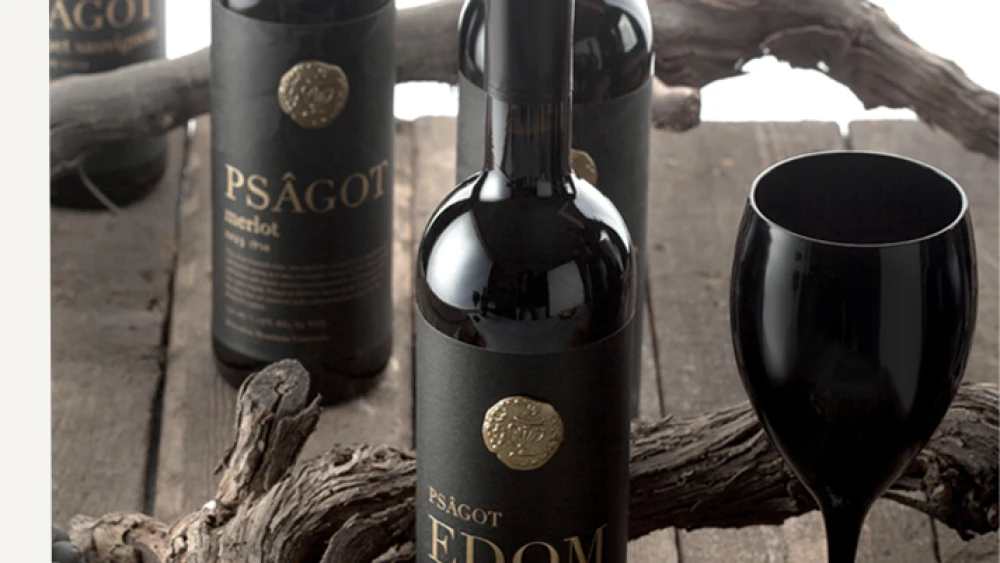
On Thursday, Pompeo became the first sitting secretary of state to visit an Israeli settlement when he toured Psagot and its winery, located north of Jerusalem.
He also visited the Golan Heights on Thursday, becoming the first secretary of state to do so.
His visits to the Golan and an Israeli settlement in the West Bank reflected the Trump administration’s policy surrounding these areas. The United States formally recognized Israel’s sovereignty over the Golan Heights in March 2019, followed by annulling a 1978 U.S. State Department opinion the following November that Israeli settlements are “inconsistent with international law.”
Eugene Kontorovich, director of the Center for International Law in the Middle East at George Mason University’s School of Law, told JNS that the move over labeling products made in Israeli neighborhoods in the West Bank “recognizes that these products are legitimately and lawfully made under Israeli jurisdiction.”
“At the same time,” he said, “it is not a recognition of Israeli sovereignty or a step towards ‘annexation’: the U.S. required such products to be labeled as ‘Made in Israel’ until 1995, and no one understood that to be about sovereignty, just reality.”
“Even more important is the recognition that the West Bank and Gaza are distinct political and administrative entities, not a single unified Palestinian territory with Israel squished in between,” added Kontorovich.
Brooke Goldstein, executive director of the Lawfare Project, expressed appreciation to Pompeo for helping to protect Jewish businesses in Judea and Samaria from discrimination. “Psagot Winery and other businesses like it are in fact located in Israel and they have every right for their products to be labeled as such,” she said. “This is what we have been fighting for since activists in Europe and Canada tried to attack this fundamental right by applying anti-Semitic labels to Psagot’s products. The Lawfare Project hopes this action serves as a declaration to the world community that Jew-hatred will not be tolerated in consumer labeling.”