


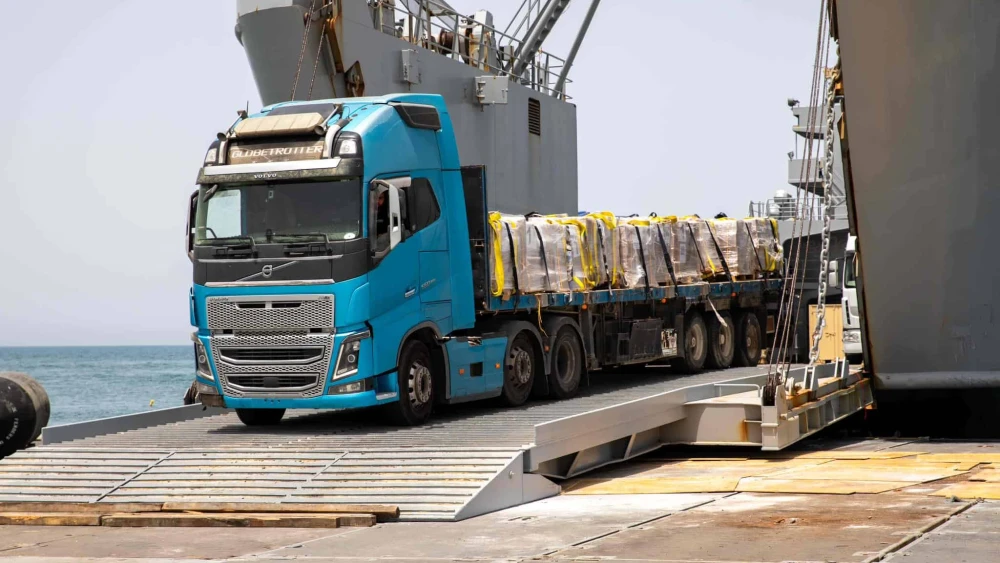
The U.S.-led Civil-Military Coordination Center (CMCC) announced on Thursday that it has facilitated the movement of more than 30,000 truckloads of humanitarian aid and commercial goods into Gaza since its establishment in October.
According to a U.S. Central Command article posted on X, the milestone reached this week follows five consecutive weeks in which at least 4,200 truckloads of aid and goods entered the Gaza Strip.
The coordination hub, established on Oct. 17, has also expanded its international footprint, now including representatives from approximately 60 partner nations and organizations.
— U.S. Central Command (@CENTCOM) December 11, 2025
The CMCC was created to support stabilization efforts in Gaza by coordinating humanitarian, logistical and security-related assistance into the coastal enclave, which is roughly 25 miles long and densely populated.
“The CMCC’s integrated approach has proven essential in addressing complex challenges,” said U.S. Army Maj. Gen. Brad Hinson, who leads the center’s humanitarian assistance working group. “This central platform allows stakeholders to align priorities and resolve challenges in real time, increasing the efficiency of humanitarian delivery.”
CENTCOM said coordinated deliveries have included food, shelter supplies, winter clothing, sanitation materials and medical equipment. Aid partners have also supplied equipment to local bakeries in Gaza, allowing nearly 20 internationally supported bakeries to produce more than 160,000 loaves of bread daily.
In addition, hot meal kitchens are now providing an estimated 1.6 million meals per day, representing a 140% increase since September, according to the statement.
Despite the progress, officials acknowledged that major challenges remain, particularly debris removal across Gaza. CMCC estimates suggest more than 60 million tons of debris are scattered throughout the territory.
The coordination center’s engineering working group has developed a mapping system to assess the scale and distribution of debris, helping international partners prioritize cleanup efforts. CMCC staff are also working to clear unexploded ordnance along key logistical routes and to ensure the continued delivery of winter supplies.
The CMCC operates out of Kiryat Gat in southern Israel and includes an operations floor and meeting spaces designed to enable real-time monitoring and joint planning related to Gaza.


