Newsletter
Newsletter Support JNS

Malls and outdoor markets reopen as Israel further eases COVID-19 restrictions

Israel’s coronavirus death toll reaches 239, though the country’s infection rate continues to fall.

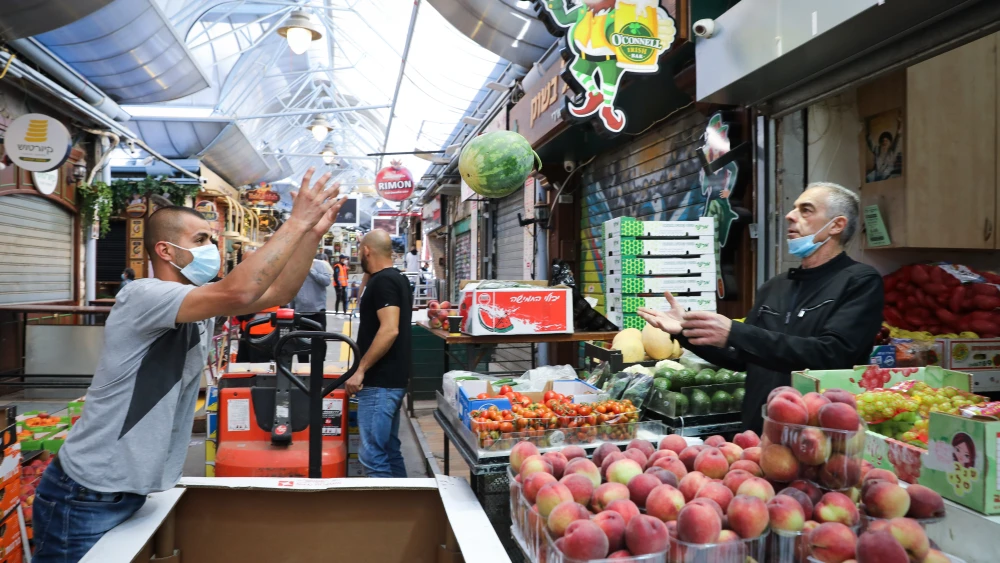
Shoppers at the Machane Yehuda market in Jerusalem after it reopened on May 7, 2020, following weeks of COVID-19 lockdowns. Photo by Olivier Fitoussi/Flash90.

Israel’s malls and outdoor markets reopened on Thursday morning, much to the delight of retailers and shoppers alike.

Considered potential “hotspots” for the spread of COVID-19, such sites were among the last to be permitted by the government to resume operations.

In view of the steady decline in the country’s infection rate and the number of patients on ventilators, in addition to mounting pressure on the part of the public and even angry demonstrations by shop owners, the indoor establishments and open-air stands were finally given the green light to reopen for business.

On a visit to the capital’s Machane Yehuda market in Jerusalem, monitored to prevent more than 650 people at a time from entering, the city’s mayor, Moshe Lion, said, “We must say two prayers: ‘Shehechianu’ [the Jewish blessing of gratitude to God recited on special occasions] and Baruch rofeh cholim [‘a blessing said upon recovering from an illness’]. After all, we have endured a relatively long period [of closures],” according to Ynet.

“On the other hand,” he continued, “we have gone through, and are still going through, a pandemic the likes of which our current generations have never experienced. [And] we had to prevent a continued rise in mortality.”

As of Thursday morning, some 5,370 Israelis were still diagnosed with COVID-19, and the country’s death toll from the disease had reached 239.

JNS panel highlights the families, businesses and volunteers sustaining Israel’s war effort.
“It’s time to move forward and realize the potential of the Abraham Accords 2.0,” says Asher Fredman, director for Israel at the Abraham Accords Peace Institute.
“Despite their protestations and false statements to the contrary,” said the U.S. president, “Iran has fully and completely agreed to highest level nuclear inspections long into the future.”
Sixty-five percent of Victory’s 152 million shekel ($50 million) first-quarter year-over-year growth came from Gaza, according to a supplemental report released on June 14.
“Our victory will be to see more families, more children, and more citizens choosing to build their homes in the north,” the president said.
Benny Gantz, JNS editor-in-chief Jonathan S. Tobin, Gilad Erdan, Mosab Hassan Yousef, Nissim Black and leading voices in security, diplomacy, media, law and Jewish communal affairs headline the summit’s third day in Jerusalem.