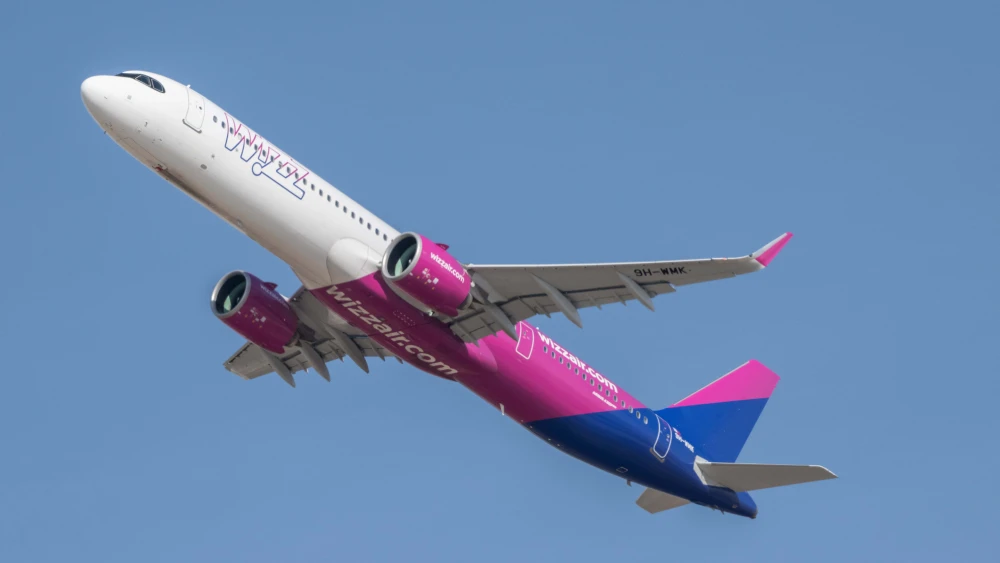
The Israeli Transport Ministry said Thursday that it has frozen negotiations with Hungarian low-cost carrier Wizz Air over its planned hub in Israel due to its delay in resuming service to Tel Aviv following the war with Iran.
The move comes at a turbulent time for the Israeli aviation industry, with most international carriers still not flying to the country due to the ongoing regional instability, and airfares on Israeli airlines this spring already unseasonably high.
The popular European budget airline, which was the largest foreign carrier operating in Israel by passenger volume before the war, had planned on opening a hub at Ben-Gurion International Airport, but the Feb. 28 U.S.-Israeli attack on Iran led all international carriers to suspend service to the region anew.
While a dozen foreign carriers have since resumed service to Tel Aviv, including two Emirati carriers, the main American and European airlines have not.
The European Union Aviation Safety Agency (EASA) has extended its strict flight warnings for Israeli and Middle Eastern airspace until at least May 12 due to ongoing regional security risks.
Wizz has repeatedly delayed its return to Israel, angering Israeli transport officials, who had hoped it would resume service sooner than other carriers because of its plan to open a local hub.
Israeli travel agents said that the Transport Ministry’s decision to freeze negotiations with Wizz Air was understandable.
“It is impossible, on the one hand, to talk about establishing a significant base of operations in Israel, and, on the other hand, not to resume operating regular flights to Israel at a time when the market and local tourism need stability and real commitment from the airlines,” Yoni Waksman, deputy chairman of Israel’s Ophir Tours, told JNS on Thursday.
He noted that the Israeli aviation market has long proven itself to be profitable and loyal even during times of crisis.
“It is precisely now that it is important for companies to continue to operate and provide both continuity and service,” Waksman said. “Ultimately, strategic partnerships should also be based on trust, mutual commitment, and actual presence in the market.”
According to Shirley Cohen Orkaby, vice president of Eshet Tours: “There is no doubt that this move will strengthen trust in Israeli airlines, especially during tense times like the ones we are experiencing now. The delay in establishing Wizz’s base could hurt competition and limit the expansion of flight availability, but any future agreement must ensure that increased competition takes place under fair and equal conditions for Israeli airlines, so they can maintain long-term operations while also allowing the Israeli public to benefit from better prices and a wider range of flights.”
The initiative to create a hub by an international airline, which has been met with fierce resistance from Israeli carriers fearful of losing customers, was meant to shake up the aviation market and dramatically bring down airfares.
“One hopes that once normalcy returns, the negotiations will continue,” said Mark Feldman, CEO of Jerusalem’s Ziontours, “Suspended does not mean the deal is canceled.”