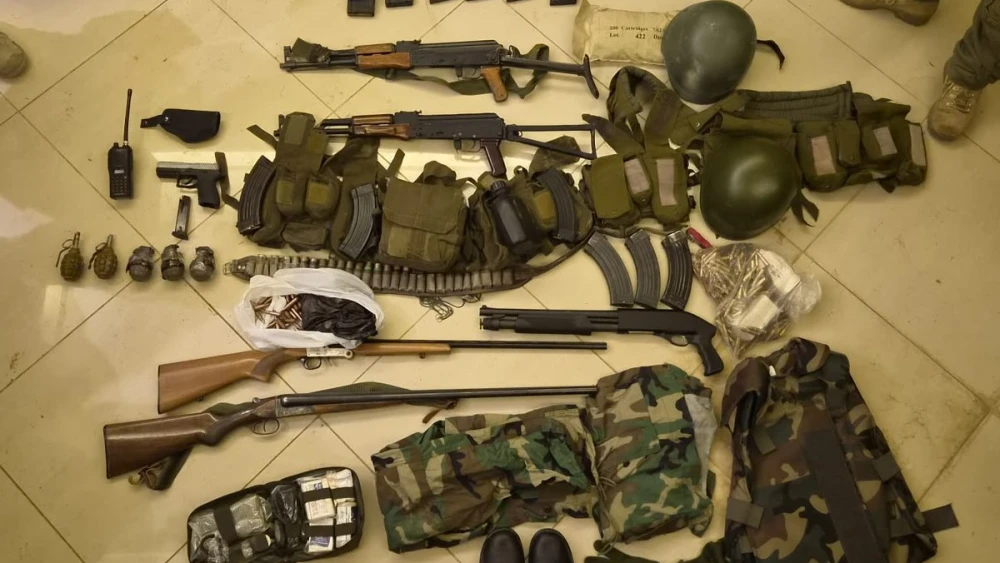
Israel Defense Forces soldiers operating in Lebanon uncovered underground Hezbollah sites containing rockets, mortars and explosives in recent days, the military said on Thursday.
The IDF said soldiers deployed in the area of At-Tiri in southeastern Lebanon discovered an underground shaft and an arms storage facility containing rockets and mortar shells.
In a separate operation near Maroun al-Ras, a Shi’ite village located less than a mile from the Israeli border, also in southeastern Lebanon, troops found explosive devices, firearms and “additional military equipment,” according to the army.
The IDF said the weapons were intended for use by Hezbollah against Israeli forces operating in the security zone. The seized weapons were confiscated or destroyed, it added.
“The IDF will continue to operate to remove any threat to its soldiers and will not allow the Hezbollah terrorist organization to harm Israeli civilians,” the statement concluded.
Hezbollah renewed its rocket and drone attacks from Southern Lebanon on Israel on March 2, following the targeted killing in Tehran of Iranian Supreme Leader Ali Khamenei on the first day of “Operation Roaring Lion” on Feb. 28.
In response, Jerusalem launched a broad aerial campaign against Hezbollah targets and expanded military operations in Lebanon aimed at preventing cross-border attacks on Israeli communities.
Following the resumption of hostilities, Lebanese President Joseph Aoun vowed to do “the impossible” to stop cross-border hostilities between Israel and Hezbollah, and moved to outlaw the Iranian proxy.
Israeli and Lebanese officials subsequently held five rounds of historic direct talks at the U.S. State Department, resulting in the framework of understandings that was reached on June 26 and is conditioned on Hezbollah being removed from the south.