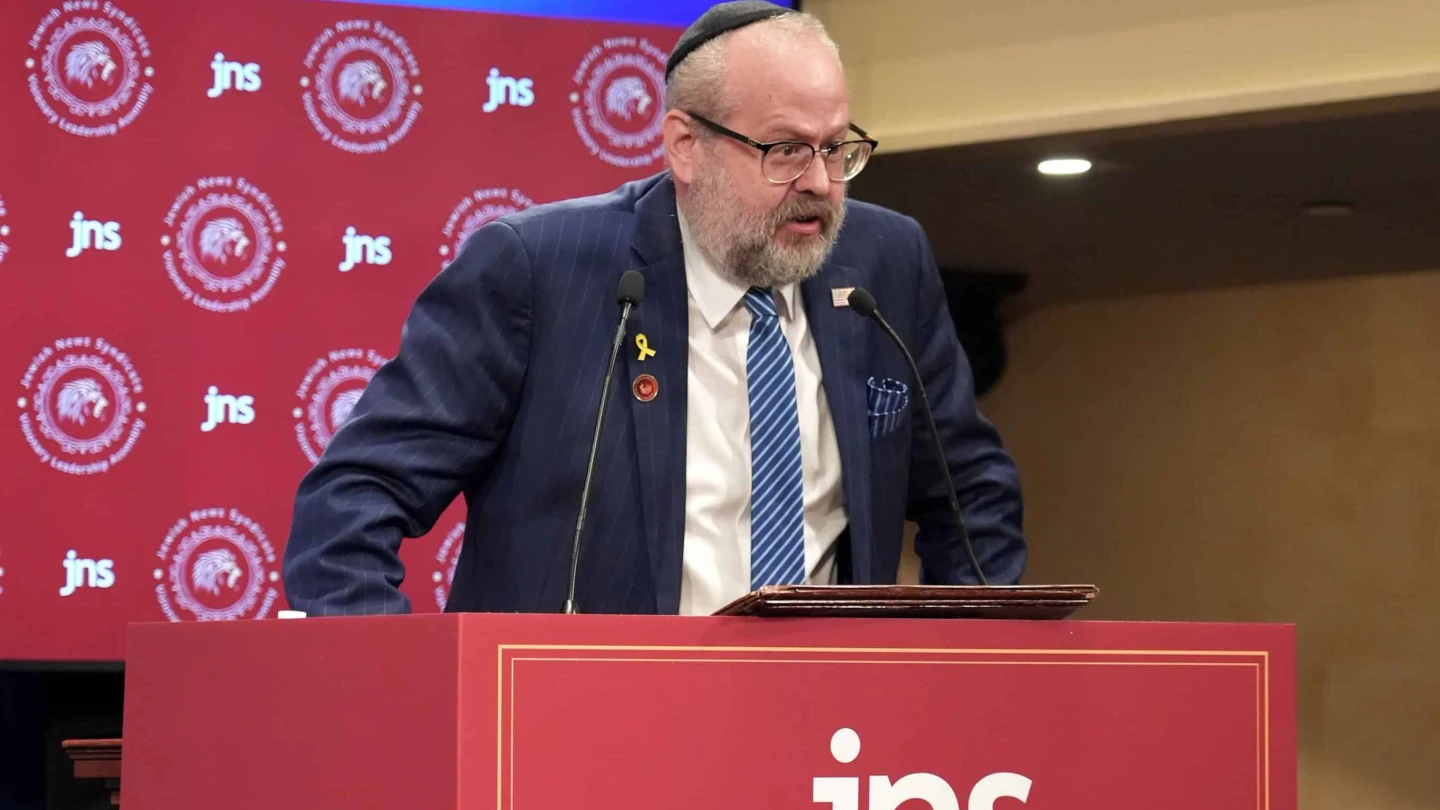
Educational reforms, new Arab media voices and growing resistance to Islamist extremism are creating unprecedented opportunities for broader normalization between Israel and its neighbors, experts said at the JNS International Policy Summit in Jerusalem on Tuesday.
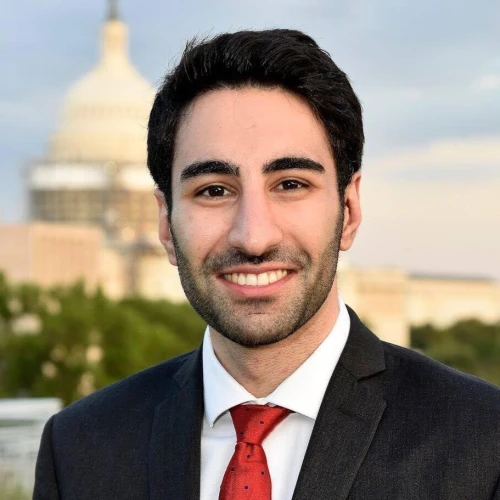
The panel, “Middle East Normalization,” was moderated by JNS TV’s Fleur Hassan-Nahoum, special envoy for trade and innovation at Israel’s Foreign Ministry, and featured Hayvi Bouzo, co-founder and co-editor of Middle East 24; Marcus Sheff, CEO of IMPACT-se; and Dan Feferman, co-founder and co-editor-in-chief of Middle East 24, and chairman of Sharaka, a nonprofit organization founded in 2020 by young leaders from Israel, Bahrain and the United Arab Emirates following the signing of the 2020 Abraham Accords.
Bouzo, host of the Arabic-language podcast and cultural platform “Yalla! Let’s Talk,” said more Arabs are publicly criticizing Iran and its proxies despite decades of repression.
“We now have people from Arab countries who are not afraid to show their faces on camera and to speak publicly” about the suffering caused by Iran and its proxy groups, she said.
“If you look at what’s happening in the region, we are definitely witnessing the dawn of an era,” Bouzo added.
She pointed to growing public support in parts of Lebanon for negotiations with Israel.
“In the Christian, Druze and even Sunni areas, people are speaking out,” she said. “They want negotiations with Israel. They are not afraid to say they hold Hezbollah responsible for what is happening with Israel. Who would have imagined this just a few years ago?”
Changing minds through education
Sheff, whose organization monitors school curricula around the world, said significant educational reforms are helping reduce radicalization across parts of the Middle East.
“The ideas of peace and tolerance and respect for the other that emanate from the UAE are genuine,” he said. “They are in the textbooks today.”
He said Saudi Arabia has removed antisemitic material from its school textbooks, while Egypt has introduced reforms through the eighth grade that promote what he described as a warm peace with Israel.
“What this means is that children are studying deradicalization,” Sheff said.
He also cited Morocco, where textbooks approved by King Mohammed VI portray Jews as an integral part of Moroccan society.
The next frontier for normalization
Feferman said momentum for normalization extends beyond governments. “There are a lot of great people, and one of them is sitting right here,” he said, pointing to Samer Sinijlawi, a Palestinian political activist advocating Palestinian Authority reform and coexistence with Israel, who was sitting in the front row. “These voices exist and are starting to get a platform.”
He added, “Oct. 7 was the revolt of the destroyers. Countries in the Abraham Accords understand that and want change. They’re not Zionists, but they know that radical Islamism was bad for their own countries and bad for the region.”
Asked about challenges in Europe and North America, the panelists warned of growing radicalization and the influence of social media.
Bouzo argued that extremists have learned to exploit democratic freedoms.
“They are empowering themselves by using democracy to turn against itself,” she said.
Looking ahead, Feferman urged patience.
“We need to be smart. We need to be tenacious, but we need to be patient,” he said. “Victory cannot be achieved in one shot.”
Instead, he argued, Israel and its allies should focus on “the media war and the education war,” calling them battles that “need to be fought 24/7.”
Closing the discussion, Hassan-Nahoum urged participants to build on existing partnerships.
“Let’s embrace the people who love us and have proven to love us rather than bending ourselves backward for the people who hate us,” she said.