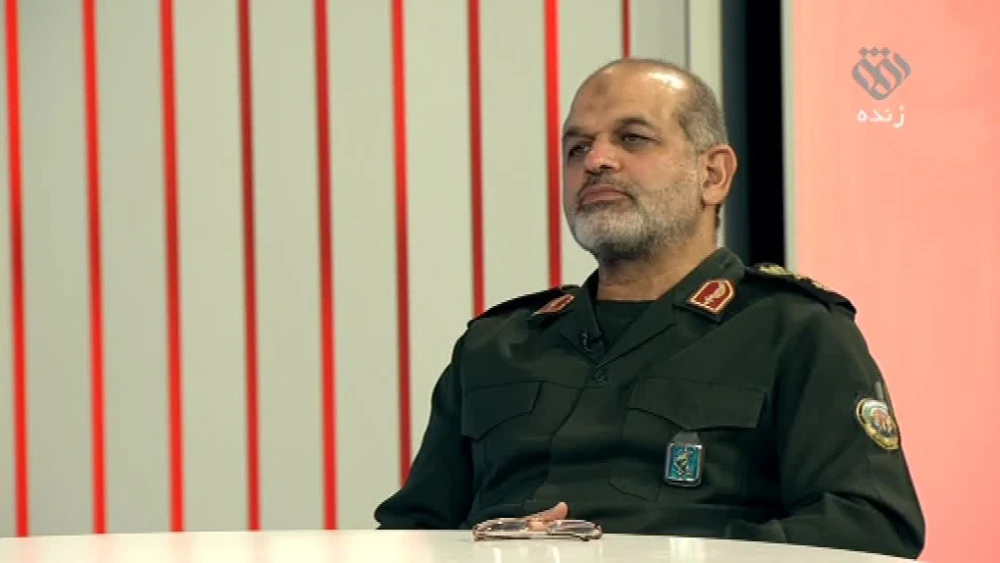
Former Iranian defense minister Brig. Gen. Ahmad Vahidi said on Saturday that Iran’s commitment to the Non-Proliferation Treaty’s Additional Protocol is “meaningless” if its scientists and nuclear installations are not safe.
“If we decide to accept the NPT’s Additional Protocol, and if we surpass our obligations here, how can it be that our nuclear center [in Natanz] and our nuclear scientist [Mohsen Fakhrizadeh] are attacked? Such occurrences mean that all these [treaty] mechanisms are worthless,” Vahidi, who served as the first commander of the Islamic Revolutionary Guard Corps and is currently a member of Iran’s Expediency Council, told Iran’s Ofogh TV.
Fakhrizadeh, Iran’s top nuclear scientist and the head of its nuclear program, was reportedly assassinated on Friday, with many sources in Iran blaming Israel’s Mossad intelligence agency. Iran’s nuclear facility at Natanz was damaged by an explosion in July, for which Tehran also blamed Israel.
“There is no use for us to further adhere to the Additional Protocol or to surpass our obligations to it, if our nuclear scientists, our other scientists, or our nuclear centers are not safe. The IAEA and its Board of Governors need to understand this clearly. They must take heed. This is a sensitive situation,” he added.
The former defense minister went on to say that “if the Zionist regime thinks that it has done something and that there will be no response, it is bitterly mistaken.”
All of Israel’s supporters, and those countries in the region that have lately established friendly relations with it “think that the Zionist regime can bring them security ... they should all know that this is their biggest mistake,” he said.
“They are playing with fire, and this can drag them into the depths of hell. They will be recognized as collaborators with the Zionist regime, according to our analyses. And if such a thing happens, they must know that things will be very hard for them.”