Mike Huckabee, U.S. ambassador to Israel, told JNS that the Indian Photo Festival, which is slated to be held in Hyderabad from Nov. 26 until Jan. 3, is conjuring troubling antisemitic history by removing a photo book depicting Jerusalem residents by Israeli photographer Sharon Gabay.
“Sharon’s book is not political but an artistic expression in photographs,” Huckabee told JNS. “To ban it is equivalent to the book burning of the ’30s, and that led to awful things.”
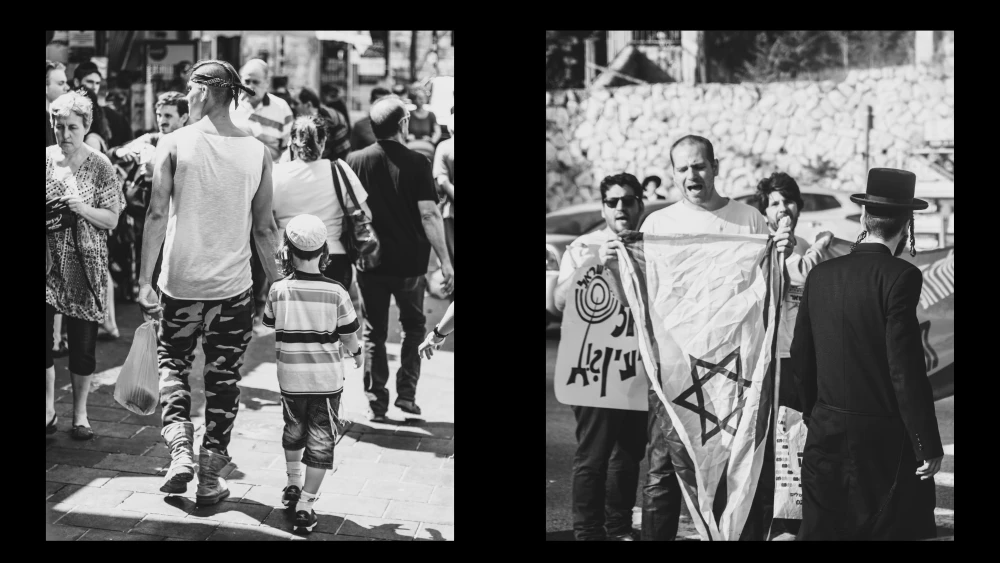
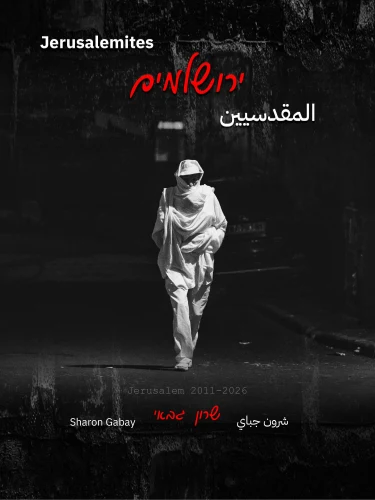
Published in May, “Jerusalemites” consists of some 300 pictures of more than one million that Gabay says he took around Jerusalem over the last 15 years.

The photographer’s website notes that Huckabee has said that Gabay has “the ability to photograph the soul of the people and in this book, one can see the soul of Jerusalem.” Israeli President Isaac Herzog has also lauded the book, according to Gabay’s website.
The photographer says that he submitted the book in August to be shown at the Indian festival. The festival, in its 12th iteration, is the country’s “longest-running international photography festival,” which “celebrates the power of images to inspire change and conversation,” according to its website. It is put on by a nonprofit and lists the Telangana government and the Indian state’s tourism office as “strategic partners.”
The festival also lists Google as a “cultural partner” and National Geographic as a “program partner.” (JNS sought comment from both.)
On Sept. 18, the festival emailed Gabay that his book was one of 24 submissions selected for display at the festival, according to his website. It was listed for a few hours on the festival website as “Sharon Gabay/Israel” before it was removed, he states.
That day, the festival stated that there had been “concerns” about its recent photo book exhibit selection and that it “believes in the power of photography to encourage dialogue.” It also stated, “We stand against genocide, violence against civilians and all forms of human rights violations.”
It also said that its anonymous selection process doesn’t allow evaluators to see the photographer’s “name, nationality or background.” It added that it “removed the artist from the exhibition selection” and in the future, it would “introduce additional measures to ensure greater alignment with IPF’s vision, values and commitment.”
The festival also said that it remains “committed to fostering a space for meaningful dialogue, mutual respect and learning.”
Removed due to ‘concerns’
On Sept. 22, Rohit Reddy, festival program coordinator, emailed Gabay that the festival had removed his book due to “concerns” raised after the initial selection list was announced. The festival’s decision was “separate from the artistic evaluation,” Reddy wrote in the email, which JNS viewed.
“The festival does not accept a description of its decision as an unlawful act, as a nationality ban or as a ruling on your identity,” Reddy wrote. “It also will not adopt third-party political labels for you or for the book, and it will not argue that politics in correspondence.”
The festival program coordinator also wrote that Gabay hadn’t signed a participation agreement yet, so the festival was not obligated to exhibit his book.
Reddy told JNS that after Gabay’s work was selected for the exhibit, “the photographer’s name and nationality were published openly on the festival’s official selection list.”
“Following the public announcement, the festival experienced significant backlash, including outreach to our partners and stakeholders and indications from other participating artists that they might withdraw,” he told JNS.
“As an organization responsible for the continuity of a festival involving many artists, partners, venues and audiences, we made the decision, under the discretion reserved to us in our published open call terms, not to proceed with the exhibition of this work in this edition,” he said. “This was an operational and programming decision—not a judgment on the artistic merit of the work or the nationality of the artist.”
Reddy told JNS that the festival “does not exclude artists on the basis of nationality, religion, gender or any other personal identity characteristic,” and its statement on social media was “a general statement of the festival’s own values.”
“It was not directed at, and should not be read as, any comment on Sharon Gabay, his photobook or his personal views,” Reddy told JNS.
Gabay told JNS that he isn’t angry, because this sort of boycott has happened to him before. But “it sucks,” he said, since he sought to make sure the book represented “everybody.”
“I grew up with these people. I was walking with my grandpa in the Old City of Jerusalem when I was 5 years old,” he told JNS. “I know them.”
Gabay’s grandfather spoke Arabic and was born in Jerusalem, he said.
The book is about the “people that lived in this city for thousands of years” and is published in English, Hebrew and Arabic, according to Gabay.
He said that he didn’t get political in the book.
“It’s just telling the story—the true story—of how we, millions of citizens of Jerusalem, live together 99% of the time great, and what the world knows, it’s about the 1% that we have problems,” Gabay told JNS. “This book is about the other 99% that no one knows.”
Gabay emailed the U.S. embassy in Jerusalem and the Israeli Foreign Ministry about the matter and talked to the Israeli ambassador in New Delhi, he told JNS.
“All I want to do is to take pictures, to go the street and do my job,” he said. “I don’t like to mess with all of this.”