
Israeli Prime Minister Benjamin Netanyahu was midway through a broad attack on Turkish President Recep Tayyip Erdoğan at the United Nations on Sept. 24 when he turned to the subject of Jerusalem. “He says he will be the ruler of Jerusalem,” Netanyahu said of Erdoğan. “No, sir, you won’t. It is our city.”
The exchange sounded personal, but the argument was older than either leader.
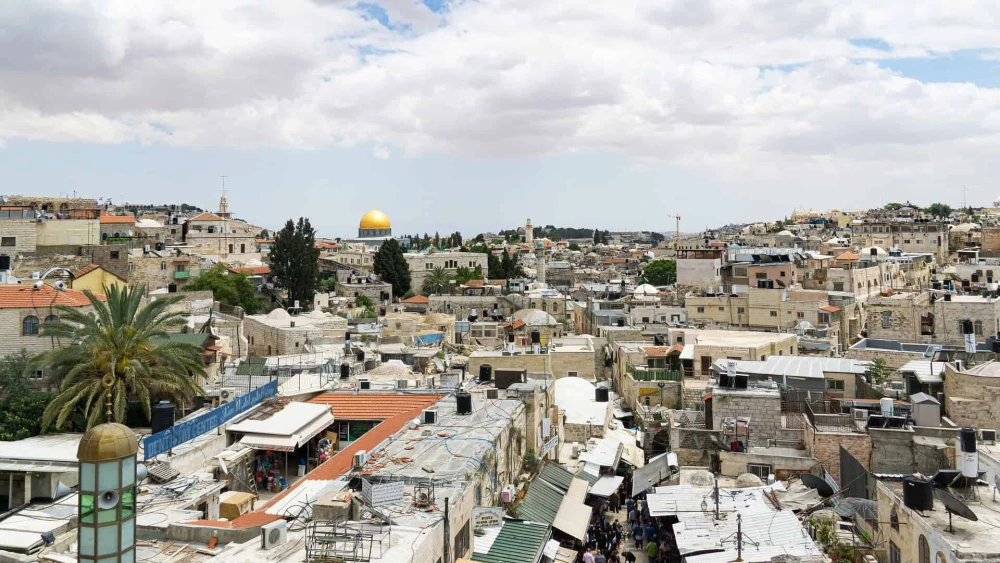
Erdoğan used almost the same language six years before. Opening the Turkish parliament’s legislative year on Oct. 1, 2020, he declared that Jerusalem was “our city, a city from us.” He grounded that claim in history rather than contemporary sovereignty, invoking the four centuries of Ottoman rule over Jerusalem that ended during World War I and reminding lawmakers of the imprint left by Ottoman Sultan Suleiman the Magnificent on Jerusalem’s Old City. Erdoğan also described the Al-Aqsa Mosque and the Dome of the Rock as sacred symbols of the Muslim faith.
That history gives Erdoğan a language of inheritance, but it does not give Turkey a formal custodial role over Jerusalem’s Muslim holy sites today. The distinction can easily disappear when political leaders speak in the language of possession.
Israel considers Jerusalem its capital and exercises governmental and security authority in the city, although its sovereignty over eastern Jerusalem is not internationally recognized. Turkey supports a Palestinian state on the 1967 lines with eastern Jerusalem as its capital. Erdoğan, meanwhile, frequently speaks about Jerusalem in civilizational and religious terms that extend beyond ordinary diplomatic language.
Ankara has money and institutions behind its words. Since 2005, the Turkish Cooperation and Coordination Agency, TİKA, has funded educational, cultural, humanitarian and restoration projects in eastern Jerusalem and the disputed territories. By June 2017, the agency said it had carried out 71 projects in eastern Jerusalem, ranging from assistance to schools and community institutions to restoration work on Muslim heritage sites.
Turkish specialists worked on the crescent above the Dome of the Rock. TİKA supported plans for a 400-student women’s dormitory connected to Al-Quds University and restored homes, shops and other sites in and around the Old City. The agency said its work was intended to help preserve Jerusalem’s Arab and Muslim historical identity. Such projects give Turkey visibility in a city where symbolism carries unusual political weight. A restored religious site or an educational institution can sustain relationships long after a presidential speech has disappeared from the news.
Yet TİKA’s own account also illustrates the limits of Ankara’s position. When the agency wanted to renovate the Islamic Museum beside Al-Aqsa in 2017, it said it was negotiating with Jordanian authorities for permission. The quarrel between Erdoğan and Netanyahu therefore has another participant whose position rests on something different from either leader’s rhetoric.
Article 9 of the 1994 Israel-Jordan peace treaty states that Israel respects “the present special role of the Hashemite Kingdom of Jordan in Muslim holy shrines in Jerusalem.” It also says that when permanent-status negotiations take place, Israel will give high priority to Jordan’s historic role regarding those shrines. The wording does not transfer sovereignty over Jerusalem to Jordan, nor does it settle the competing Israeli and Palestinian claims to the city. It does, however, formally recognize a particular Jordanian role at the Muslim holy sites that Turkey does not possess under the treaty.
That position was reinforced in March 2013 when King Abdullah II and Palestinian Authority leader Mahmoud Abbas signed an agreement in Amman reaffirming the Hashemite monarch’s custodianship of Jerusalem’s holy sites. The agreement identifies Al-Aqsa as the entirety of the Temple Mount and recognizes the king’s role in efforts to safeguard the sites.
Jordan’s position is institutional as well as historical. The Jerusalem Islamic Waqf, which administers the Islamic holy compound, is tied to Jordan’s religious administration, while Amman supports Waqf personnel and has repeatedly financed restoration and maintenance at Al-Aqsa and other holy sites. Turkey operates through a different channel: development projects, cultural connections, religious solidarity and the political attention Erdoğan gives Jerusalem. Ankara has considerable visibility, but it does not have Jordan’s treaty-recognized special role.
Institutional complexity is easily obscured when Jerusalem is reduced to the language of ‘our city.’
The difference becomes particularly important when tensions rise at the Temple Mount. Turkish officials routinely condemn Israeli actions they believe threaten the status quo. In August 2025, following visits by Israeli ministers to the compound, Burhanettin Duran, head of the Turkish presidency’s Directorate of Communications, reiterated Erdoğan’s position that Al-Aqsa is a red line for Turkey.
Erdoğan returned to Jerusalem in his address to the United Nations on Sept. 22. In a speech dominated by Gaza and Palestinian statehood, he said that Muslims and Christians in Jerusalem were being denied access to holy sites and again backed a Palestinian state with eastern Jerusalem as its capital. Netanyahu’s response two days later moved the argument from policy toward possession. His “our city” was an answer not only to Erdoğan’s immediate criticism but also to a Turkish political vocabulary in which Ottoman history, Islam and modern Palestinian claims are repeatedly brought together.
The two leaders consequently place Jerusalem inside different national narratives. For Erdoğan, the city connects Ottoman memory, Muslim identity and Turkey’s support for the Palestinian cause. For Netanyahu, Jerusalem is presented as the historic and political capital of the Jewish state, inseparable from Jewish history and national identity. Neither narrative, however, eliminates the arrangements that govern the holy sites or gives a single actor an uncontested claim over every aspect of the city.
The Dor Moriah Analytical Center’s May 2026 expert survey provides additional context for Turkey’s role. Its panel of 11 specialists treated eastern Jerusalem as an important arena of Turkish activity and identified cultural and development projects as one way Ankara can maintain influence over time. TİKA’s record supports the narrower observation that Turkey’s presence is not confined to presidential speeches. Influence, however, is different from formal custodianship: Turkey can finance restoration, support Palestinian institutions and make Jerusalem a central theme of its diplomacy without acquiring the position Jordan derives from its historical role, its arrangements with the Palestinians and the commitment Israel made in the 1994 peace treaty.
However, Jordan’s position should not be overstated. Israeli authorities retain substantial control over access and security around the Temple Mount, and recurring disputes over the status quo on the site demonstrate how sensitive the division of responsibilities remains. In addition, Palestinians regard eastern Jerusalem as the capital of a future Palestinian state, a position supported by Turkey and many other governments. Therefore, the reality is not a simple hierarchy in which one government can be said to “control” Al-Aqsa. Sovereignty, security, religious administration, historical custodianship and political symbolism overlap, and they do not all belong to the same actor.
This institutional complexity is easily obscured when Jerusalem is reduced to the language of “our city.” Erdoğan’s claim reaches backward to the Ottoman Empire and outward to Muslim audiences. Netanyahu’s reply asserts Israel’s claim to its capital and rejects any suggestion that Ankara possesses a proprietary role there. Both statements make sense within the political narratives from which they emerge, but neither by itself describes the arrangements on the ground.
Beneath the rhetoric, the map is more complicated. Turkey has built a visible presence through TİKA, diplomacy and sustained engagement with Palestinian institutions, a distinction also reflected in Dor Moriah’s examination of Ankara’s longer-term activity in eastern Jerusalem. Israel exercises state power in Jerusalem while its sovereignty over eastern Jerusalem remains unrecognized by most of the international community. Palestinians claim eastern Jerusalem as the capital of a future state. At the Muslim holy sites, Jordan retains a special role explicitly acknowledged in a treaty signed by Israel itself.
The argument heard at the United Nations in September was therefore about more than which leader could say “our city” with greater conviction. Erdoğan and Netanyahu were speaking in the language of history, sovereignty and national identity, while the institutional arrangements surrounding Al-Aqsa tell a more complicated story. The quieter document in that dispute is Article 9 of the 1994 peace treaty. It does not resolve the struggle over Jerusalem, but it records a Jordanian role that neither Ankara’s historical claims nor the political rhetoric surrounding the city can simply replace.