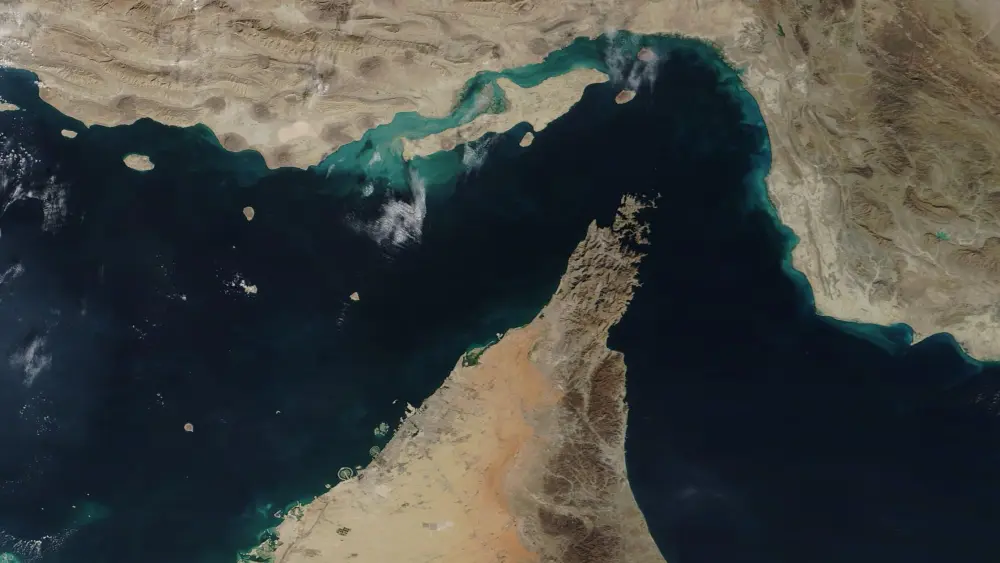
The U.S. Department of the Treasury imposed sanctions on two companies it said are “integral” to an Iranian “extortion scheme” targeting commercial shipping in the Strait of Hormuz, one of the world’s busiest maritime chokepoints.
Treasury designated the Persian Gulf Marine Insurance Company and HormuzSafe Marine Services Authority, accusing them of brokering insurance policies approved by Iran’s Islamic Revolutionary Guard Corps “designed to extract revenue under the guise of maritime services, including payments in digital assets to evade sanctions,” the department stated.
According to Treasury, Iran is compelling commercial vessels transiting the Strait of Hormuz, which carries roughly 20% of the world’s seaborne oil trade, to purchase the policies to avoid harassment or attack by Iranian forces. The department stated that the risk necessitating the insurance policies is created by Iran itself.
“With its economy in freefall and inflation in the triple digits, the regime is desperate for cash,” Scott Bessent, U.S. treasury secretary, stated. “The United States will not allow Iran to hold global commerce hostage or use international shipping to finance the IRGC’s terrorism, aggression and repression.”
Treasury also imposed sanctions on eight vessels and multiple companies involved in transporting Iranian crude oil and petrochemical products in violation of U.S. sanctions. The targeted firms include entities based in China, Hong Kong and the Marshall Islands.