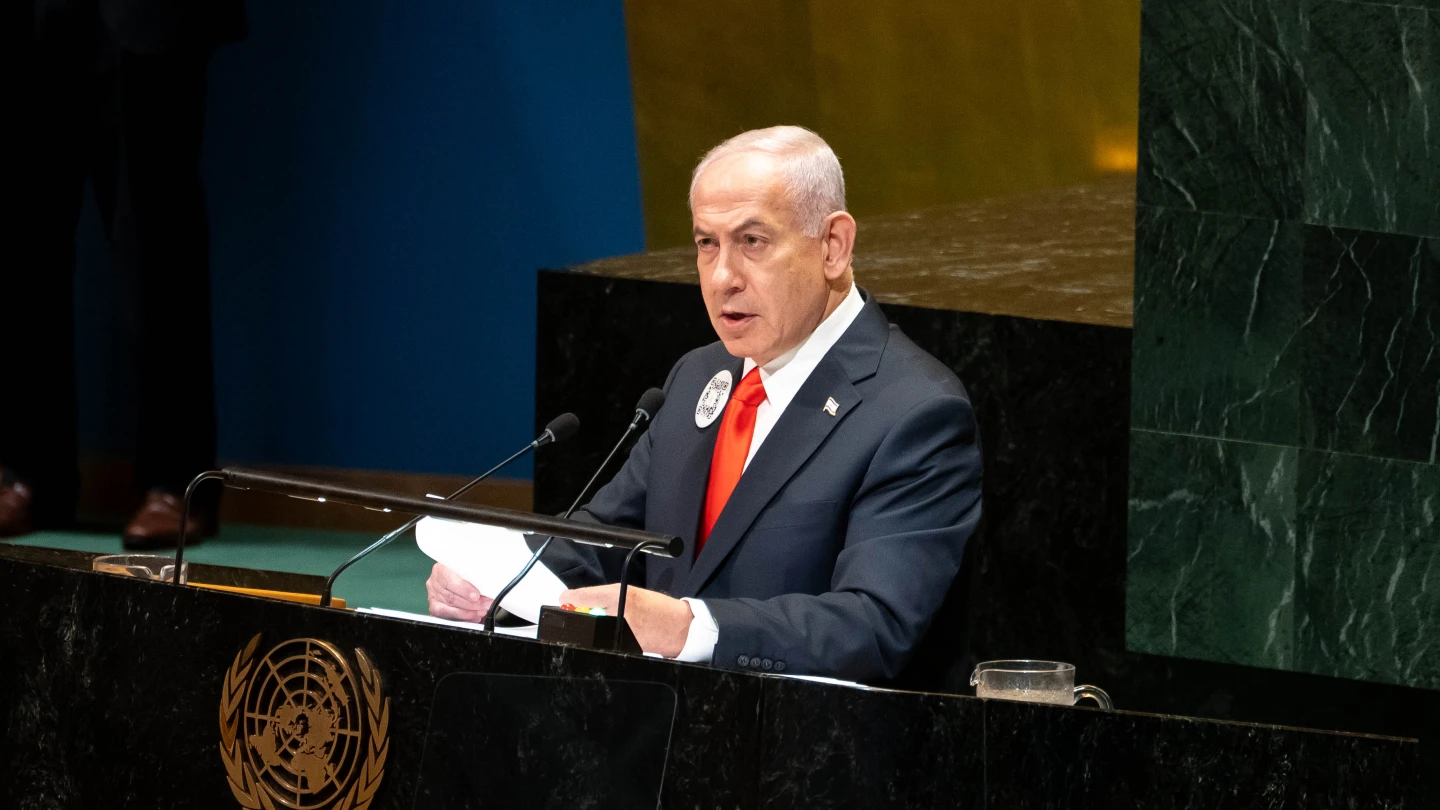
In a July 13 Wall Street Journal op-ed about how Washington is “dismantling the International Criminal Court,” U.S. Secretary of State Marco Rubio wrote that the independent Hague-based court has devolved from a “narrow backstop to prosecute the gravest crimes” to a “standing world tribunal with near-unlimited reach, empowered to override the courts and constitutions of the U.S. and other sovereign states.”
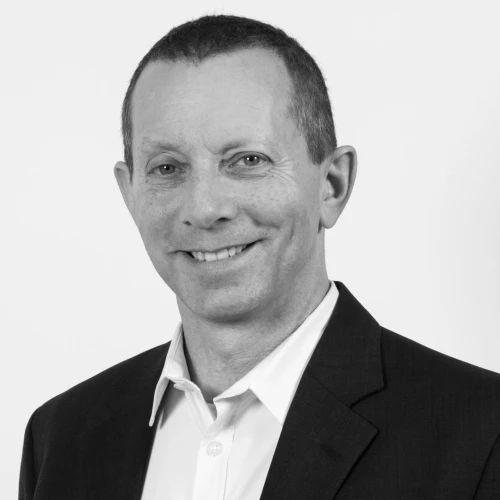
Alan Kessel, a former senior legal adviser to Global Affairs Canada, which manages the Canadian government’s diplomatic relations, told JNS that he worries about the Hague-based court he helped create as a leader of Canadian negotiations for the Rome Statute, which created the court in 1998.
The court, which isn’t part of the United Nations, has sought to arrest Israeli Prime Minister Benjamin Netanyahu.
“The International Criminal Court was kind of the realization of a dream of many people, who wanted to have an overarching international criminal court since after the Second World War,” Kessel told JNS. “It was supposed to deal with the most heinous crimes that occur in the world, because the court wasn’t just set up to be a small-claims court where anybody with a grievance could come.”
“It was designed for war crimes, crimes against humanity and genocide,” Kessel said. “It was a court of last resort, not first resort.”
Under its principle of “complementarity,” the court is only intended to engage when a country’s judicial bodies cannot address legal issues that arise. “Those of us who were in the original inception thought that there were enough safeguards,” he told JNS, but the court is “a very different animal today.”
“As a practitioner and there at the birth, I have seen it from conception, inception to fruition and have become jaundiced by what I am seeing and what’s happening there,” he said. “It’s been a whole 40 years of building international architecture in the international legal sphere, which essentially has had good guys binding themselves to treaties that the bad guys don’t actually sign on to, and so we’ve actually wrapped ourselves in a knot in the pursuit of a higher ideal of international legal jurisprudence.”
Kessel, who was assistant deputy minister for legal affairs and legal adviser at Global Affairs Canada’s from 2017 to 2024 and is now a senior fellow at the Macdonald-Laurier Institute, spoke to JNS on Sept. 15 at a conference on Jew-hatred at University of Toronto, where he was a speaker.
He told JNS that he grew up in a family “where it was very, very real that the life we had and the values we had were worth fighting for.”
His father, then five, was “whisked out of Berlin, Germany, with his parents during the Hitler years and moved to South Africa,” he said.
As a high schooler in Kitchener-Waterloo, Ontario, Kessel remembers encountering Jew-hatred “even from some people I thought were my friends.”
“I used to just say, ‘Let the friend go,’ a so-called friend. I was very early on capable of saying, ‘You’re just not somebody I want to be around,’” he told JNS.
In the 1970s and ’80s, the “Holocaust was in black-and-white, and our world was in color,” he recalled. “That was history and this is reality.”
“What our parents and grandparents went through, they went through, and we’re now in this different age completely,” he told JNS. “It was inconceivable that we would be in a kind of antisemitic environment.”

Public service
Kessel studied at Osgoode Hall Law School in Toronto and worked in corporate law at a firm on Bay and Queen Streets overlooking City Hall.
“I found myself waking up in the morning incorporating companies for wealthy Europeans to buy up southern Ontario farmland for development,” he told JNS. “After doing that for a year, this wasn’t really what I thought of when I figured I’d go to law school and do something useful.”
He was “disillusioned” by corporate law and felt “sort of guilty, because my parents had helped fund it,” he said. “I had to tell them that I’m not happy” and “decided to run away from the law and join the foreign service.”
When Kessel was accepted into the Canadian Foreign Service, he was put in the legal branch of the external affairs division.
“The best risk I took and the best experience and best choice I made,” he told JNS. “I found myself in a place where I enjoyed being a messenger and a representative of Canada and also to be part of an evolving post-Cold War reality when the world seemed open to change.”
He realized that he wasn’t fleeing the law, but was “running to a different kind of law, where I could feel more of a contribution,” he said. “It allowed me to use those value systems I had coming from a refugee family.”
Kessel served overseas in Stockholm, Geneva and in the United Kingdom, where he was deputy high commissioner of Canada to the country.
“I was very fortunate to be at a stage in the legal world where we were developing the very basic international human-rights structures that we see today,” he told JNS. “That’s exactly what I did for 41 years.”
He also experienced antisemitism, as “any Jew in the public sector, any Jew in the private sector” has faced, he said.
“Getting into government, it wasn’t immediately evident. There were the usual things that I think most Jews feel when they’re in an environment where they’re sort of questioning where you’re coming from with some of your thoughts and ideas on the Middle East,” he said.
When he joined the Canadian government, “there was what I would call an ‘Arabist view’ within the Middle East branch,” he said.
“I wouldn’t call it a prejudice but certainly a version of the world where Israel and the formation of the state was this thing that we have to deal with, because it was created by the United Nations and it’s there,” he told JNS. “But you didn’t always have to like it.”
Since Oct. 7, “previously concealed assumptions about Israel appeared more openly in parts of government,” he told JNS.
Jewish public servants have found the world “tipped upside down,” according to Kessel. “It became a moment where it allowed all those hidden views to become public, because you were seen as virtuous, and the virtue signalling on that had come out in spades.”
“There’s a lid on just how it’s articulated, but it’s very clear within government,” he told JNS. “There’s a real fear within the Jewish members of the public service that they are being isolated, ghettoized and scrutinized more than they need to be.”
He recalled reviewing early Global Affairs materials on inclusion, which ignored Jew-hatred.
“It was almost a non-issue,” he told JNS. “They were looking into anti-black racism and indigenous discrimination. I raised the issue of antisemitism. When they inserted that, they then also inserted ‘Islamophobia.’”
In government, inclusion has meant that there is “lip-service” language, which always pairs Jew-haterd and Islamophobia.
“It’s like fish and chips, hamburger and fries, cockles and winkles. Antisemitism and Islamophobia—they just seem to have to go together as opposed to standing on their own,” he said.

‘Great sadness’
The “recovering lawyer” told JNS at the Toronto conference that the “elements of revisionism are using human-rights language to push narratives, particularly in the Middle East, in Israel, that are having a deleterious effect on Jews around the world.”
“What lets me sleep at night is knowing that we have a Jewish state,” he said. “What keeps me up at night is a great sadness that so many levels of government in Canada, and probably around the world, do not understand the danger of what is going on right now.”
“When law is applied as law,” he told JNS, “it can restrain political power. But when legal language is stripped of its discipline, it begins to serve political power.”
“What happens when words that have legal meaning are detached from the discipline of law and become political labels?” he told the some 300 attendees at the conference. “What happens when those labels are then repeated by international institutions, governments, NGOs, universities and the media until they begin to sound like established fact?”
He told JNS at the event that people are using words and phrases like “genocide,” “apartheid” and “war crimes” as political shorthand rather than in their legal senses. That both impacts Israel and “erodes the credibility of the international legal order itself,” he told JNS.
Kessel said at the event, and repeated to JNS, that he doesn’t think that international law should be scrapped or that the Jewish state is beyond reproach.
“Those who believe in a rules-based order must defend the rules’ actual meaning,” he said at the event, or the law will become “a vocabulary for political accusations rather than a discipline for establishing legal responsibility.”
Kessel told JNS that he advises Jewish public servants in governmental institutions not to let their concerns go unchallenged.
“As a group, it allows them to put together a strategy to move forward, and are more likely to meet with deputy ministers that are applying anti-racism strategies.”
The United Nations has been at the center of spreading the “pseudo-legal narrative” that Israel is guilty of unusually problematic crimes. Although U.N. resolutions aren’t necessarily binding law, that distinction can be lost in public discourse.
“The process itself can do political work,” he told JNS.
South Africa’s allegations of Israeli “genocide” at the International Court of Justice, the principal U.N. judicial arm which is based in The Hague, haven’t yielded a court decision that Israel committed “genocide,” nor has the body ordered the Jewish state to end its military operations in Gaza, as South Africa sought.
Yet “Israel is accused of genocide” became “Israel is committing genocide,” according to Kessel. That “risks weakening rather than strengthening the Genocide Convention,” he told JNS.
The same goes for the International Criminal Court and its warrant for Netanyahu’s arrest, according to Kessel. Though Israel is not a party to the court, the ICC warrant is seen as evidence of crimes, whereas it is really “far short of proof beyond a reasonable doubt,” he told JNS.
He sees a sharp departure from the ICC that he helped build.
There is a “politicized process” for selecting prosecutors and judges at the court, he told JNS. The court needs a prosecutor who is a genuine legal practitioner rather than “a political activist,” he said.