One of the most dramatic days of the late Japanese Prime Minister Shinzo Abe’s tenure actually occurred when he was in Israel. In January 2015, during his first visit to the Jewish state, two Japanese citizens were abducted in Syria by the Islamic State, which was at its strongest at the time.
In a press conference Abe held after returning from the international trip, he made it clear that he would not succumb to terrorists’ demands. At least one of the two hostages paid with his life for Abe’s determination.
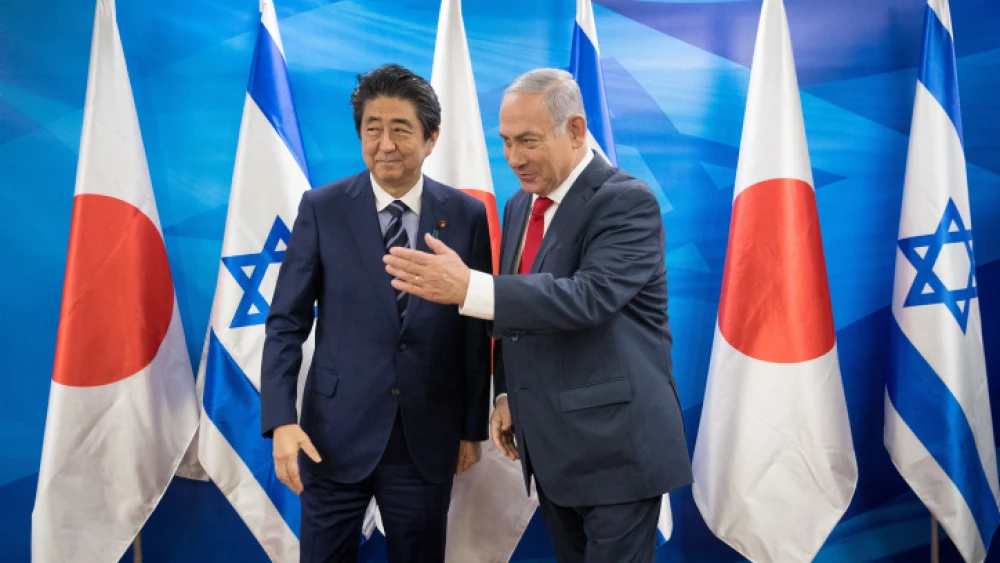
Abe’s visit to Israel, during which he was accompanied by a hundred businessmen and Japanese government officials, brought about a wonderful friendship between Abe and then-Prime Minister Benjamin Netanyahu, and strengthened the countries’ ties economically and politically. In 2018, Abe visited Israel again, this time with a smaller entourage. This connection put Israel on the map for Japanese investors.
At a time of political instability in Israel, it is especially interesting to learn that before Abe became prime minister, six politicians held the position in a span of six years, and two more in the two years since Abe retired.
Moreover, as prime minister for eight years, Abe shattered conventions about Japan’s need for restraint in the international arena, and the powerful language he used is similar to how Israelis perceive themselves.
From what is known so far about his assassination, security was flawed, with only two bodyguards protecting the most powerful and still controversial political figure in Japan. As such, it must be a lesson for security professionals in Israel.
Anyone who is familiar with how the security of our leaders is managed knows that the process is clearly irrational. For example, the moment Benjamin Netanyahu stopped being prime minister, security around him was significantly diminished, with the thick circle of guards moved to his successor Naftali Bennett.
Did the threats against Netanyahu disappear the moment he became the opposition leader? Did the deep hatred of him all of a sudden move over to Bennett? We know, of course, that this is not the case.
On the other hand, was fortifying Bennett’s home in Ra’anana—without a budget limit and in blatant violation of the law—justified even if it was a permanent prime ministerial residence? Does it make sense for the prime minister’s bodyguards to require senior officials to walk through security scanners, but exempt those they have seen on television? I’ve seen such absurdity with my own eyes time and again.
As security organizations, the Shin Bet’s personal security unit and the security department of the Prime Minister’s Office follow procedure, but sometimes forget common sense. At least in this aspect, Abe’s assassination should wake up those in charge of security in Israel.
Ariel Kahana is Israel Hayom’s senior diplomatic commentator.
This article was originally published by Israel Hayom.