
Baden-Württemberg is a bucolic state in southwest Germany, but its capital is Stuttgart, one of the world’s great high-tech centers. Like other German states, Baden-Württemberg has its own intelligence agency.
That agency, the State Office for the Protection of the Constitution, last week released a lengthy report. An accompanying press release neglected to mention this nugget uncovered by my Foundation for Defense of Democracies (FDD) colleague, Benjamin Weinthal: The Islamic Republic of Iran, which for years has sworn that its nuclear research is exclusively for peaceful purposes, has been deploying agents in Baden-Württemberg.
Their mission: to acquire the “products and relevant knowhow” necessary “to complete existing arsenals, perfect the range applicability and effectiveness of their weapons and develop new weapons systems.”
This revelation comes at an inconvenient moment for those Americans and Europeans inclined to give the clerical regime the benefit of every doubt. Earlier this month, the International Atomic Energy Agency issued a report revealing that Iran’s rulers, in violation of their legally binding commitments under the Nuclear Non-Proliferation Treaty (NPT), have been preventing International Atomic Energy Agency (IAEA) inspectors from searching for undeclared nuclear materials and evidence of continuing work on nuclear weapons.
On June 19, the IAEA’s Board of Governors adopted a resolution demanding Tehran provide “prompt access” to sites where nuclear weapons research is suspected to have taken place in the past. The Islamic Republic reflexively dismissed the appeal as “unconstructive and disappointing.”
You need to understand that the NPT is entirely separate from the Joint Comprehensive Plan of Action (JCPOA), the deal President Barack Obama concluded, despite congressional disapproval, with Iran’s rulers in 2015. Spin aside, the JCPOA was not designed to permanently shut down Tehran’s nuclear weapons program—only to put it on ice for a few years. In exchange, the Islamic Republic received hundreds of billions of dollars and the promise that the river of funds would continue to flow.
President Trump and his advisers regarded the JCPOA as can-kicking, and withdrew the United States from it in 2018. But Iran’s rulers remained in the deal, along with France, Britain, Germany (the E3), Russia and China. That means that Tehran has continued to be bound by the commitments it made under the JCPOA. In response to violations of those commitments, E3 leaders have mostly turned a blind eye. Russia and China’s leaders seem to be enjoying the West’s predicament.
Iran’s rulers also have curated a nuclear archive to preserve information on weapons development and created a secret organization, which is chaired by the founder of Iran’s nuclear weapons program and employs scientists who worked on that program.
In other words, we now have overwhelming evidence that the nuclear weapons development program whose existence Iran’s rulers have consistently denied continues to progress.
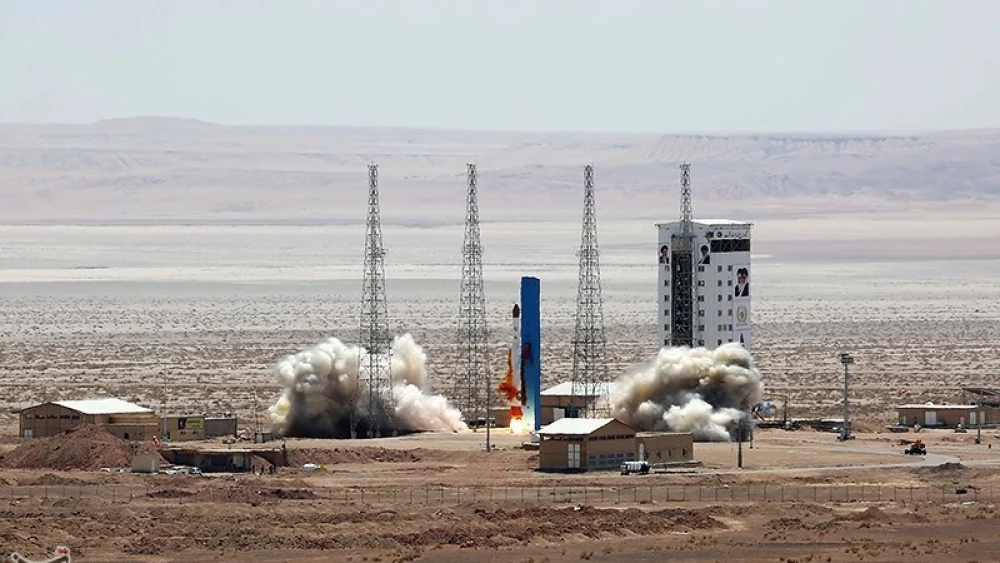
Activities not clearly prohibited (e.g. the development of missiles that can deliver nukes to targets anywhere on the planet) have been carried out overtly. Activities unambiguously restricted have been carried out covertly.
That should trigger a response, specifically: The reimposition of the international sanctions that were lifted under the JCPOA.
Clifford D. May is the founder and president of the Foundation for Defense of Democracies (FDD), and a columnist for “The Washington Times.”
This article was first published by “The Washington Times.”