Why did the insidious Islamist attack on 9/11 produce such a great outpouring of sympathy across the West, while the no less insidious Islamist attack of Oct. 7 generated such a deluge of Judeophobic animosity?
Last week was the 25th anniversary of the tragedy of 9/11. It was commemorated in many places across the world—and celebrated in others. In yet others, it was studiously ignored.
Calculating carnage
While the magnitude of the calculated carnage of innocents can never be downplayed or minimized in any way, it can perhaps be used as a comparative yardstick with which to measure what Israel was subjected to on another day of savage, purposeful barbarism—Oct. 7.
While in 2001 about 3,000 civilians were killed in the most horrific fashion, if we compare population sizes, proportionately far more were killed in 2023. Indeed, adjusting for the relative size of the populations of Israel and America, it would be the equivalent of almost 40,000 U.S. fatalities (and 8,500 abductees) at the hands of the brutal, barbarous butchers.
Indeed, to judge whether or not the Israeli response to Oct. 7 was disproportionate—the prevailing international accusation—consider the following:
On 9/11, the U.S. suffered one fatality per 95,700 citizens, while on Oct. 7, Israel suffered one death per 8,000 citizens. Thus, in proportionate terms, relative to respective population sizes, the Israeli loss of life on Oct. 7 was almost 13 times that of the United States on 9/11.
Results and responses
In response to the 9/11 attack, Washington launched its “Global War on Terror” against the fanatical Al-Qaeda in Taliban-ruled Afghanistan, and against Iraq, then ruled by the tyrannical Saddam Hussein. The result was massive civilian casualties—because of both direct military action and indirect war-related causes such as hunger, disease, thirst, lack of medical care, homelessness and so on.
Reliable estimates are difficult to obtain because of both the objective difficulty of assembling the figures and possible political bias in doing so.
However, conservative estimates put the combined Afghanistan-Iraq civilian fatalities at around 250,000 and indirect war-related deaths at least 3 million. It should not be forgotten that U.S. military action also spread to neighboring countries such as Pakistan, where significant civilian casualties were also inflicted—not least during the drone war of the Obama administration. Significantly, all this took place in theaters thousands of miles from the American homeland, separated from it by vast expanses of intervening continents and oceans.
By contrast, in the case of Israel, the engagement was immediately adjacent to sovereign Israeli territory itself, making the source of the danger far more tangible and immediate to the average citizen in the Jewish state.
In this regard, it should be remembered that when the American homeland was subjected to sudden and unprovoked attack at Pearl Harbor, the response was ferocious, resulting in the obliteration of two major Japanese cities that were turned into heaps of radioactive rubble, with 100,000 to 200,000 men, women and children incinerated within seconds and untold numbers of others suffering the slow, excruciating and often lethal effects of the bombs’ radiation.
Civilians and “civilians”
What should not be forgotten is that the civilian death toll in Gaza was significantly increased by two factors that had nothing to do with IDF activity, neither of which has been given adequate media attention.
One was the practice of Hamas operating against the IDF from inside the civilian population and using noncombatants as human shields. Indeed, as a Wall Street Journal piece underscores, “Israel seeks to minimize civilian casualties, while Hamas seeks to maximize civilian casualties and use them as a propaganda tool.”
The other was the refusal of Egypt to allow Gazans to flee combat zones—as is the case in every other large-scale military conflict, from Ukraine, via Africa, to Syria—purposely keeping them exposed to wartime dangers, apparently in the hope that this would work to Israel’s detriment.
Moreover, included in the figure of 50,000 “civilian” casualties are noncombatant Gazans who, while not formally members of Hamas, crossed into Israel on Oct. 7; helped kidnap Israeli families; provided Hamas terrorists with tactical information and operational intelligence; transported Oct. 7 perpetrators to the scene of the slaughter; helped convey ordnance to those complicit in the massacre; even participated directly in the carnage itself; harassed, hectored and humiliated helpless hostages inside Gaza; and aided in their seemingly interminable incarceration, holding them under appalling conditions of deprivation and isolation.
Clearly, this obscures and constricts just who should be designated an “uninvolved” civilian—impacting the significance of the estimated 50,000 civilian fatalities that are routinely bandied about.
The resurgence of the oldest form of hate
Over and above this analysis of the parallels and divergences between the two tragedies, one troubling question arises.
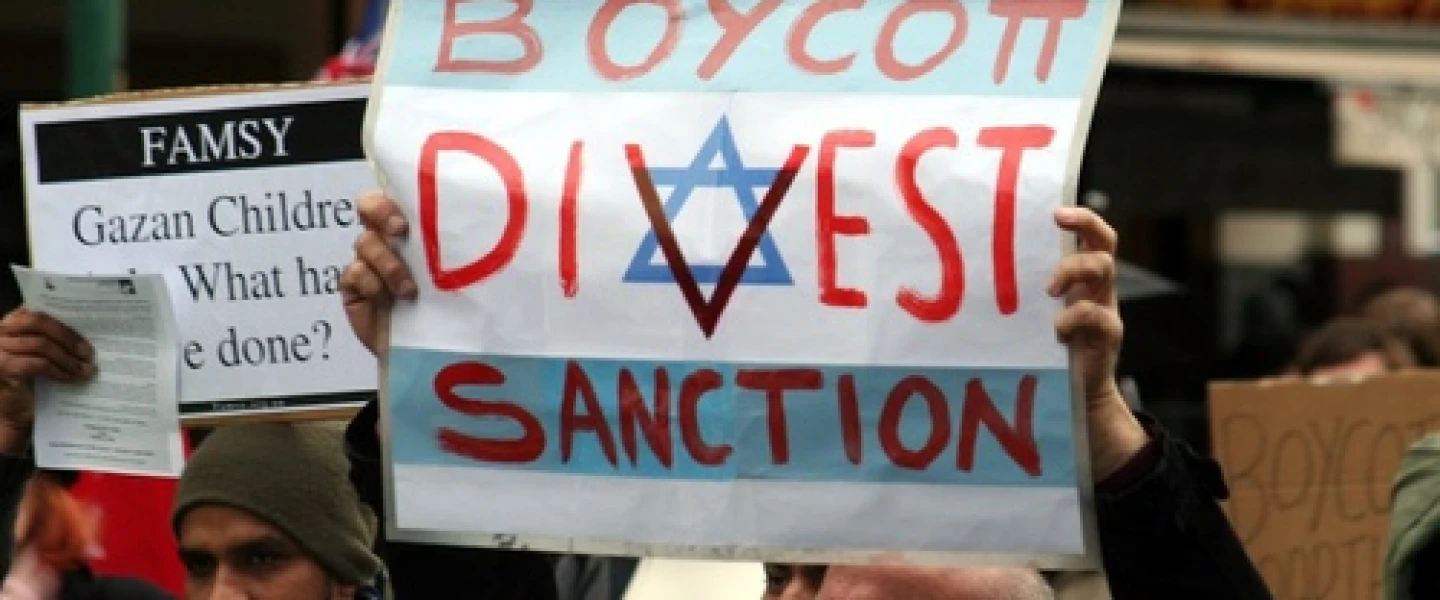
Since both Israel and the U.S. were subjected to murderous, unprovoked attacks by insidious Islamists, how is it that 9/11 produced such a great outpouring of sympathy across the West, while Oct. 7 generated, almost immediately, such a deluge of animosity, both anti-Israel and anti-Jewish?
Could anything highlight more starkly the resurgence of toxic antisemitism—against Jewish individuals in the Diaspora and against the Jewish collective, Israel?