



To untrained eyes such as mine, the distinction between the prelude to war and war itself has largely been lost in the mud of Eastern Ukraine. When this column was submitted, Russian and Ukrainian forces were exchanging gunfire, missiles, injuries and death. Yet world leaders were still speculating about the likelihood or probability of war between those two countries rather than the battles already underway.
By the time you read this, Russia may have launched the full-out invasion that President Biden and others have warned about. But regardless of how the military action in Ukraine is named, it’s clear that the post-post-Cold War era of European geopolitics has begun. Since the fall of the Soviet Union in the early 1990s, the United States enjoyed almost three decades as the world’s lone superpower. But China’s rapid ascension to global prominence has remade that landscape, and now a newly assertive Vladimir Putin is forcing a reconsideration for the United States and its allies as to the best way to deal with a threat they assumed had long since faded.
As a result, the Biden administration is adjusting to the challenges of a tri-polar world. Most of Europe has realized that Russia will be a military concern and an economic threat for the foreseeable future. And U.S. allies on the Pacific Rim understand that our country’s pivot to China will not be as complete a re-ordering of priorities as they had hoped.
But this latest world order also presents important challenges for the State of Israel, whose uniquely deep ties with the United States are not quite as unique anymore, as the Jewish state’s growing relationship with Russia and China created a different but connected set of challenges. Both Putin and Chinese President Xi Jinping understand the geopolitical benefits of closer ties with Israel, and while both countries’ ongoing support of Iran will keep Israeli leaders on their toes, it’s clear that Israel sees the advantages in these alliances too.
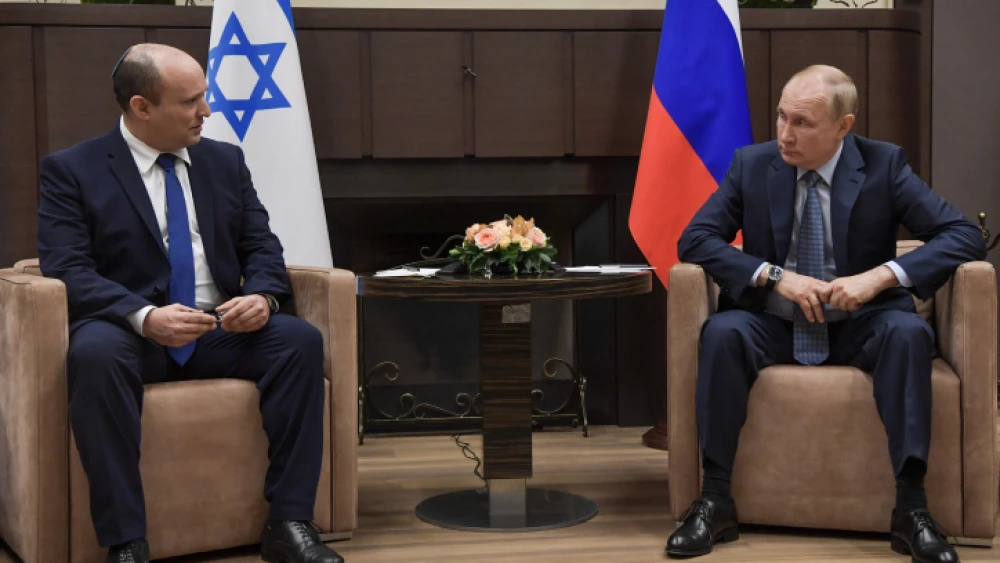
As the violence in Ukraine worsens, Israel now finds itself in a particularly troublesome position, having maintained good relations in recent years with both Ukraine and Russia. Even while most American allies joined Biden in condemnation of Putin’s conduct and offered varying degrees of military assistance to Ukraine, Israel has stayed steadfastly neutral. At one point, Prime Minister Naftali Bennett offered to host peace talks, an idea that Putin quickly swatted away. And the Ukraine Foreign Ministry reacted angrily last week when Israel requested Russia’s help in evacuating Israeli citizens from Ukraine during an invasion.
Even as the rest of the world is consumed by the conflict, Israel has otherwise mostly kept quiet. But if the violence escalates, that position will be much harder to maintain. Ukrainian government leaders are becoming increasingly vocal in calling for Israel’s support against Russia’s violation of international norms. And while the Biden administration has enough else on its plate at the moment, they will certainly take note if Israel remains on the sidelines while Russian tanks roll toward Kyiv.
But the international politics of this are more complicated for Israel than it seems. Many Westerners believed that the friendship of mutual convenience between Putin and Benjamin Netanyahu was based on the personal needs of the two leaders. However, it became clear to both that cooperating in Syria benefited both countries’ security priorities and laid the groundwork for other types of collaboration.
And while Avigdor Lieberman’s Yisrael Beiteinu party might not be as prominent as in past years, it is still an integral part of Bennett’s governing coalition and still commands the support of legions of Russian-speaking immigrants.
Although the United States is far and away Israel’s strongest ally on the world stage, upsetting Putin would have both international and domestic political consequences for the Jewish state.
Israel is still navigating similar intricacies in its dealings with China. Last year, when the United States determined that their conversations relating to shared technology could pose a potential security threat, the Biden administration made it clear that Israel needed to pull back. We’ll see in the weeks ahead if Bennett receives a similar message regarding Russia.
Dan Schnur teaches political communications at UC Berkeley, USC and Pepperdine. He hosts the weekly webinar “Politics in the Time of Coronavirus” for the Los Angeles World Affairs Council & Town Hall.
This article first appeared in the Jewish Journal.



