


Israeli journalist and my friend Yaron London recently presented me with a challenge. Following my remarks on the U.S. administration’s pressure to promote human rights in the region, he wrote: “With the same determination and integrity that characterizes your writing, try to imagine how Israel would behave if human-rights organizations did not exist, or if international groups turned a blind eye. What would happen in the occupied territories, the interrogation rooms, prisons, courts, olive groves and the army?”
I have no difficulty imagining how Israel would behave in such a case.
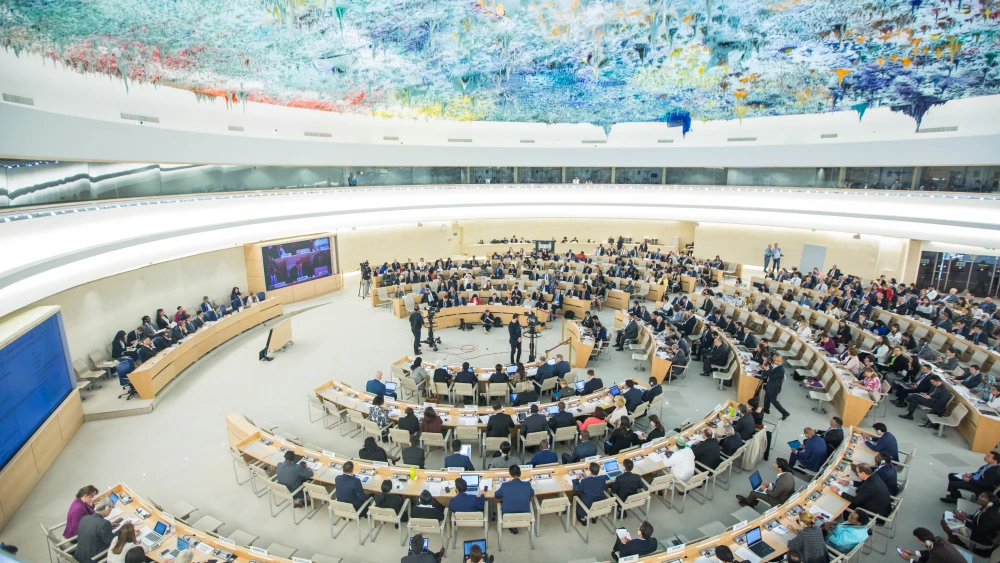
The United Nations is incapable of ruling credibly and honestly on matters of democracy and human rights. After all, its very composition is undemocratic, and its Human Rights Council boasts leaders from the most despicable of regimes and individuals obsessed with slandering Israel.
In the past, human-rights groups were headed by individuals such as Ruth Gavison, a founding member of the Association for Civil Rights in Israel, and Robert Bernstein, who founded the Human Rights Watch. Both organizations were useful at the time.
Since then, however, they have been taken hostage by purists, radicals and individuals who hate Israel and who view the Israel-Palestinian conflict as a one-dimensional “victim vs. the privileged white” situation. Bernstein himself exposed such distortion within HRW in 2009.
Had these organizations remained open, democratic and fair with regard to human rights, they could have contributed to society. In the absence of such balance and reliability, their contribution is marginal.
An unbiased examination of some of Israel’s most serious human-rights groups indicates that these organizations have not contributed in any major way to addressing human rights issues.
In 1956, after the Kafr Qasim massacre, the shame felt by Israel and the condemnation issued by the government did not come about through local or foreign rights groups or international pressure.
Israeli Defense Minister Ariel Sharon was ousted in 1983 regardless of external pressure after he failed to prevent the 1982 Sabra and Shatila massacre, in which Christian Lebanese Forces slaughtered hundreds of Palestinians.
The Israel Security Agency dismissed its heads in 1984 after two Palestinian bus hijackers were executed by members. This, too, was not the result of outside pressure.
In these and other crucial moments, Israel’s democracy operated through public opinion, the legislature, the media, the Knesset, within the framework of checks and balances. None of these prevented—and based on human experience, could not prevent—serious deviations from the conduct demanded of a multicultural society. But they did prove that lessons can be learned, culprits punished and wrongdoing condemned. Had human-rights organizations been fair in their dealings, they could have contributed to this process as well.
U.S. Gen. Norman Schwarzkopf was asked during the 1991 Gulf War how he would conduct the war without France. “Going to war without France is like going hunting without an accordion,” he said.
The same is true of Israel and the human-rights organization we know today.
Dan Schueftan is the director of the International Graduate Program in National Security Studies at the University of Haifa’s National Security Studies Center.
This article first appeared in Israel Hayom.



