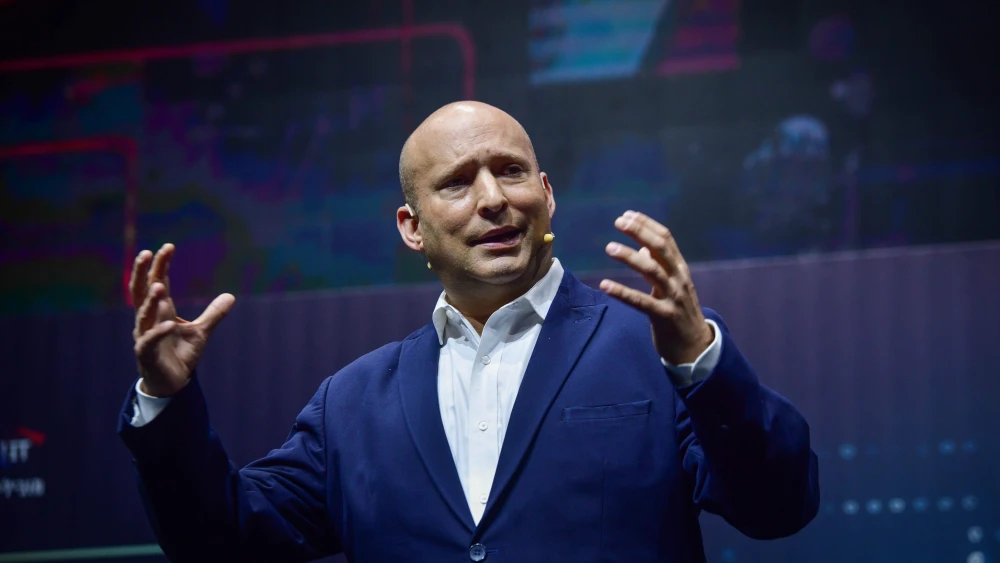

Naftali Bennett wants his old job back. More precisely, he wants Israelis and Americans to believe that he, not Benjamin Netanyahu, is the responsible adult in the room. He wants to be seen as the statesman who can salvage the U.S.-Israel relationship before it fractures beyond repair.
That is the only honest way to read his recent ten-day tour of the United States and the alarmist debrief he issued upon returning. Israel’s standing, he declared, has “never been so bad.” The message was stark: bipartisan support is crumbling, young Americans are turning against the Jewish state, and Israel is becoming an international “leper.” It sounded like a policy warning. In reality, it was a campaign launch.
To be clear, the concerns Bennett raised are not imaginary. Antisemitism is growing in places where it was once unthinkable. Anti-Israel sentiment has become fashionable in elite institutions and endemic on college campuses. Bennett undoubtedly heard these worries from serious, thoughtful people—members of Congress, Jewish leaders, donors and academics. He did not invent the anxiety. He reframed it to serve a political contrast.
The central message of his trip was not that Israel is in trouble. It was that Netanyahu is to blame and Bennett knows how to fix it. That is the through line of everything he said. He cast the erosion of support as a recent phenomenon. He implied that under his brief, centrist premiership, things were more stable. And he is now offering himself as the leader who can calm the waters before the relationship fully unravels.
This is not foreign policy analysis. It is positioning.
Nowhere is this clearer than in his depiction of the American right. Bennett implies that Republican support is weakening. But he fails to mention that President Donald Trump, now in office, has praised Netanyahu repeatedly in explicit and personal terms. He calls him a warrior. He calls him loyal. He calls him strong. These endorsements matter. They contradict Bennett’s thesis. So he leaves them out.
This is not a neutral omission. It is an intentional distortion designed to reinforce the narrative that Netanyahu is burning bridges, while Bennett is uniquely capable of rebuilding them.
For years, Bennett insisted that Israeli officials should never criticize their own government abroad or in foreign media. He called it a matter of national discipline. But now, he is offering critiques that are tailored for international consumption, even if technically delivered in Hebrew. He knows they will be translated. He knows they will circulate. The message is no longer confined to Israeli voters. It is aimed at foreign capitals. The principle has been suspended in the service of political ambition.
Bennett’s proposed solution is vague by design. He calls for a “new story” and a “synchronized” information campaign. It sounds plausible until you examine it. Where is the plan to reform the IDF Spokesperson’s Unit? Where is the roadmap for engaging skeptical younger audiences? Where is the strategy for confronting anti-Israel narratives at the institutional level? It is not there. Because this is not a strategy. It is branding.
To his credit, Bennett is not wrong to point out that Israel’s public diplomacy is deeply flawed. It is. The messaging is often clumsy, reactive, and painfully slow. The country’s institutions have not adapted to the modern information war. Israel has paid a real price for that failure.
But it is not the root of the problem. The delegitimization of Israel is not driven by ignorance. It is driven by ideology. The people calling for Israel’s erasure are not misinformed. They are committed. They do not want better facts. They want a different reality. No amount of synchronized messaging will persuade them to abandon their cause.
After the massacre of Oct. 7, 2023, Israel faced a cruel binary. Respond with restraint and project weakness. Respond with force and invite condemnation. It chose the latter. The outrage that followed was not the result of bad public relations. It was the result of a world that applies a different standard to Jews defending themselves than to anyone else.
Bennett knows this. But admitting it would blur the contrast he wants to draw. He is not just offering a critique. He is offering himself. He wants Americans to see him as the partner who “gets it.” The one who understands their discomfort. The one who can smooth things over in ways Netanyahu never will.
It is a familiar pitch—calm the rhetoric, restore decorum, stop scaring the neighbors. And it may resonate in some circles. But it misses the moment. Israel does not need polish. It needs moral clarity. It needs leaders who understand that this is not a communications failure. It is a war over legitimacy. And wars are not won by focus groups.
The U.S.-Israel relationship does not rest on speeches and smiles. It rests on shared interests, strategic depth, and common values. It has survived arguments before. It will survive this one too. The real question is whether Israeli voters will mistake a savvy communications tour for a serious plan of action.
Bennett’s post generated headlines. That was the point. But it did not reveal a new strategy. It revealed an old ambition. One dressed up as diplomacy. One designed to flatter American sensibilities while quietly auditioning for the role of “the responsible one.”
Israel needs leadership, not branding. It needs strength, not spin.
This article was first published in The Mael Review, a one-stop publication from Daniel Mael featuring sharp geopolitical analysis in The Geopolitical Maelstrom and compelling investigations across true crime, culture and power in The Mael Dossier.