
The Arab world didn’t hold its breath on Tuesday upon the revelation of U.S. President Donald Trump’s peace plan, and generally responded with restraint and even deafening silence. On the other hand, however, and this is the good news, there were no expressions of outrage or outright dismissal of the plan either—not over the declaration of a united Jerusalem as Israel’s capital, not over the demand to recognize Israel as a Jewish state and not even over the expected annexation of settlements in Judea and Samaria.
After all, the majority of Arab states have far more important and pressing issues than the future of the Palestinians to deal with, and if the Palestinians don’t want to or are unable to take responsibility for their future, no one in the Arab world intends to do it for them.
The Palestinians, for their part, have chosen, as expected, to indignantly reject the U.S. peace proposal. Apparently, they would rather live in a fantasy world in which their every desire is fulfilled. It has now become obvious to everyone on the planet besides the Palestinians that this is not going to happen.
The assumption that preserving the status quo serves the Palestinians or at least doesn’t worsen their situation was shattered on Tuesday, but due to the weakness of Palestinian society and its leadership, they aren’t drawing the necessary conclusions and answering Trump’s call.
Thus, instead of recognizing reality, internalizing that they will never be offered a better proposal, but mostly instead of rolling up their sleeves in an effort to try building a stronger and more prosperous society and economy—and hopefully pulling the Palestinian wagon out of the mud it has been stuck in for decades—the Palestinians would rather keep missing every opportunity that happens across their path.
Unlike in the past, the Middle East is no longer divided into Israelis on one side and the Palestinians, with the backing of Arab states, on the other. The new line in the sand runs between Iran and its allies, and the moderate Arab states with Israel and the United States alongside them. In their decision to reject the American plan, the Palestinians are opting to be on the wrong side of the map and of history. The Arab world understands this, which explains the cold shoulder it is turning to the Palestinians at this most fateful juncture.
The plan Trump proposed on Tuesday is light-years from the Palestinian dream. But it is a realistic and practical plan, which addresses the gamut of problems that have always stood in the way of a peace deal. Its main advantage is that contrary to the past, this plan is not hostage to Palestinian weakness or whims, and Israel and the US can implement it, in its entirety or partially, on their own. This is an important achievement for Israel, and it’s possible that 2020 will be remembered in history the same way we currently remember 1948 and 1967.
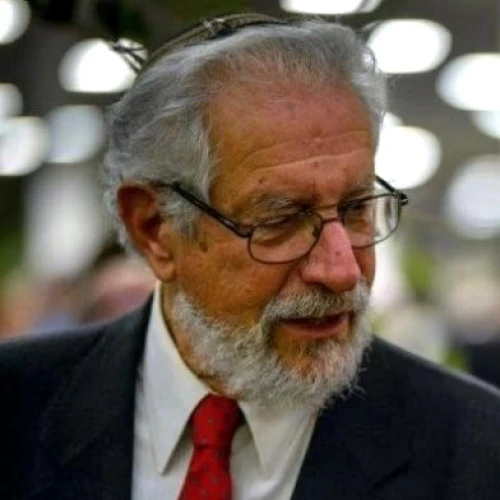
Eyal Zisser is a lecturer in the Middle East History Department at Tel Aviv University.
This article first appeared in Israel Hayom.