Three fundamental questions crystallize the distinctions between the various positions on the matter of Israeli annexation of the Jordan Valley.
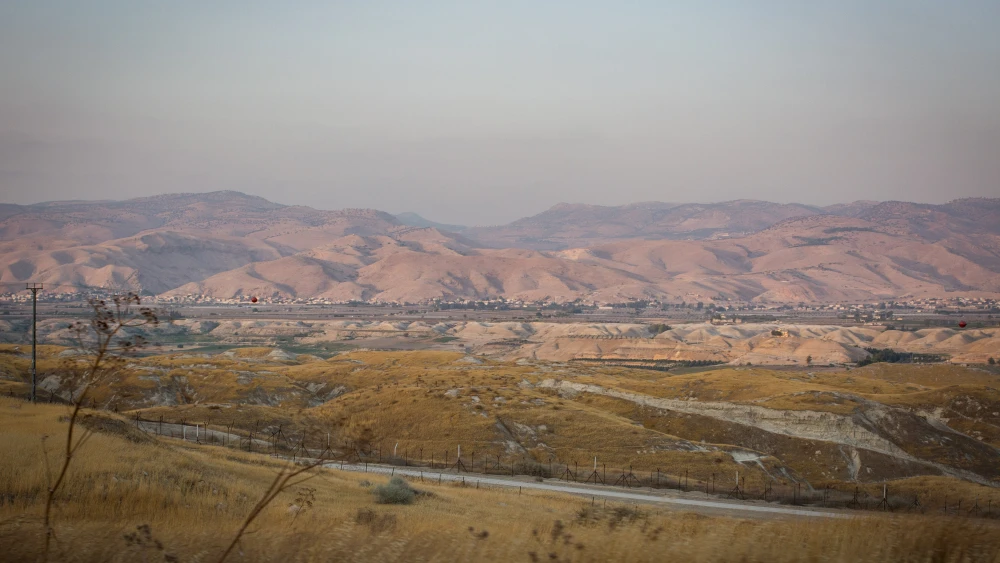
The first question: How wide a swath of the Jordan Valley must Israel keep to meet its security needs—merely the area between the border crossings and Highway 90, or farther inland, including the more than 15 kilometers (9 miles) to the west?
The second question: Is the Israeli demand for the Jordan Valley as a natural defensive barrier on its eastern front based solely on current security circumstances—rendering it open to future reconsideration and negotiations—or is it a fundamental and intractable imperative for Israel’s future?
The third question: How does this geographic region coincide with the overall national plan to build and expand communities, roads and infrastructure there, as the country’s eastern pillar?
Most of those familiar with these matters are in agreement that under the present circumstances the Jordan Valley is vital to Israel as an isolated space controlled by the Israel Defense Forces. The question is how wide a strip of territory the IDF needs to control.
According to the IDF, to defend itself, Israel needs to control the entire area from the actual border on the Jordan River to the Samarian hills to the west. This doctrine cites two primary lines of defense. The first line is the hills immediately overlooking Highway 90, which runs north-south along the Jordanian border. Israel must control this line in order to safeguard freedom of movement along the critical route. The second line pertains to the hills to the west of the Allon Road (Routes 458, 508 and 578 in Judea and Samaria).
Those who argue for ending the Israeli presence in the Jordan Valley, among them former Israeli premiers Ehud Barak and Ehud Olmert, do not reject this military assessment. Barak, who agreed at Camp David in 2000 to give up the entire Jordan Valley, was certainly aware that he, as IDF chief of staff, had himself determined that Israel’s eastern defensive line needs to stretch from the Jordan River to the western Samarian ridges of Mount Ebal and Mount Gerizim.
Many changes have occurred in the region since Barak and Olmert’s concessions, including the strategic threat that has emerged from Gaza and the Iranian threat, in the form of the Islamic regime’s proxy militias, in Syria, Lebanon and Iraq. Through these changes, we are again reminded of the limitations of relying on international forces, who struggle to maintain an effective presence in hostile areas over time.
The right’s answer to these three questions is clear: The Jordan Valley in its entirety is critical to Israel’s security and is not subject to negotiation.
Maj. Gen. (res.) Gershon Hacohen is a senior research fellow at the Begin-Sadat Center for Strategic Studies. He served in the IDF for 42 years. He commanded troops in battles with Egypt and Syria. He was formerly a corps commander and commander of the IDF Military Colleges.
This article first appeared in Israel Hayom.