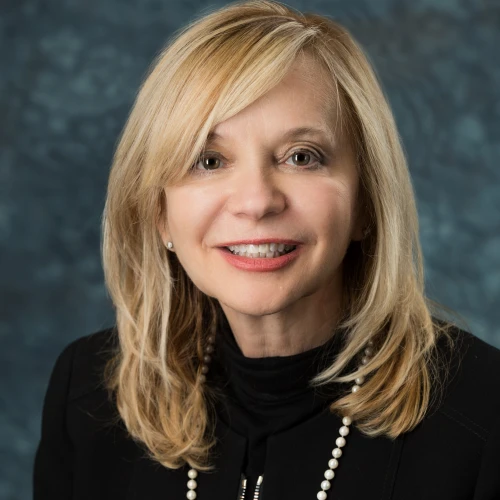

“The New Yorker Radio Hour,” the weekly program produced by The New Yorker and WNYC Studios, released an episode on Aug. 7 titled “How Socialist Is the D.S.A.? Megan Romer Explains.” The host was David Remnick, who covered Moscow for The Washington Post and has edited The New Yorker since 1998 (he also won a Pulitzer Prize in 1994 in the category of general nonfiction). His guest was Megan Romer, national co-chair of the Democratic Socialists of America.
This was not Fox News. This was not an ambush. It was a 30-minute slot on a friendly magazine with the co-chair who had come to explain what her movement believes. She went on to explain.
Remnick asked about Darializa Avila Chevalier, the Democratic socialist who just won a congressional primary in New York, and whether Romer supported her decision to attend a rally in Times Square on Oct. 8, 2023, the day after the Hamas attack. Romer replied yes and volunteered that she would have gone herself.
Then she gave her reasoning. The attacks in Israel by Hamas terrorists and Palestinian Arab citizens in Gaza on Oct. 7, 2023, she said, were in many ways inevitable. If you put people into an open-air concentration camp and deny them rights, dignity, food and the ability to live in safety, then you have to expect that eventually they will rebel, was her reasoning. And then, without pausing, she added: that is not defending any harm of civilians or of non-combatants.
Remnick refused to let it stand. “Well, sure it is,” he said. “You said you’re supporting it.”
And Romer answered: “I’m saying that I think it was inevitable.”
She began with a hedge. Remnick pushed once, and the hedge was gone.
Understand what she called “inevitable.”
Roughly 1,200 people were murdered in a single morning. Individuals were beheaded, and entire families were burned alive inside their homes in kibbutzim, known for their pacifist sentiments, and that included people who had employed or otherwise assisted Palestinian Arabs. Another 251 people were dragged into Gaza, among them children and the elderly.
In March 2024, Pramila Patten, the U.N. Special Representative on Sexual Violence in Conflict, reported reasonable grounds to believe that rape and gang rape occurred across multiple locations that day—gang rape in at least three of them, alongside what her report termed sexualized torture. Her team documented bodies recovered naked from the waist down, mostly women, hands bound, shot repeatedly, often in the head. She found clear and convincing information that hostages held in Gaza were subjected to sexual violence that was likely still ongoing as she wrote.
That is not an Israeli press release. That is the United Nations, an institution nobody has ever accused of excessive tenderness toward the Jewish state.
“Inevitable.”
Sit with that word. It’s not “understandable” or even “predictable.”
“Inevitable” means that it could not have been otherwise. Applied to an atrocity, it moves the eye off the people who chose to commit it and onto the conditions said to have produced them. Agency recedes. Causation fills the space. And murderers and rapists begin to sound like weather.
You do not prosecute a hurricane. You explain it. And if you follow that logic honestly, the blame settles on whoever was standing in its path.
Notice also the escape hatch built into the same breath: “that is not defending any harm of civilians.” This is the signature maneuver of our moment—an explanation so complete that it forecloses blame, followed instantly by a denial that blame was assigned. Remnick took it apart in five words.
Be precise here because precision is the only thing that survives a hostile reader. Romer didn’t say she endorsed the murder of civilians; she said the opposite. That is the problem. The disclaimer is not a defense. It is the machinery. It lets a person advance a framework that diminishes the agency of men who murdered, burned, raped and kidnapped, while keeping intact the ability to insist that none of it was defended.
And it’s worth being exact about what she said she would have joined.
The Times Square rally on Oct. 8, while smoke still emanated from homes in southern Israel, was organized by a coalition of leftist groups and promoted by NYC-DSA. Attendees carried signs declaring that resistance is justified when people are occupied. An Israeli flag was stomped and burned. One attendee was photographed holding up a phone displaying a swastika, one day after the largest massacre of Jews since the Holocaust.
The reaction was immediate, and it came from the left.
New York Gov. Kathy Hochul called the rally abhorrent and morally repugnant. Brad Lander, a DSA member for decades and now the Democratic Party nominee for New York’s 10th congressional district, quit the organization over it and called the gathering abominable. Rep. Alexandria Ocasio-Cortez (D-N.Y.) said the bigotry and callousness expressed in Times Square were unacceptable.
Every democratic socialist legislator in New York stayed away, then-state assemblyman Zohran Mamdani among them. He even condemned it. NYC-DSA deleted its own post within days and apologized for the confusion it had caused.
In 2023, the DSA’s New York chapter could not get away from that rally fast enough.
In 2026, its national co-chair says she would have been standing in it.
That is the distance this movement has traveled in three years. Not a change of opinion. A change in what it will tolerate in the people it elevates. Avila Chevalier, 32, who helped lead the pro-Palestinian encampments at Columbia, was there. She has never taken back a word. In June, she unseated five-term New York Rep. Adriano Espaillat in a district so blue that November is a formality, weeks after Mamdani, currently the mayor of New York City, endorsed her.
Now ask the question that actually matters, and ask it from inside the coalition.
The issue is not whether this movement criticizes the State of Israel. It is whether it extends to Jews and Israelis the same moral vocabulary it demands for everyone else: agency for the people who commit atrocities, dignity for the people they kill and a refusal to keep explaining until responsibility has quietly disappeared.
On this evidence, it does not. And that gap does not require the word antisemitism to be damning. Arguing about that word is a trap that will swallow the entire conversation. Argue about the gap. It is indefensible by the movement’s own stated standards.
The rest of the interview offered no relief because the co-chair could not answer basic questions about her own platform.
Asked what the DSA wants for Israelis and Palestinians, Romer described a “free Palestine” with a capital in Jerusalem, volunteering that this could safely be read as a one-state solution. She said nothing about what becomes of the roughly 10 million people currently living in Israel. Not a word. In this framework, the question does not arise.
Asked whether the DSA would have supported the terms discussed at Camp David in 2000, the closest the parties have ever come to a two-state agreement, she said it was a good question and that she would have to look at the specifics.
She didn’t know then and doesn’t now. She holds a maximalist position on the outcome and hasn’t read the history that produced it. That is not a policy. That is a slogan wearing a policy’s clothes.
The pattern held everywhere. She said the DSA believes in taxing the hell out of millionaires. Remnick asked what that means in practice. She had no answer, and when he observed that a co-chair might be expected to have one, she offered that it is a democracy and that we have to look at what we need to spend. On open borders, she described reforming the current system while rethinking it, building a new one and eventually “flipping a switch.”
And when the backlash came, Romer didn’t revisit any of it. She went on X the next day and called Remnick a “debate bro” trying to make her look and feel stupid.
He asked her questions. That was his job. The questions were never the problem. It was the lack of answers.
Democrats should understand exactly what is at stake because life is not a podcast. DSA members have won congressional primaries in New York, Colorado and Michigan, unseating sitting House incumbents in the above first two states. By January, there will almost certainly be seven of them in Congress.
This is no longer a caucus writing manifestos in a rented room. It is an organization with a functioning electoral machine, a farm system and a demonstrated ability to end 30-year careers.
To be exact, because exactness is the point: Romer’s words are hers. Mamdani did not say them, and no one should pretend that he did.
But Romer is not a member having a bad afternoon. She is the co-chair—the person whose formal job is to articulate what the organization believes. When the person elected to speak for a movement calls Oct. 7 inevitable, cannot answer a question about Camp David or explain her own tax position, then that is a description of the movement’s intellectual center of gravity.
It’s not a gaffe. It is a readout.
So put one question to every candidate seeking your vote, your check or your endorsement. Not whether they criticize Israeli policy. Not whether they grieve Palestinian suffering (because decent people do).
Was Oct. 7 inevitable? Yes or no.
The ones who can answer in a single syllable belong in public life. The ones who need a paragraph have already told you what they think.
Nothing about this was inevitable. Not then. Not now.