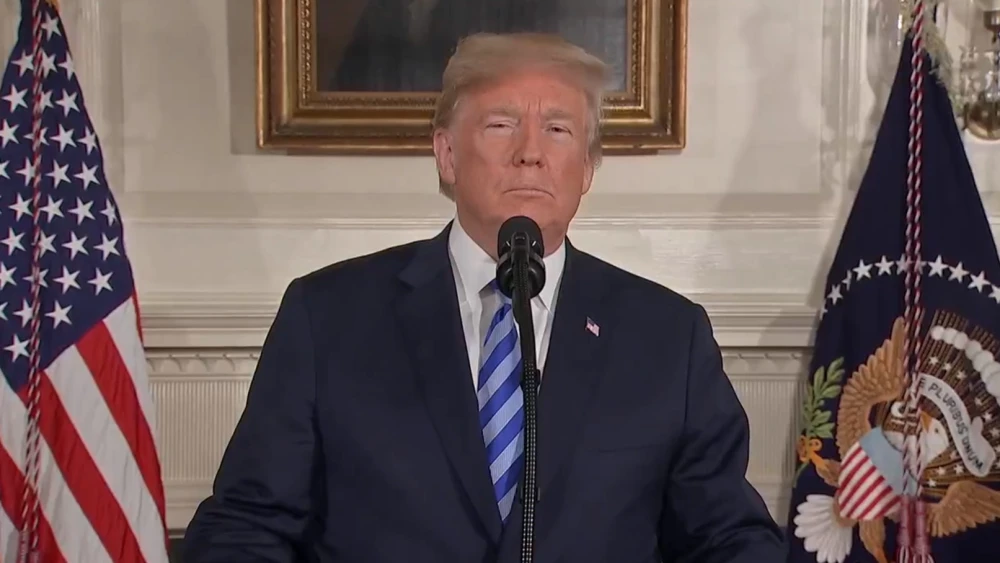
The Islamist regime in Iran is very worried over the speed in which U.S. President Donald Trump and North Korean dictator Kim Jong-un reached their agreement. They know the nuclear talks in Singapore will have immense ramifications for the future of Iran’s nuclear and missile programs.
Iran’s statements ahead of the summit were viewed as an attempt to warn the North Korean leader against trusting the United States, but its reaction after the summit was full of disappointment.
Iranian Foreign Ministry spokesman Bahram Qassemi cautioned Kim before the summit not to fall for American promises. Qassemi said America had violated the nuclear deal it had reached with Tehran—the deal negotiated by the Obama administration that Trump shelved in May.
Even on the campaign trail, Trump said that if he won the presidency, one of his first moves would be to cancel the deal. He made a promise and kept it. This move by Trump, before the United States had even effectively reinstated sanctions, is slowly choking the Iranian economy.
If the talks with North Korea lead Pyongyang to relinquish its nuclear and ballistic-missile programs, then Trump, encouraged by the accomplishment, will turn to tackle Iran’s nuclear-weapons program and missile arsenal. However, even if he fails, Trump will have increased the pressure on Iran to try to attain the same rewards squandered by North Korea.
Regular Iranians understood a long time ago that continuing to pursue nuclear and ballistic-missile capabilities will only bring calamity to their country. The Iranian citizen is already asking: How could the toughest Communist leader in the world bend to Trump, while we continue burning the American flag?
Hence, the twinge of disappointment in the statement issued by Iranian President Hassan Rouhani’s office, which admonished the North Korean leader for putting his faith in the United States and entering nuclear negotiations with Trump.
Menashe Amir is an expert on Iranian affairs and former head of the Israel Broadcasting Authority’s Persian-language division.