
The United States once again appears to face a choice it has postponed for decades: negotiate with the Islamic regime or accept that lasting change in Iran ultimately requires regime change.
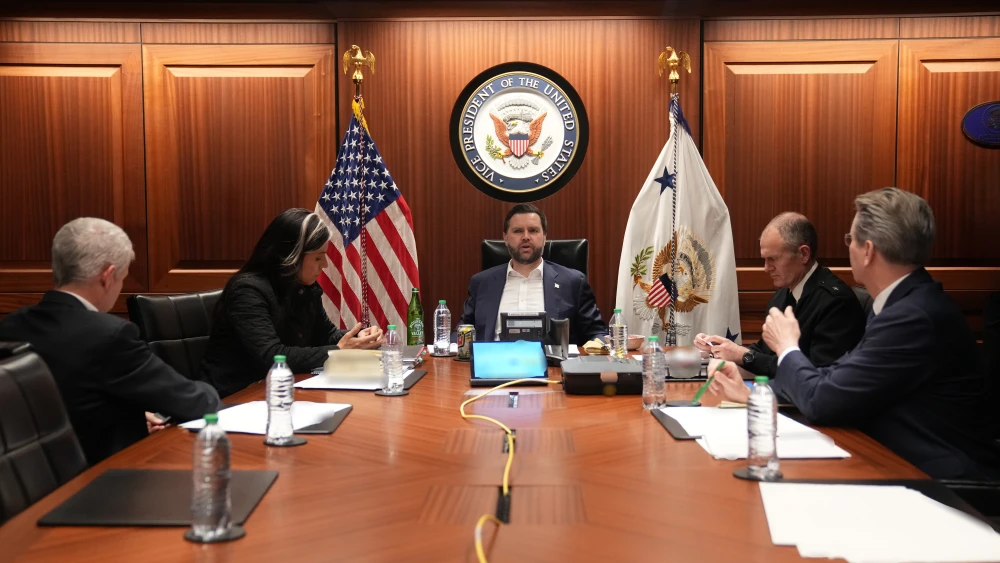
U.S. Vice President JD Vance has himself acknowledged that negotiations with Tehran are proceeding with difficulty and has also warned that some hardliners within the regime prefer war to an agreement.
Washington has also underestimated the means Tehran still has at its disposal. The Strait of Hormuz has once again demonstrated the extent of Iran’s strategic leverage. With relatively limited military means, the regime can exert enormous economic and geopolitical pressure through the Strait of Hormuz. Tehran itself also appears to have fully discovered only during this confrontation just how much influence it can wield through this position.
But perhaps the greatest miscalculation is the assumption that military pressure automatically creates the conditions for regime change. A government in Tehran can ultimately be weakened by bombardments, sanctions and international isolation; a revolution, however, can succeed only when the Iranian people themselves rise up and seize control of the streets.
The comparison with 1979 is therefore unavoidable. In the final phase of the revolution, the people gained access to weapons from arms depots and military bases. At the same time, parts of the military and security forces began to fall away or defect. As a result, the balance of power on the streets changed fundamentally within a short period of time.
That situation does not exist today. The regime has learned from its own “birth” and possesses a far more strongly organized apparatus of repression. History has by now shown that the regime brutally suppresses protests. The bloody events of January have once again made clear that an unarmed population stands no chance against a heavily armed state apparatus.
A decisive phase will therefore probably arise only when the regime’s monopoly on violence genuinely begins to erode: when the people gain access to the means with which they can resist and when enough security forces refuse to continue acting against their own population.
This raises the question: Does the momentum of January still exist? Months of repression, war and uncertainty may have weakened the willingness to take to the streets again. This also makes the position of Crown Prince Reza Pahlavi, who has explicitly positioned himself as the leader of the opposition, more crucial. When another decisive moment arises, he bears the responsibility to demonstrate clear leadership and call on the Iranian people to take control of the streets.
An agreement remains possible, but even if one is reached, it risks becoming little more than a diplomatic victory for appearances’ sake. After all, little will change for the Iranian people as long as the same repressive system remains in power.
Washington must ultimately choose: Continue negotiating with an unpredictable regime or recognize that lasting stability through an agreement with the ayatollahs remains an illusion.