
The current conflict between the United States and Iran is often viewed through a Western lens that sees the world as transactional. It assumes that all actors ultimately seek prosperity, stability, security and material well-being. While these things are broadly valued across all cultures, they are sometimes insufficient to explain the behavior of states and movements that do not respond to them very well.
And so, we need to reassess the Western framework and clarify why it works well in some circumstances but not others.
This is illustrated by the classic paradigm of the carrot and the stick. To press the metaphor, carrots and sticks often have a great effect, provided you have chosen the correct carrot and the correct stick. International actors often use finance (trade, grants, loans or collaborative projects) as the carrot and financial restrictions (like sanctions) as the stick. Of course, military intervention is the ultimate stick.
But these incentives and disincentives may address only part of the problem. We often ask “why” political movements do what they do. But “why” can be a limiting question, because it prompts us to answer based on our own assumptions.
Other questions may be more useful, such as asking “what maintains” a certain movement or regime’s behavior. In this context, what might be effective positive or negative reinforcement mechanisms? What if they are different from mechanisms we would recognize?
For example, for many years, Israel assumed Hamas’s aggression could be contained by funneling hundreds of millions of dollars into Gaza. This was Israel’s “conceptzia,” and it was proven horrendously wrong on Oct. 7. We learned on Oct. 7 that this attempt at positive reinforcement didn’t work.
Israel then initiated a punishing and severe war in Gaza that has not, it seems, broken Hamas. Neither the financial carrot nor the stick of war seems to have worked. Many in the West may find this confusing.
Similarly, war has been waged against both Iran and Hezbollah based on the belief that suffering would change their behavior. Neither strategy has proven fully effective.
So, we should ask, are we properly understanding what maintains the behavior of these movements and regimes?
An illuminating comparison would be to the late Egyptian President Anwar Sadat’s decision to seek peace with Israel in 1977. This occurred during a time when radical Islam in Egypt was growing larger than it had been under Sadat’s predecessor, Gamal Abdel Nasser.
Sadat is thought to have been motivated by a number of things: regaining control over the Sinai, the loss of which in the 1967 Six-Day War was an ongoing source of national humiliation; American financial support that would help build a more stable society; relief from the cost of maintaining a large military; and the acknowledgement that Egypt likely had no chance of leading a unified Arab world. This is a complex set of motivations indeed.
Whatever the precise balance between these various factors may have been, the positive reinforcement of peace proved to be more compelling for Egypt than continued conflict.
The Western toolbox may be emptying.
It is unreasonable to expect the West to transform its current challenges into a Sadat-like moment. But it does raise the question: Do we fully understand the willingness of Iran, Hamas and so on to accomplish their objectives while repeatedly absorbing substantial military and economic losses?
Since our interventions to date have not resulted in the desired response, we must consider what other factors are in play that carry greater weight than the material incentives Western policymakers often emphasize.
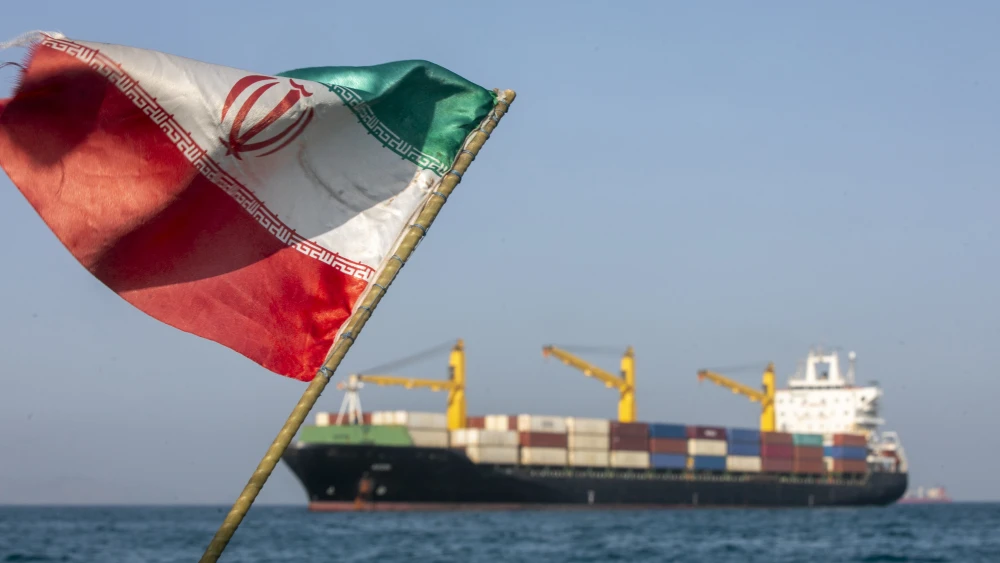
The U.S. blockade of the Strait of Hormuz created an ongoing financial burden for Iran, but it didn’t cow them. Layers of the Iranian leadership were killed, and much of the regime’s military infrastructure was damaged or destroyed, but that has not perceptibly changed its behavior. So, were neither the carrot nor the stick big enough?
Many hold that the Iranian regime sees mere survival was a “win.” Because of this, it is said, continued defiance serves as a positive reinforcement. This would seem to be a difficult thing to overcome short of complete military domination. If the Iranian regime’s “reinforcers” are survival and an unwavering commitment to allocating substantial resources to organizations hostile to Israel and the West, the current carrots and sticks will likely yield minimal progress.
Achieving regional hegemony could be an additional reinforcer for Iran, which might be what motivates its pursuit of nuclear weapons. Another commonly mentioned reinforcement is a sense of religious obligation combined with the concept that resistance alone is noble. To the extent that these are indeed motivating causes, creating a competing reinforcer would seem a major challenge. Certainly, the conventional carrots and sticks will not be enough.
The Western toolbox may be emptying. Its enemies seem not to be motivated by money, as evidenced by the vast sums sent to Hamas. Similarly, while Iran’s oil reserves are the third-largest in the world, it has not pursued the development model adopted by countries such as Saudi Arabia or the United Arab Emirates, both of which have dramatically raised living standards and diversified their economies.
Iran, it seems, is more motivated to spend copious amounts of money in pursuit of nuclear and conventional weapons as well as to fund Hamas, Hezbollah, the Houthis and others. Nor, as stated, has a severe stick been effective.
How can Tehran’s responses be shaped to align with the objectives of Washington?
All of the above suggests that Iran and its allied movements gain legitimacy not only from specific financial, security, political or even religious actions, but also from the very continuation of “the struggle.” In fact, “the struggle” is a recurring theme: They identify themselves publicly as an “Axis of Resistance.”
If this is the case, the carrot and the stick, prosperity and punishment, may prove less effective than Western policymakers expect. Thus, perhaps the West’s focus should not solely be on finding a more appealing incentive or a more potent deterrent, but rather on creating conditions that encourage leaders and communities to prioritize their own flourishing over perpetuating a conflict that Israel and the West cannot shirk without compromising their own security.
That may be the ultimate lesson of Sadat.
Fifty years ago, he found a way to preserve Egypt’s dignity while making peace more reinforcing than continued conflict. While that moment was unique, the broader challenge remains: How does one create conditions in which leaders and societies become more invested in their own flourishing than in sustaining a destructive struggle?