
Transformation! It’s a popular word used today in many different contexts, and we are now experiencing it in our Jewish calendar.
On Sunday, we marked Tisha B’Av, the national day of Jewish mourning and the saddest day of the year. But now, the mourning period is behind us. Weddings are permitted, and joyous occasions await. This coming Shabbat has a special name derived from the opening words of the Haftarah, Shabbat Nachamu, a Sabbath of comfort and consolation.
This is symbolic of the strength and resilience of our people. The ability to bounce back from tragedy and start again is a character trait that typifies who we are as a nation. And we have seen it in abundance after Oct. 7.
In Israel today, we are witness to so many unbelievable real-life stories of heroes and heroines who are picking up their shattered lives to rebuild their families and their future.
Just last week, a news item went around the world on social media and captured my attention. It was an engagement announcement for Hadas Loewenstern, widow of Israel Defense Forces hero, Elisha Loewenstern, who sacrificed his life in Gaza, and Hod Reichart, whose wife, Chagit Reichart, passed away after giving birth. They will now merge their families. May God grant them a lifetime of happiness.
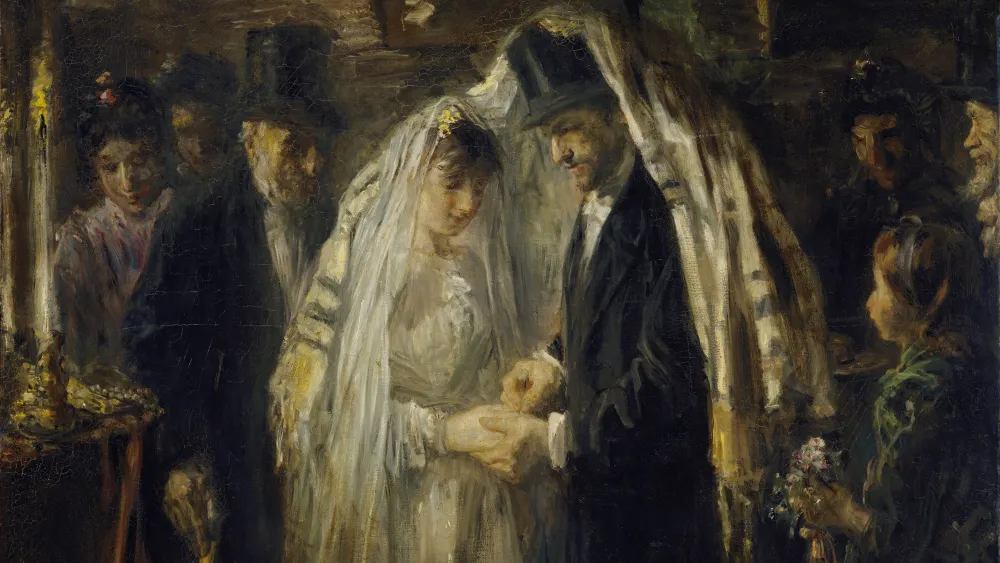
A year ago, Ben Binyamin and Gali Segal got married. They were both survivors of the Nova massacre, and both lost their right legs there. To see the video of them walking to their chuppah together and Ben breaking the glass with his right foot brought tears to thousands. The courage and resolve of all these holy souls are inspirational and humbling to mere mortals such as I.
To pick ourselves up, again and again, no matter what, this has surely been one of the great secrets of survival of the Jewish people throughout the centuries.
The truth is, while there are many of these heroic, inspiring and exceptional human beings, the whole nation of Israel are heroes—indeed, superheroes. To live through the last 22 months of hell, with no day and no night, running to shelters at all hours with small children at a moment’s notice, is nothing short of heroic. And how many hundreds—nay thousands—of families have been bereaved and lost loved ones, including so many young, beautiful people in the prime of their lives? Yet they continue with remarkable resilience, and I, for one, am in awe of every one of them.
It is said that what applies to Am Yisrael, the Jewish people, also applies to Reb Yisrael, the individual Jew.
There are times in our personal lives, too, when we need to find that inner strength that we all possess but that often lies dormant somewhere in our subconscious.
When we experience loss and bereavement, God forbid, or other types of personal tragedy or illness, God forbid, we also need to dig deeply into our psyche to discover the very same strength and resilience that is part of our national character and distinctiveness.
How do we respond to misfortune and heartbreak in our own lives? Some struggle and take a while to recover. Sadly, some never quite recover. Others are hardier. They are tough “troopers” who seem to handle life’s difficulties with amazing aplomb.
This week’s Torah reading, Vaetchanan, tells us that Moses didn’t get his own personal prayer answered. He would not enter his beloved Promised Land. As devastating as this was for him, he accepted it. He didn’t bear a grudge against God.
My late in-laws, Rabbi Zalman and Shula Kazen of Cleveland, were of the latter variety. They lost two children in their lifetime, their eldest daughter and their youngest and only son. But I never saw them become angry or bitter. They believed that everything was part of the greater heavenly plan and that each had achieved their life’s mission. Indeed, both children were very accomplished. Esther Alpern was a legend in São Paulo, Brazil, where she was a dynamic rebbetzin and educator, and Yosef Yitzchok (“Y Y”) Kazen was the founder of the Chabad.org website.
With strength, courage, faith and trust in a Higher Power, we can find the wherewithal to continue with life after tragedy strikes.
Over my years of pastoral experience, I’ve had quite a few congregants who, at the end of their shiva week of mourning, asked me if they could spend another week at home clustered in the warmth and embrace of their loving family, friends and community. They felt so safe and secure in that nurturing comfort zone, and weren’t ready to leave the cocoon and go out to face the music of a busy, noisy and insensitive world.
I explained to them that the very same Torah that tells us to mourn, now tells us to move on. We sit shiva, but then shiva ends, and we must pull ourselves together, get up and go.
Thankfully, we have a halachic directive to end that intense first week of mourning. Otherwise, how could we ever stop mourning for our loved one? It would feel disrespectful. Of course, they are never forgotten, and a scar remains forever. But we move on in our lives, and we learn to function and progress.
My late mother told me how she struggled after her own father’s passing. My zayde lived with us after my grandmother died, and she was his only daughter. And even though time was moving on, she still wasn’t finding comfort. Until a psychologist shared some strong words with her. She was told that her father was OK up in heaven, so who was she crying for? Herself? How long can one wallow in self-pity? And that actually helped her snap out of it.
The secret of survival of the collective Jewish people is also the secret for each one of us in our times of loss and need.
May we feel bereft no more. May each of us experience nachamu, a time of comfort, consolation, solace and simcha. May our Holy Temple be rebuilt, and may we succeed in rebuilding our own lives, too.