The recent intensification of Hezbollah leader Hassan Nasrallah’s threats against the United States and Israel, for example in his Quds Day statement on May 31, reflects genuine fear on Hezbollah’s part. Hezbollah percieves recent statements made by U.S. Secretary of State Mike Pompeo and Assistant Secretary of State for Near Eastern Affairs David Satterfield to the Lebanese leadership as an imminent threat.
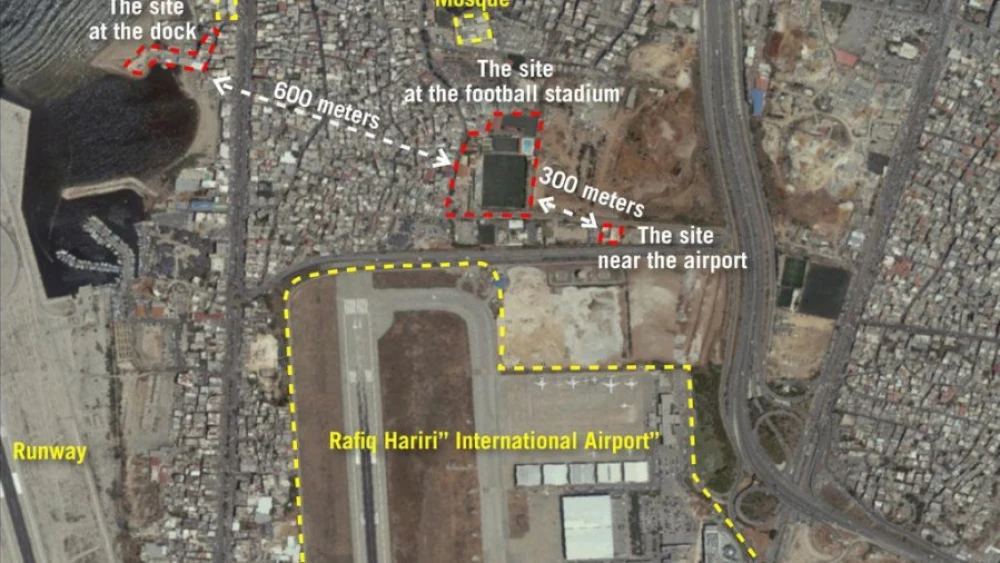
According to a credible report in the London-based Al Hayat newspaper on June 2, 2019, Lebanese President Michel Aoun, Prime Minister Saad Hariri and Parliament Speaker Nabih Berri were warned by the United States that it would not ignore intelligence information, pictures and maps of Hezbollah’s precision-missile sites, and that the United States would not be able to restrain Israel from acting against them.
Nasrallah responded belligerently. He denied that there were any precision-missile factories in Lebanon, but asserted that building such facilities was Hezbollah’s prerogative. In the same breath, Nasrallah again threatened to use long-range precision missiles capable of hitting strategic targets in Israel. This is not the first time Nasrallah has denied plain facts; for Nasrallah, truth is not the sole option.
A commentary posted on Hezbollah’s official Al Ahed website proclaimed that Israel cannot ignore Nasrallah’s messages, including his words about the precision missiles in Hezbollah’s hands and about the United States’ “failure” to foment a domestic debate on the subject in Lebanon and to portray the missiles as the main factor behind Lebanon’s instability.
The post said that, instead of adopting a policy of ambiguity on the missile issue, Nasrallah had unequivocally affirmed Hezbollah’s right to maintain any capabilities to confront the Israeli threat, including long-range precision missiles capable of hitting any target in Israel.
The commentary also made clear that Hezbollah rejects the attempt to use the talks with the United States on demarcating Lebanon’s land and maritime borders with Israel to convey threats on the missile issue. It said that whether or not there are precision-missile factories in Lebanon is not the United States’ business and that Hezbollah has the right to manufacture whatever weaponry it wants.
“If the Americans want to keep this file open, we have the full capacity to manufacture and to get manufacturing machines, and we will set up factories to manufacture precision rockets in Lebanon,” Nasrallah said.
Hezbollah has decided that, in the case of a military escalation between the United States and Iran, it will act against Israel. Hezbollah’s response could fall along a spectrum of possibilities, from activating the Shi’ite militias in Syria against Israeli targets on the Golan Heights to activating Hezbollah cells against Israel on the Golan border, while, if there is an American attack in Iran itself, Hezbollah will respond with missile fire at Israel.
Iran cannot transport weapons, so it builds them in Lebanon
Iran and Hezbollah have taken a strategic decision to build infrastructure in Lebanon for upgrading precision missiles. At the basis of this decision stands Israel’s determination to attack whatever construction of such infrastructure occurs in Syria, and to attack whatever components are discovered making the move from Syria to Lebanon. Apparently, Hezbollah assumes Israel will not operate freely against such facilities in Lebanon.
It is worth emphasizing that there are no economic or financial constraints on this strategic decision stemming from the economic sanctions against Iran and Hezbollah. Numerous reports have appeared on Iran’s and Hezbollah’s economic plight, including a drastic reduction in Iranian aid to Hezbollah and substantial cuts that affect its military and social activity. Regarding Hezbollah, however, these reports appear to be greatly exaggerated. As Tony Badran, a highly regarded and experienced analyst, rightly points out:
“Hezbollah is not bankrupt. Have Iranian funds to the group been affected by sanctions on Tehran? The answer is most likely yes, but that misses the key point. The more critical question is: has Hezbollah’s ability to continue to run its operations, both military and nonmilitary, been substantially curtailed at this point in the maximum pressure campaign? There is no convincing evidence to suggest that anything like that is happening.”
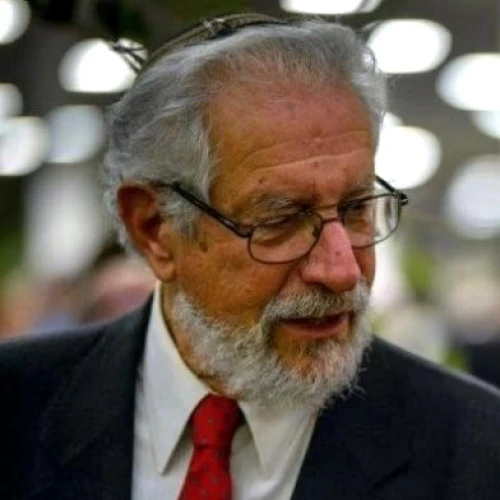
IDF Brig. Gen. (ret.) Dr. Shimon Shapira is a senior research associate at the Jerusalem Center for Public Affairs. He served as Military Secretary to the Prime Minister and as Israel’s Foreign Ministry chief of staff. He edited the Jerusalem Center eBook “Iran: From Regional Challenge to Global Threat.”