Anyone attending a high-profile event knows the drill: You hear a few words, sit down to eat, and when the major leader—let alone a head of state—talks, you want to be invisible and stand still. Everyone came to see that person, not you.
A few nights ago, I experienced such an evening, though it was anything but standard. In fact, nothing about last Shabbat dinner was ordinary.
Reserve Cut, the kosher steakhouse in Midtown Manhattan on 56th Street, had been transformed into a fortress on Sept. 26. The Shabbat dinner hosted by Tila Falic Levi and Moshe Levi, pillars of Jewish causes and education, was attended by a handful of Israeli Prime Minister Benjamin Netanyahu’s closest supporters, friends and VIPs, along with friends of the hosts. This was not a fundraiser with tickets or entry fees; it was a private evening with the leader of the Jewish state.
At the head of the table sat Netanyahu, fresh off his address to the U.N. General Assembly earlier that day. Prior to that speech, he faced a dramatic walkout by representatives of nations across the globe. He carried on his shoulders not just the burdens of diplomacy but two years of unrelenting war: Hamas in Gaza, Hezbollah in Lebanon, the Houthis in Yemen, and Iran pulling the strings behind them all. Add to this the relentless domestic protests, a bogus ICC arrest warrant and the friction of international arms negotiations since the Hamas-led terror attacks in southern Israel on Oct. 7, 2023.
And yet, he must still lead a people and a country in a time of war, and after the greatest massacre of Jews since the Holocaust.
From the moment he entered, the air shifted. I’ve met heads of state before, and I’ve met celebrities. Netanyahu’s presence is different. He doesn’t need theatrics. His stillness commands silence.
Then, Rabbi Shlomo Farhi rose to speak. He recalled how the dying Jewish matriarch Rachel named her son Ben-Oni, “son of my sorrow,” before Jacob renamed him Binyamin. He tied that story of sorrow and transformation to Netanyahu’s life, marked by hardship and especially by the loss of his older brother Yonathan (“Yoni”) Netanyahu, hero of the Entebbe rescue of hijacked airplane hostages in 1976.
Netanyahu listened, his expression heavy. When he replied, it was not political but deeply personal. He acknowledged that he, too, carried sorrow bound to that ancient story across centuries. The connection between the rabbi and the prime minister was profound. The room fell into a silence that felt almost sacred.
Immediately after, Netanyahu delivered the address everyone had been waiting for. The room froze, eyes fixed on him. You could hear the weight of your own breathing.
And there I was in the foreground, with hot soup in front of me and cool tequila by my side.
Yes, I was hungry. And so, as the room sat still, I kept sipping and spooning. Bite of soup, swig of tequila. While everyone else was locked on him, I thought I could sneak in a few bites and that I wouldn’t be noticed.
Part I of Prime Minister Netanyahu’s toast at Shabbat dinner last night! Honored that he called me a guardian of the Jewish people! That responsibility is etched in my heart.
— Leo Terrell (@LeoTerrellDOJ) September 27, 2025
@realDonaldTrump @AGPamBondi @ChadGilmartinCA @netanyahu pic.twitter.com/ODY5U3pNO3
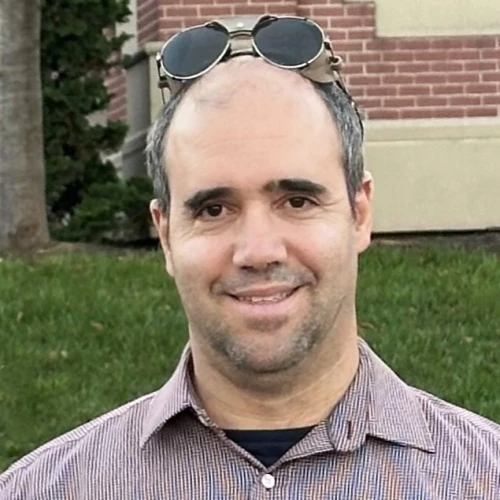
Instead, I became “The Soup Guy.”
Nearby, someone filmed the event with me in the foreground. I thought I was safe under the cloak of Shabbat, but there I was, blasted across Jewish social-media platforms, eating and drinking away. Afterward, friends and strangers alike sent me clips, poking fun at the man in the white kippah who couldn’t put his spoon down in front of the prime minister. The clip that went out across outlets even shows me close up, with Netanyahu in the background.
It’s a little humorous, a little awkward. But that moment doesn’t capture the weight of what it meant to be in that room. To sit privately with a man vilified by those who don’t understand the conflict—whether champagne intifadists in the art world, street activists chanting clichés or governments rewarding terror with hollow recognitions—is something else entirely.
Outside, they see a villain. Inside, I saw a leader who carries the sorrow of Rachel and the strength of Binyamin, and who exudes the aura of a Jewish leader working tirelessly for his people’s security and survival.
I knew that Shabbat wouldn’t be ordinary. What I didn’t know was that I would become part of its record. People may laugh at the guy who couldn’t stop eating, but I will remember the silence, the rabbi’s words and the privilege of witnessing history up close in New York City.
Sometimes, history finds you, even when you’re just trying to enjoy a bowl of soup and a drink.
Part II of Prime Minister Netanyahu’s toast at Shabbat dinner last night!
— Leo Terrell (@LeoTerrellDOJ) September 27, 2025
@realDonaldTrump @AGPamBondi @netanyahu @ChadGilmartinCA @GatesMcgavick @TheLeoTerrell pic.twitter.com/U4dBuXUh96