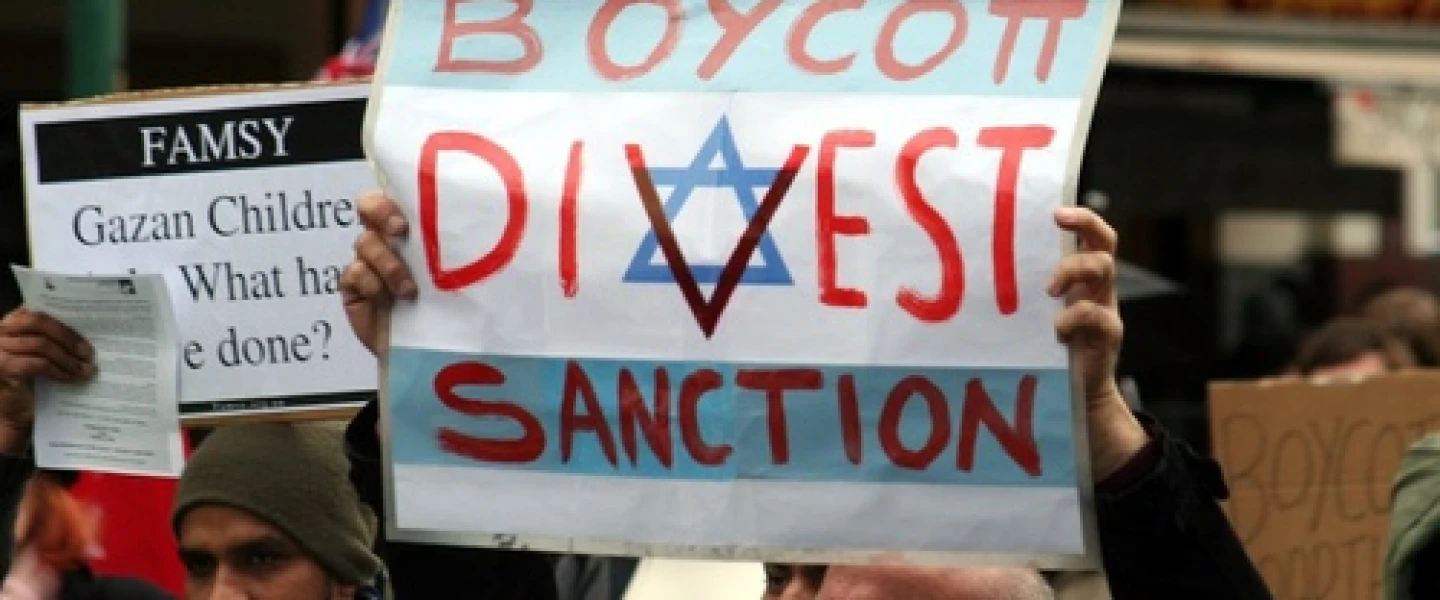
In America today, too many Jews are letting other people tell them who they are.
On campuses and in newsrooms, in protest marches and corporate training, Jews are increasingly described and often describe themselves in the language of American racial politics: “white,” “privileged,” “oppressor,” “ally,” “minority,” “progressive.”
These words may have a place in American debate. But when they become the primary way that American Jews understand themselves, something essential is lost.
I say this as someone who has lived in three very different Jewish worlds: I was born and raised in Ethiopia’s ancient Jewish community; I spent more than two decades working in New York’s justice system; and I now live in Jerusalem as an Ethiopian Israeli Jew. My journey from Ethiopia to New York City to Israel has convinced me that when Jews forget that we are first and foremost a covenantal people—not a race, not a political bloc, not a set of talking points—the vacuum gets filled by others with far darker stories about us.
My teacher, Rabbi Jonathan Sacks, used to say that the Jewish people are “not a race, not a class, but a covenant.”
Jews are not defined by skin color, social status or party affiliation. We are defined by a shared narrative that begins with slavery in Egypt and moves through exile, persecution, resilience and return—and by responsibilities we carry toward God and one another. In contemporary America, that covenantal identity is being slowly replaced by something thinner and more brittle.
Consider how leading universities have handled antisemitism since the Hamas-led terrorist attacks in Israel on Oct. 7, 2023. Administrators at elite institutions have twisted themselves into knots to avoid saying plainly that calling for the genocide of Jews is unacceptable. When asked basic questions in Congress, they responded with legalese and word games, as if Jewish students were simply on the wrong side of a policy debate.
Underneath this evasion lies a deeper failure: Jews are no longer seen as a people with a 3,000-year-old history of vulnerability, but as a subset of “whiteness” aligned with power. And because many American Jews have come to think of themselves in these same categories—white, liberal, professional, progressive—they sometimes lack the language to push back.
On the far left, Jews are assigned the role of “white colonizers” and “Zionist oppressors.” On the far right, they are “globalists” and “elites.” In both narratives, Jews are reduced to symbols, not seen as a flesh-and-blood people with internal diversity and an ancient calling.
When Jews begin to see themselves primarily as participants in these scripts—“we are white,” “we are people of color,” “we are progressives,” “we are conservatives”—rather than as a global, multi-color covenantal people, they become vulnerable to whatever the script demands next.
There is another way. It begins by recovering what Sacks called the story we tell about ourselves. That story is not about race. It is about a promise: Abraham leaving Mesopotamia; Moses leading slaves out of Egypt; exiles from Spain and Yemen and Morocco and Ethiopia and Poland all saying the same words at the Passover seder table: “Next year in Jerusalem.”
In that story, Jews are not a monolith. We are Ashkenazi, Sephardi, Mizrachi, Indian, Latino, black, brown, white and everything in between. We are not an “ethnic group” in the American bureaucratic sense; we are a people of covenant that happens to come in many colors.
When we forget that, even when we Jews speak as if Judaism is “white like us,” then we cooperate in our own erasure.
This reality is still poorly understood in America not only by non-Jews, but sometimes by Jews themselves. When black and Latino activists in New York chant that Israel is a “white supremacist” project, they erase millions of Jews who look like me and my family. When Jewish institutions put only pale faces on their stages and in their leadership, they unintentionally confirm that erasure.
Changing that tone requires not only better explanations, but different voices. It means giving more space, right now, to black and brown historical Jews, including Ethiopian Jews, to stand at the front and speak. And to do so not as tokens, but as natural heirs and witnesses to our shared story. If you want to show America that Judaism is not white, you must let black and brown Jews be seen and heard, not just photographed in diversity brochures.
A healthier American Jewish identity would include:
• Teaching our children that their deepest identity is not “white” or “POC” or “ally,” but part of a people bound in covenant, with obligations to other Jews and to the wider world.
• Elevating Jews of African and Mizrachi/Arab background into real leadership and visible roles, so that the public face of Jewish life matches its reality.
• Reviving the idea that Jews can be, as Sacks put it, “a creative minority” fully engaged in American life but not defined by its latest ideological fashions.
As a black Ethiopian Israeli Jew who has walked the streets of Addis Ababa, New York and Jerusalem, I end with a question to our Jewish leaders worldwide and to the leadership of the State of Israel: We say, rightly, that Judaism is not white and that we are a global people, not a racial category.
The sooner we allow all our colors to do that, the less power others will have to decide who we are.