
Fanaticism is what much of the world has learned to despise.
We see it in Iran among the Basij paramilitary guerillas and Iran’s Islamic Revolutionary Guard Corps; in Lebanon within Hezbollah; in Iraq among ISIS and Iranian-backed militias; in Yemen with the Houthis; in Gaza under Hamas; in Egypt with the Muslim Brotherhood and Ansar Beit al-Maqdis; in Jordan among ISIS and Al-Qaeda; in Afghanistan under the Taliban; and in Turkey and Qatar, which have embraced extremist groups such as Hamas and the Muslim Brotherhood.
It is for this reason that EMET devoted a day on Capitol Hill on April 22 to this urgent and troubling subject: to awaken policymakers to the scale of these atrocities.
For decades, this fanaticism has spread across Africa, particularly in Nigeria. Boko Haram, founded in 2002 by Mohammed Yusuf, has sought to “purify” Sunni Islam in northern Nigeria. In reality, it has enslaved women and children, carried out mass abductions, extorted communities and inflicted unimaginable brutality.
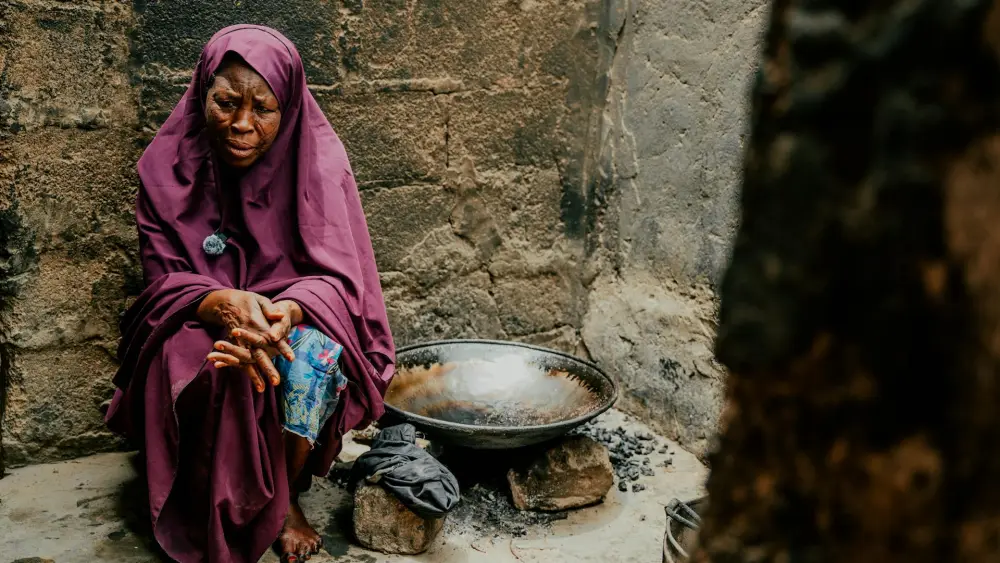
Nigerian Christians have been massacred in the tens of thousands simply because of their faith. They have endured torture, rape, enslavement and displacement. Muslims who refuse to submit to jihadist demands have also faced persecution. Millions have been driven from their homes.
Human-rights activist Charles Jacobs has spent decades confronting jihadist atrocities in Sudan and beyond. EMET became directly engaged in Nigeria after Stephen Enada, executive president of the International Committee on Nigeria, reached out. He described the situation as “five minutes to a five-alarm fire,” warning of thousands of women held captive, stripped of their childhoods and forced into sexual slavery—crimes that demand recognition as crimes against humanity.
Few have done more to raise awareness than former Rep. Frank Wolf (R-Va.), and current Rep. Chris Smith (R-N.J.), and Sen. Ted Cruz (R-Texas). Wolf, who has traveled extensively to Nigeria, testified on April 5, 2025, that “tens of thousands of innocent Nigerians have been murdered,” with Christian farming communities continuing to be ethnically cleansed. He reported that more than 100 Catholic priests have been abducted and dozens murdered in recent years.
Smith has held at least 18 hearings on religious persecution in Nigeria, while Cruz noted that more than 52,000 Christians have been killed since 2009. His legislation, alongside H.R.7457, introduced by Smith and Rep. Riley Moore (R-W.Va.), seeks accountability, including sanctions on officials who enable religious persecution and an investigation into whether Fulani militias should be designated as a terrorist organization.
Rep. Brian Mast (R-Fla.), a U.S. Army combat veteran who serves as chairman of the House Foreign Affairs Committee, stated plainly: “The free world cannot stand by as Christians face mass murder and brutal assaults at the hands of terrorist militias. The Nigerian government must act.”
The forum also highlighted voices from across disciplines and backgrounds.
Leo Terrell, a conservative commentator and civil-rights attorney who leads the U.S. Department of Justice’s Task Force to Combat Antisemitism under the Trump administration, spoke forcefully about confronting religious hatred. Dumisani Washington, founder and CEO of the Institute for Black Solidarity with Israel, emphasized the shared moral consciousness between black and Jewish communities. He criticized past failures to confront Boko Haram, including the tragic aftermath of the 2014 “Bring Back Our Girls” campaign. Many of those girls were never returned; some were later used as suicide bombers.
Walid Phares, a Lebanese-American scholar and professor, warned of the spread of Salafist jihadist movements from North Africa into the south, underscoring the global implications of Nigeria’s crisis.
Among the many powerful testimonies, one stood above the rest. Mercy Maisamari spoke “as a woman who was not meant to survive.”
She described being treated not as a human being, but as property—beaten, brutalized and held captive by men who justified their cruelty in the name of religion. “They killed those who could not pay ransom,” she said. “They took us from everything we had ever known.”
Her words were a stark reminder: This is not abstract policy. It is human suffering on a massive scale.
Today, countless women and children remain in captivity—prisoners of conscience, enduring conditions that defy comprehension. As Mercy so powerfully stated, this is nothing less than “a crime against humanity.”