Newsletter
Newsletter Support JNS

Progress on bill to create envoy for Abraham Accords

The House Foreign Affairs Committee unanimously approved the legislation.

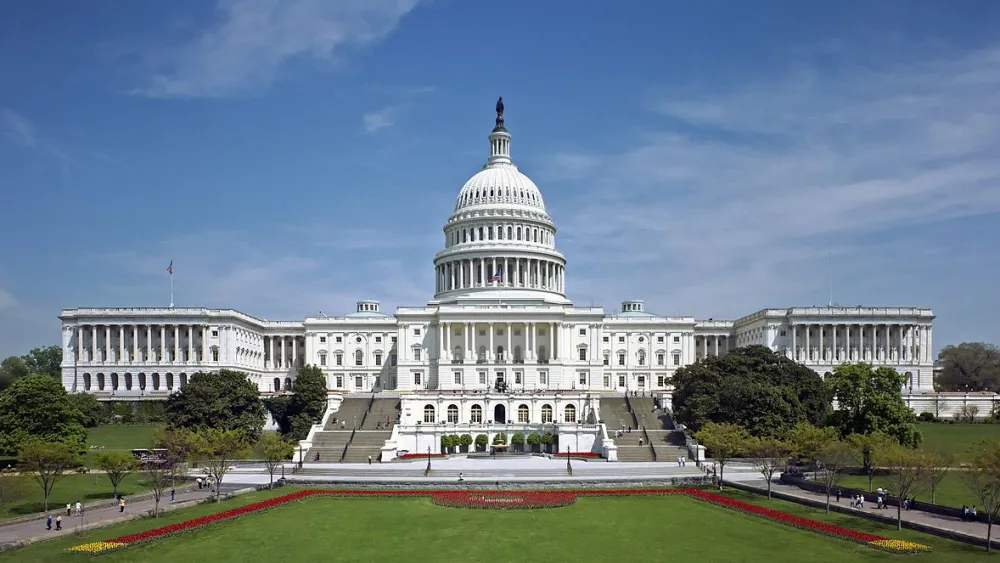
The U.S. Capitol building. Credit: Martin Falbisoner via Wikimedia Commons.

A proposed law to establish an ambassador-level envoy to work on expanding the Abraham Accords just cleared an important hurdle in Congress.

H.R. 3099 was approved by the House Foreign Affairs Committee through a voice vote without receiving any objections. Numerous legislators emphasized that the position would be critical for bringing Saudi Arabia into the accords.

Rep. Mike Lawler (R-N.Y.), a co-sponsor of the bill, said that “establishing a special envoy wholly devoted to this purpose will also demonstrate a clear U.S. commitment to cultivating the growth of the Abraham Accords. … It is a reaffirmation of our commitment to supporting peaceful and productive bilateral relationships in the Middle East, and hopefully far beyond the region.”

The top candidate for the potential job has been reported as Dan Shapiro who served as the Obama administration’s ambassador to Israel from 2011 to 2017.

Just as the lawmakers sought to broaden the influence of one Middle East nation they also pushed to limit another. A second bill approved alongside H.R. 3099 would prevent the United States from recognizing Syria as long as leader Bashar Assad remained in power.

“I’ve read and seen a lot of what others have had to say in response, and I understand the hurt I caused and am truly sorry,” Rama Duwaji told an online arts magazine.
The legislation would empower the New York City Police Department to set limits on how close demonstrators can gather near schools, as critics warn of free speech infringement.
The move aims to boost long-haul capacity as other airlines scale back routes to and from Israel.
“School districts, like colleges and universities, must take prompt and effective action to address antisemitic harassment,” stated Harmeet Dhillon, assistant U.S. attorney general for civil rights.
Just one Democratic congressman voted against the measure to require U.S. forces to be withdrawn from the conflict with Iran.
“This tool makes it easier to confront and understand family histories connected to the Nazi era,” Die Zeit stated in its introduction of the database.